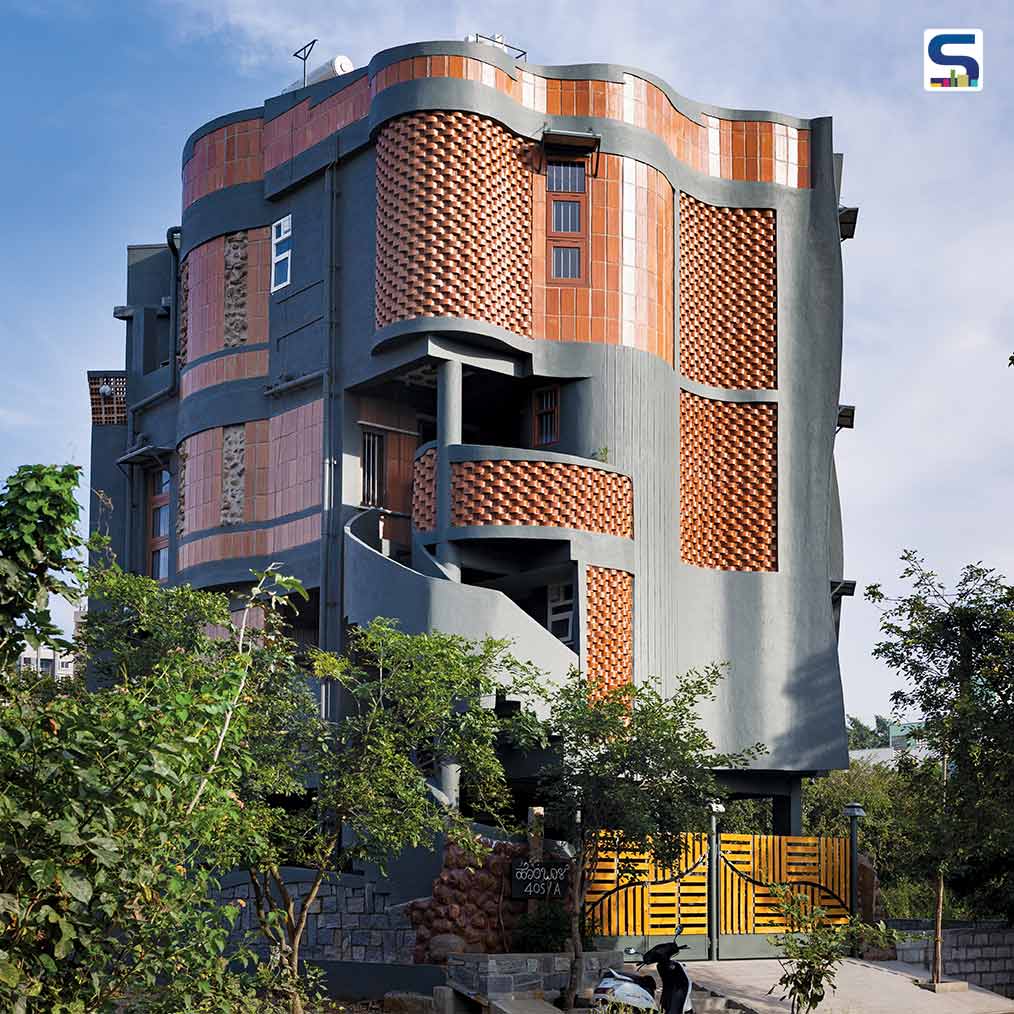
Located in Bengaluru, the 2,500 sq ft Hombale Residence showcases a facade that quietly yet confidently narrates the idea of a home that is rooted in context, memory and material sensibility. Rather than serving as a mere exterior envelope, the facade is crafted to respond sensitively to Bengaluru’s evolving urban fabric and to create a retreat that embodies the essence of a village home.
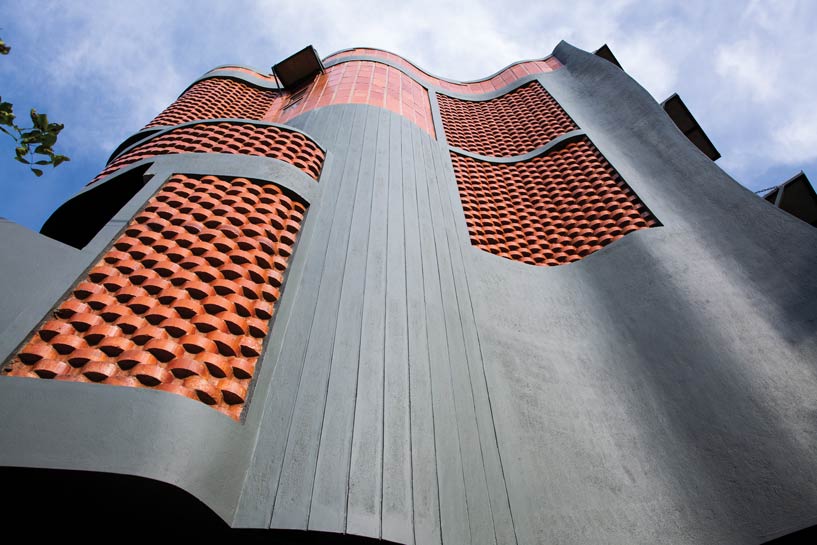
Designed as an ode to the vernacular homes of Karnataka, the facade composition balances tradition with contemporary restraint. Thoughtfully sourced and executed, semi-circular brick elements lend the exterior a rhythmic curvature and a distinct textural depth. Beyond aesthetics, these bricks offer thermal insulation while softening the building’s visual mass.
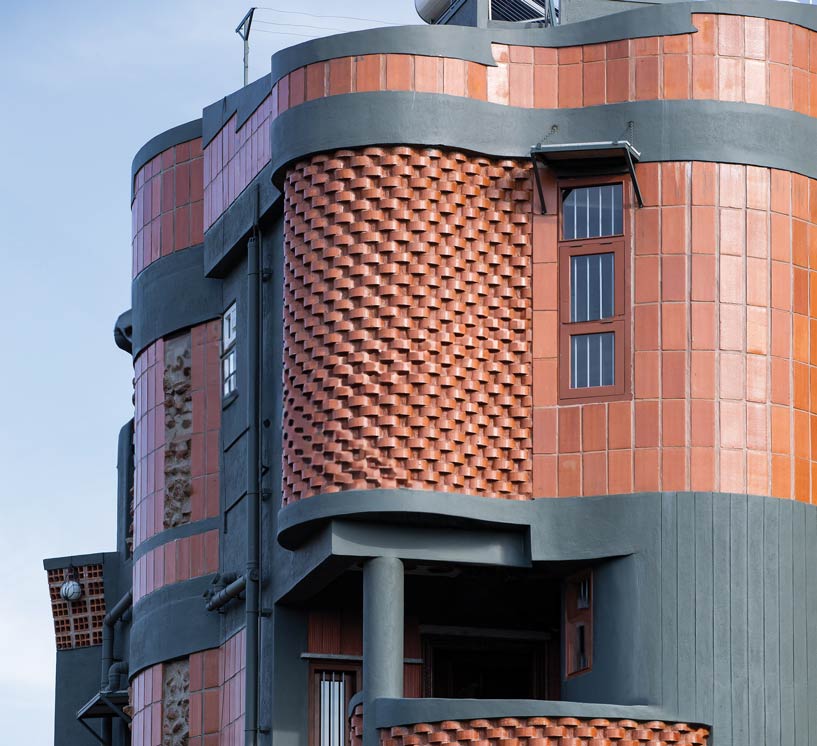
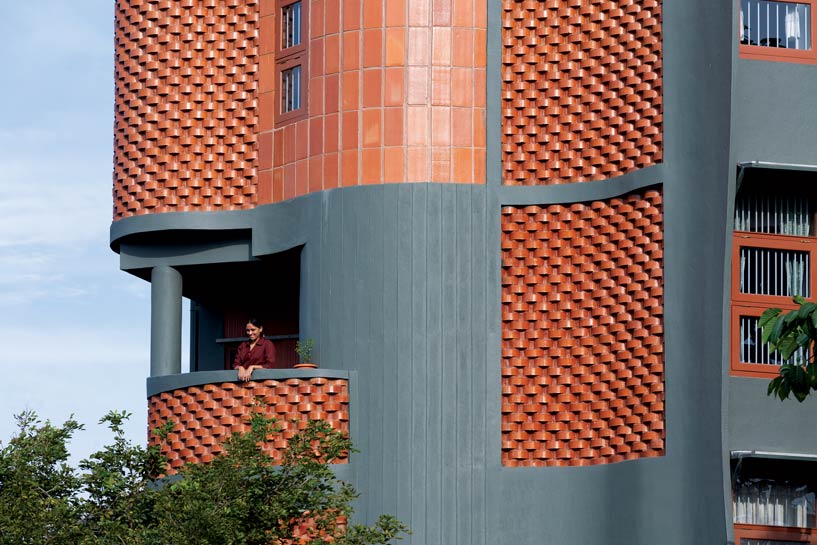
The curved brickwork introduces fluidity to the elevation, breaking away from rigid urban geometries and adding a handcrafted character. Complementing the masonry are timber pillars procured from the client’s native town. These are strategically integrated into the facade system to reinforce structural rhythm and ground the project in its regional material culture. Openings and fenestrations are strategically planned to balance light, ventilation and privacy, while subtle recesses and slit glazing along the vertical planes allow controlled daylight setting within the interiors.
PROJECT DETAILS
Project: Hombale Residence
Typology: Residential
Location: Bengaluru, Karnataka
Completion year: 2024
Built Area: 2,500 sqft
Studio: Dhi Architecture and Design, Bengaluru
Principal Architect: Ar Shruti Mysore Vedavyas
Visualization & design team: Dhi Architecture & Design
Photographs: Shalini Siva Prasad (Orka Photography)

Ar Shruti Mysore Vedavyas Dhi Architecture And Design, Bengaluru
Dhi, derived from Sanskrit, signifies understanding, intelligence and perception, forming the philosophical foundation of Dhi Architecture and Design. Founded by Ar Shruti Mysore Vedavyas, a student of Ar Jaisim, the studio has worked across residential, hospitality, commercial and institutional typologies. Her design methodology challenges conventional boundaries, guided by the belief that architecture should move beyond static form to become a living environment intrinsically connected to its occupants.