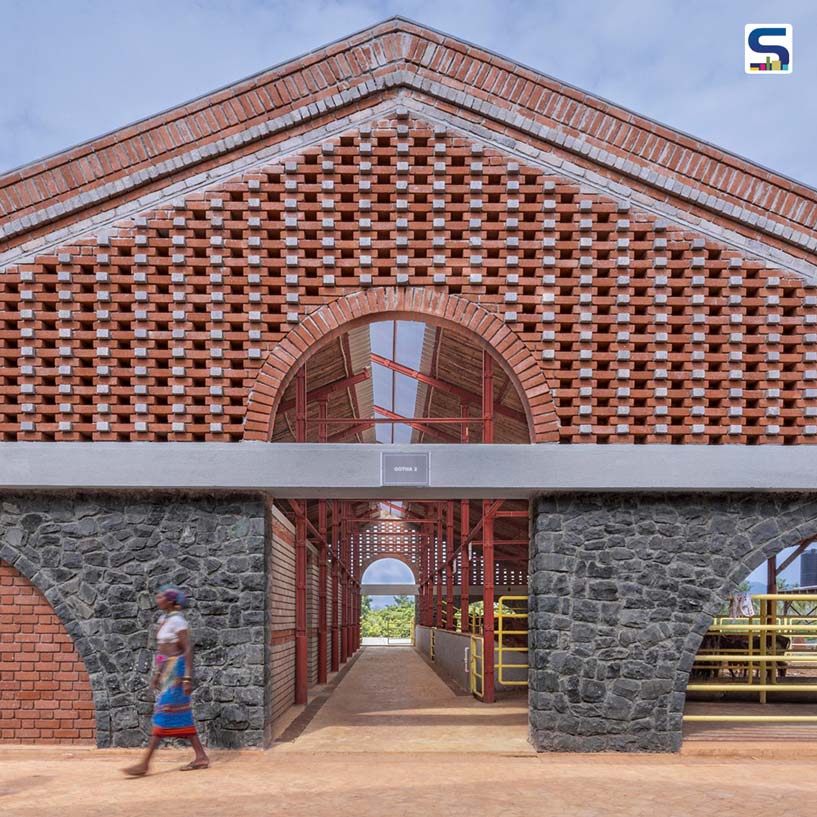
Architecture studio Compartment S4 recently completed a remarkable cattle shelter project in Maharashtra. The firm employed a thoughtful combination of brick, stone and bamboo to transform what could have been a purely functional structure into a humane, climate-responsive habitat that serves both the animals and the people who care for them. Know more about it on SURFACES REPORTER (SR).
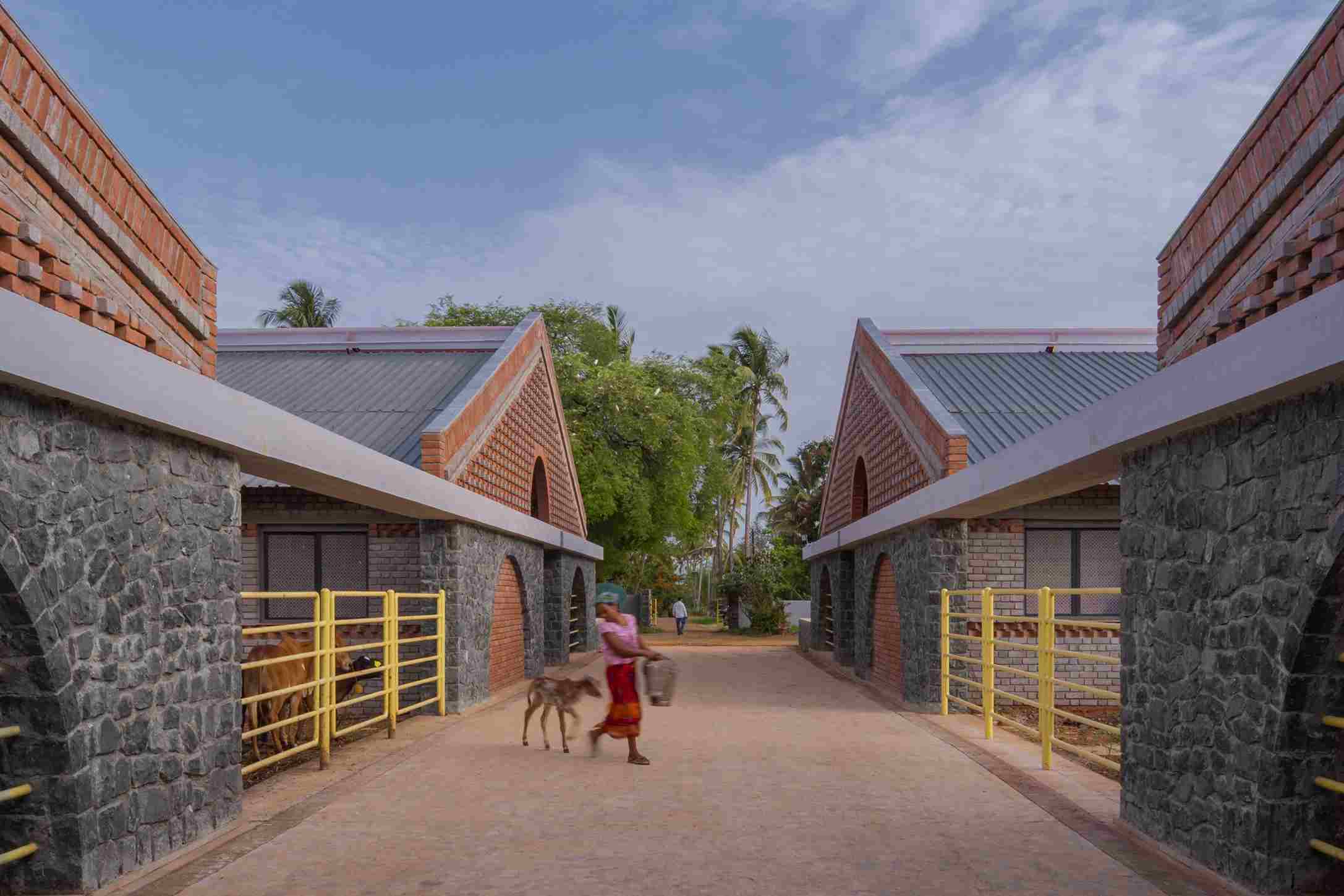
The indoor resting areas transition seamlessly into outdoor paddocks, allowing the cows the freedom to move between shaded and open environments as they choose.
Brick, stone and bamboo
The project, known as Gaughar (meaning Cow House), is located within an expansive 340 acre fruit orchard in Dahanu, a coastal town in Maharashtra. Rather than constructing an entirely new building from scratch, the studio made the environmentally conscious decision to work with what was already there. The existing dilapidated shed’s steel framework had been preserved, painted red and then reimagined through the strategic addition of locally sourced black basalt stone and brickwork. These new walls were punctuated by sweeping archways and perforated masonry sections, thereby lending the structure an open character.
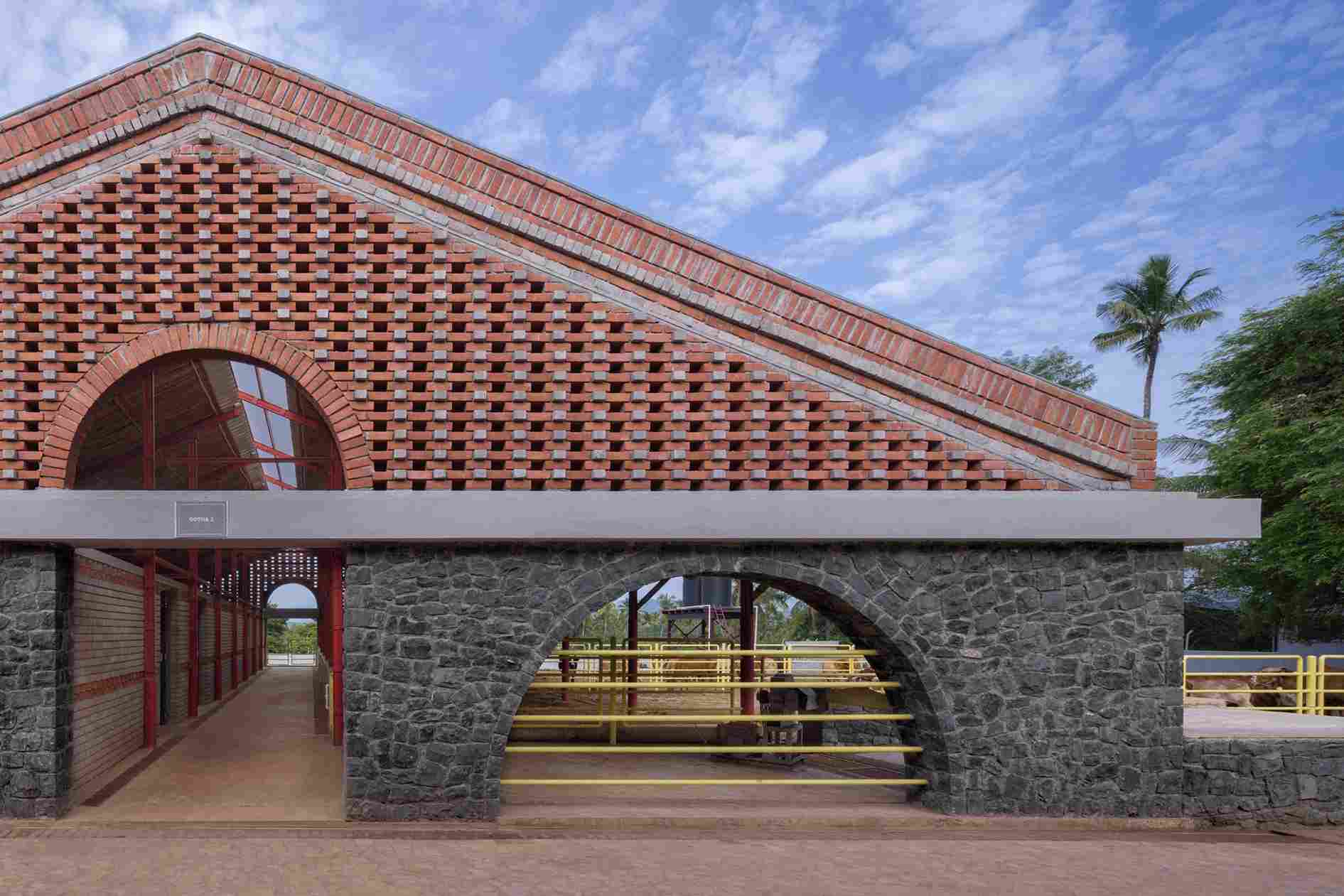
Bamboo ceiling installations were created in close collaboration with skilled artisans from the Dang region, while the windows were fitted with panels of hand-crafted, block-printed ajrakh fabric.
The reconfigured layout was further planned around hygiene standards and the natural daily routines of both the cattle and their caretakers. The studio achieved this by alternating between enclosed and open zones, thus enabling smooth movement, adequate ventilation and the flow of natural light throughout the facility. The indoor resting areas transition seamlessly into outdoor paddocks, allowing the cows the freedom to move between shaded and open environments as they choose.
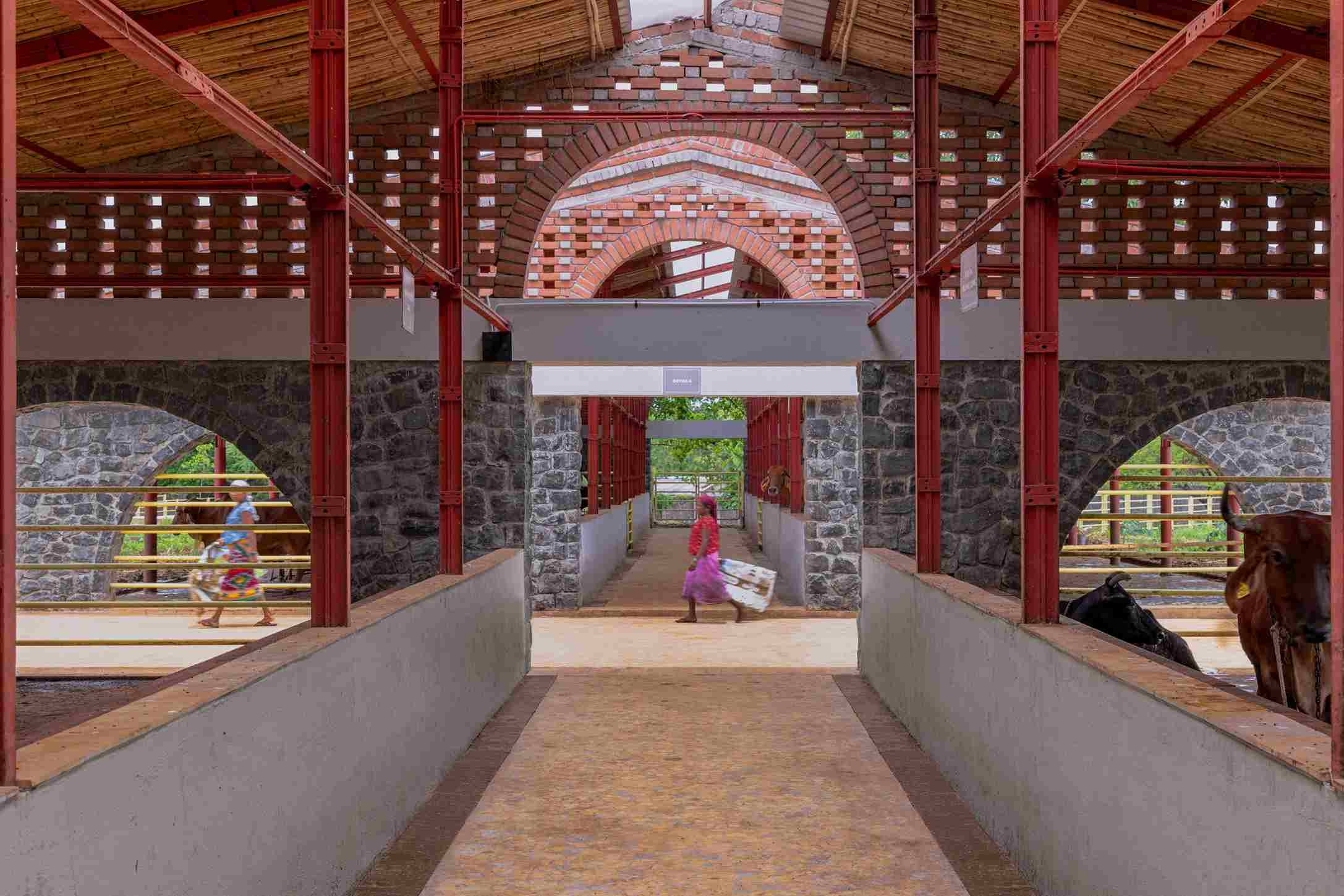
According to the studio, much of the design language was borrowed from vernacular agricultural structures and time-tested material practices that have long responded to local climate conditions.
Comfort and craft
Beyond functionality, the studio placed significant emphasis on warmth and craftsmanship. Bamboo ceiling installations were created in close collaboration with skilled artisans from the Dang region, while the windows were fitted with panels of hand-crafted, block-printed ajrakh fabric to introduce colour, texture and cultural resonance into an otherwise workaday setting. Perforated brickwork on the gable ends drew inspiration from traditional jali screens, and the water troughs located throughout the sheds and paddocks were conceptually inspired by the matka.
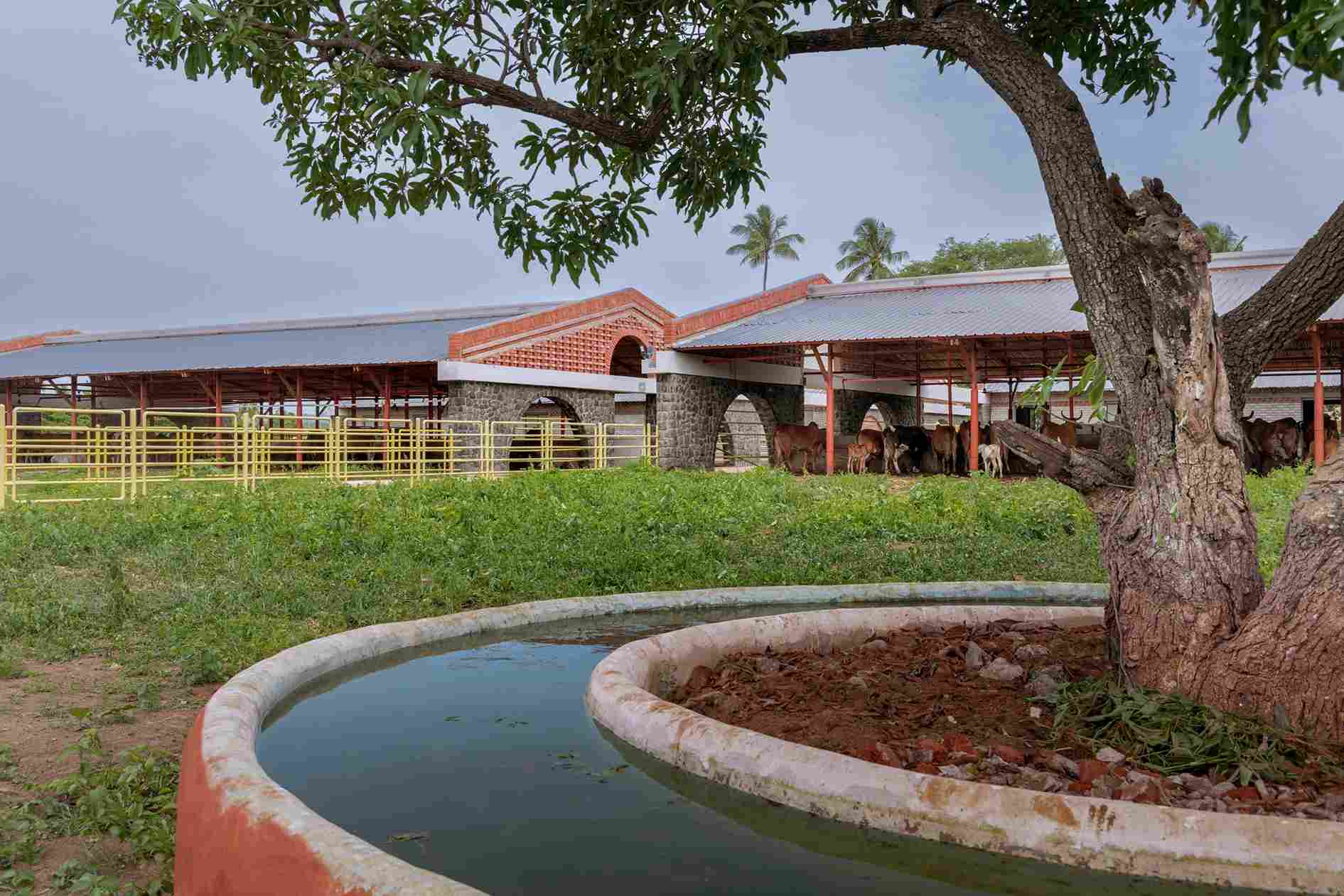
Perforated brickwork on the gable ends drew inspiration from traditional jali screens, and the water troughs located throughout the sheds and paddocks were conceptually inspired by the matka.
According to the studio, much of the design language was borrowed from vernacular agricultural structures and time-tested material practices that have long responded to local climate conditions. Techniques such as arched masonry walls and porous brick screens draw from inherited regional knowledge while being carefully adapted to meet the demands of a contemporary cattle facility.
Image credit: The Space Tracing Company