Cochin Creative Collective was founded in 2016 and has grown into an award-winning multidisciplinary practice. How did you meet, and how would you describe the studio’s journey?
Cochin Creative Collective: We share a similar academic trajectory - a Bachelor’s degree from TKM College of Engineering, Kollam, followed by a Master’s from Politecnico di Milano, albeit at different times. That shared background brought us into conversation, and over time, Cochin Creative Collective emerged organically from that dialogue. Like many young studios, we began with modest residential renovations and interior projects. Through word of mouth and early clients who believed in our approach, we secured our first independent commissions. Projects such as Artist’s Residence and Atelier and 2020 House were later built and gained national recognition, helping define the identity of the studio.
When you decided to start the practice, what were the first concrete steps you took - how did you set up your office and secure your first projects?
Cochin Creative Collective: In the beginning, our ambition was simple. One large table and a small team of three to five people, including the two of us. We were less focused on scale and more invested in building a thoughtful,
collaborative design environment. Our first significant commission was 1868 House, a renovation project that remains unbuilt today. Despite that, it was formative. It allowed us to articulate an early position on adaptive reuse, geometry, and material continuity. The project received recognition at the IIA National Awards 2018, our first major acknowledgment as a studio. “We often describe our projects as objects within Kerala’s tropical landscape, shaped by order and geometry. Geometry acts as an early disciplinary framework, setting limits and structure.”
In the early years, how did you manage cash flow - fees, salaries, rent, software - before the practice became stable? Are there any financial mistakes you would advise young architects to avoid?
Cochin Creative Collective: The early years required careful balancing. Fees were modest and aligned with the Kochi context, but rarely comfortable. To sustain the practice, we also took up teaching positions at SCMS School of Architecture, which provided financial stability while keeping us academically engaged. One lesson for young architects: underpricing may feel necessary initially, but financial discipline must develop alongside design ambition.
How did you build your client base in Kochi?
Cochin Creative Collective: Most early commissions came through friends and extended networks. Word of mouth played a central role. Our Instagram presence helped articulate a distinct visual identity and expand visibility beyond immediate circles.
This collaborative structure allows the studio to expand intellectually beyond conventional architectural boundaries.
Consistent built work and sustained relationships proved more effective than aggressive outreach.
When a client approaches you, how do you decide who will handle which parts of the project?
Cochin Creative Collective: We collaborate closely during conceptual stages, after which responsibilities align naturally with project needs. One may focus on spatial strategy and geometric framework, while the other engages deeply with detailing and coordination. However, key design decisions are always resolved collectively. “For us, reuse is both a sustainability choice and an ethical position, engaging with memory, continuity, and context.”
Your work often reflects Kerala’s tropical landscape and building culture while engaging with geometry and order. How do you translate this into everyday design decisions?
Cochin Creative Collective: We often describe our projects as objects within Kerala’s tropical landscape, shaped by order and geometry. Geometry acts as an early disciplinary framework, setting limits and structure. This geometric shell becomes a container within which climate, light, material, and landscape relationships unfold. The dialogue between strict order and the organic tropical context defines much of our work.
You work across architecture, interiors, landscape, and graphic design. What does being a “collective” enable you to do?
Cochin Creative Collective: The term “collective” reflects openness. We actively collaborate with like-minded professionals rather than operating as a closed entity. Our ongoing association with Architect Reshma Mathew, for example, has strengthened the research and theoretical dimensions of the practice. Developing fictional narratives from our architectural projects as source with Kannan Cherthedath has been an ongoing process the practice engages in. With close collaboration with architecture photographer Syam Sreesylam we have been able to delve into photography to develop composite imagery to express narratives where architecture and art intersect. This collaborative structure allows the studio to expand intellectually beyond conventional architectural boundaries.
Several of your projects involve renovation and reuse rather than new builds. What draws you to working with existing structures?
Cochin Creative Collective: Working with existing structures, especially those with historic character, has been central to our practice. 1868 House laid the groundwork for how we approach adaptive reuse. It later informed projects like 1990 House, where material and intervention strategies draw subtle parallels. For us, reuse is both a sustainability choice and an ethical position, engaging with memory, continuity, and context.
As a relatively young studio managing multiple projects, what challenges do you face in scaling while staying experimental?
Cochin Creative Collective: Balancing growth with experimentation is an ongoing negotiation. As operational demands increase, maintaining research intensity requires conscious effort. We approach each project as an opportunity to extract a spatial, material, or theoretical contribution that advances the studio’s trajectory. Reflection, often post-completion, plays a key role in sustaining this mindset.
You have been recognized at platforms such as the World Architecture Festival and IIA Awards; has this visibility changed your practice?
Cochin Creative Collective: Recognition at platforms such as the World Architecture Festival and IIA Awards has brought visibility, primarily within the architectural community. It has not dramatically altered our typologies, but it has influenced and also was a kind of validation for the clients who approach us. Increasingly design-aware and aligned with our ethos.
Looking ahead, what typologies or questions are you most interested in exploring?
Cochin Creative Collective: While housing has been central to our practice, we are increasingly interested in stepping beyond the domestic scale and engaging with larger public projects. Over the years, we have been developing ideas around what we might call a form of generic architecture within the home. Working with order, geometry, and spatial frameworks that transcend purely personal expression. We are now interested in taking these ideas forward into the public realm. Moving into larger civic or institutional projects would allow us to test these spatial principles at a broader scale where architecture engages not just with an individual family, but with a collective public experience.
ARTIST RESIDENCE AND ATELIER, THIRUVANKULAM, KERALA
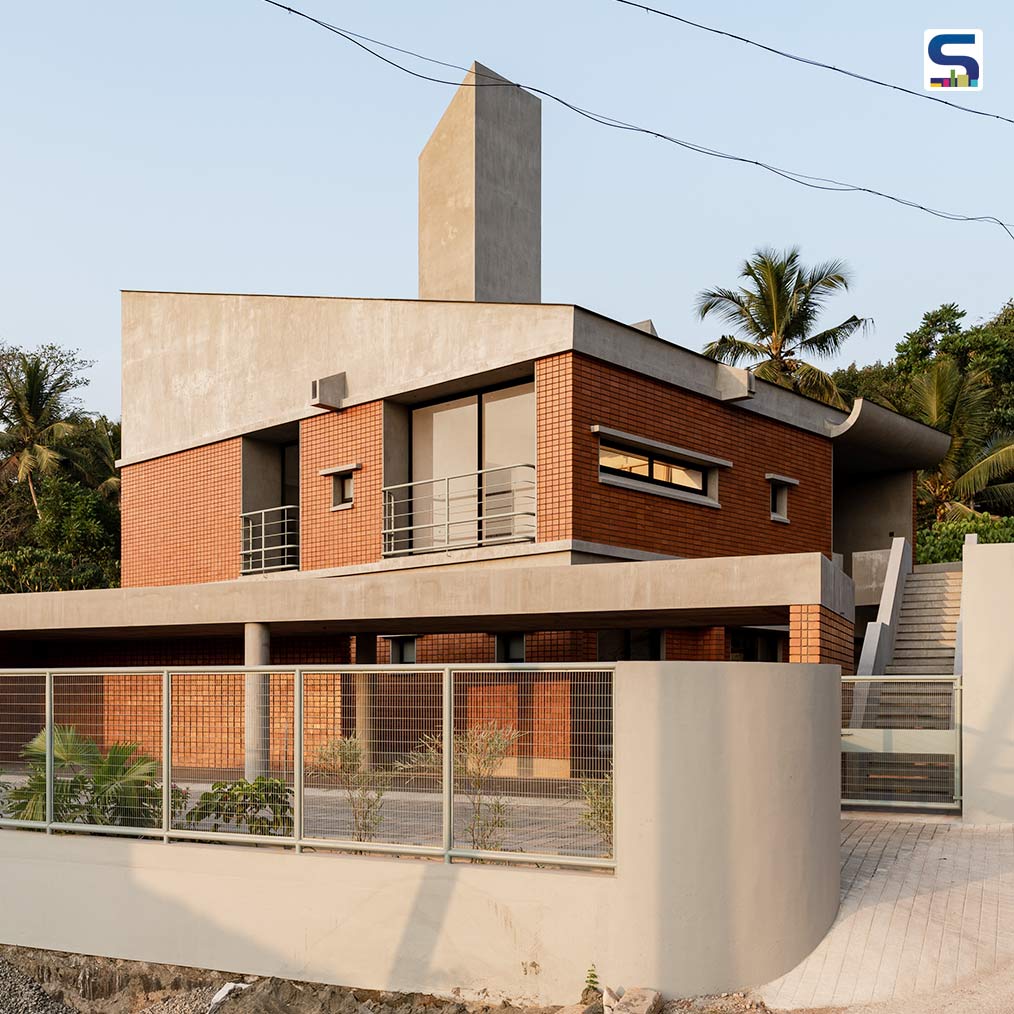
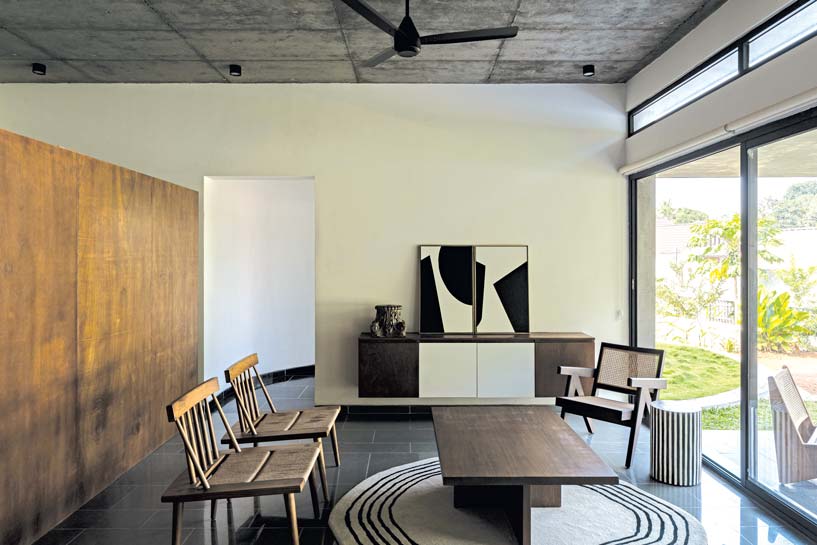
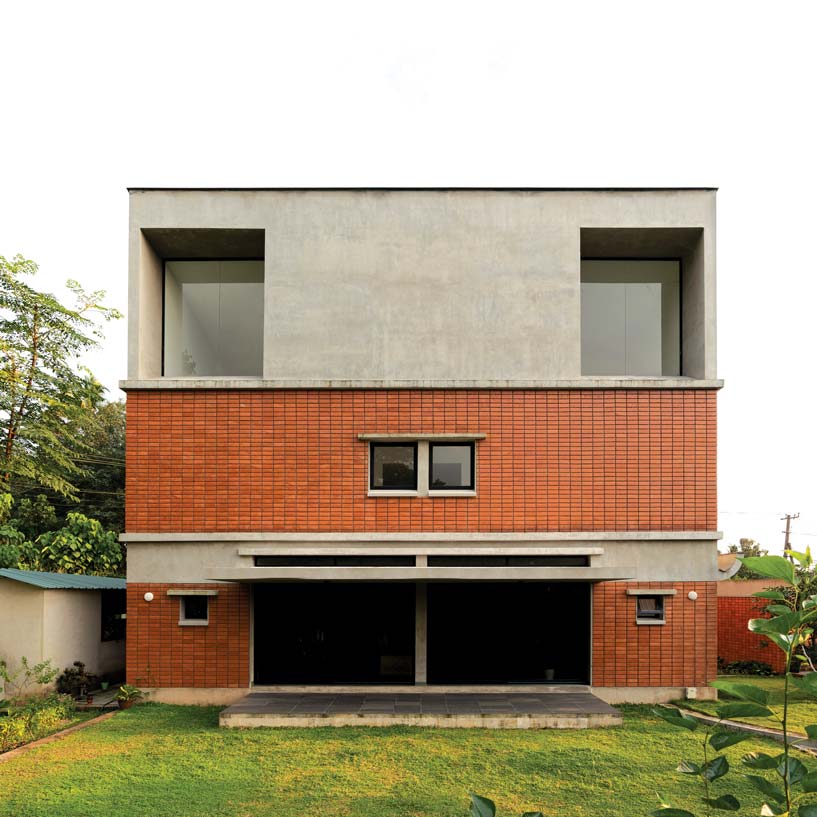
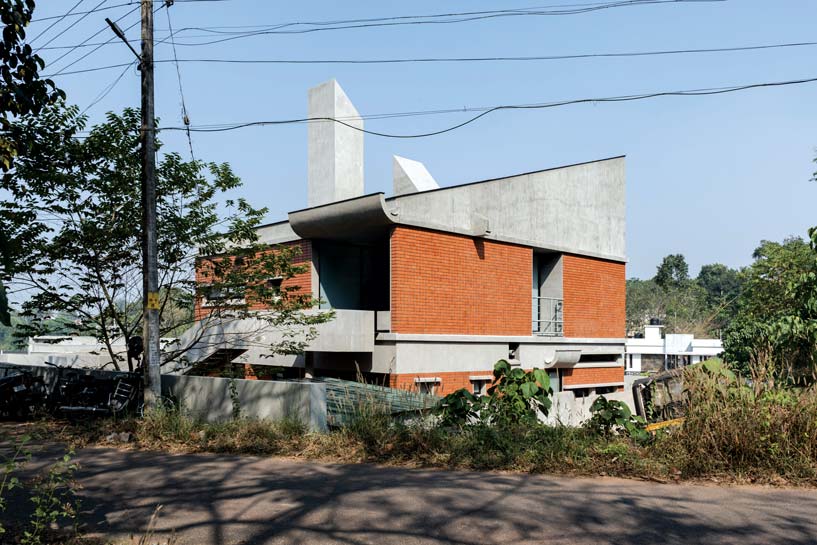
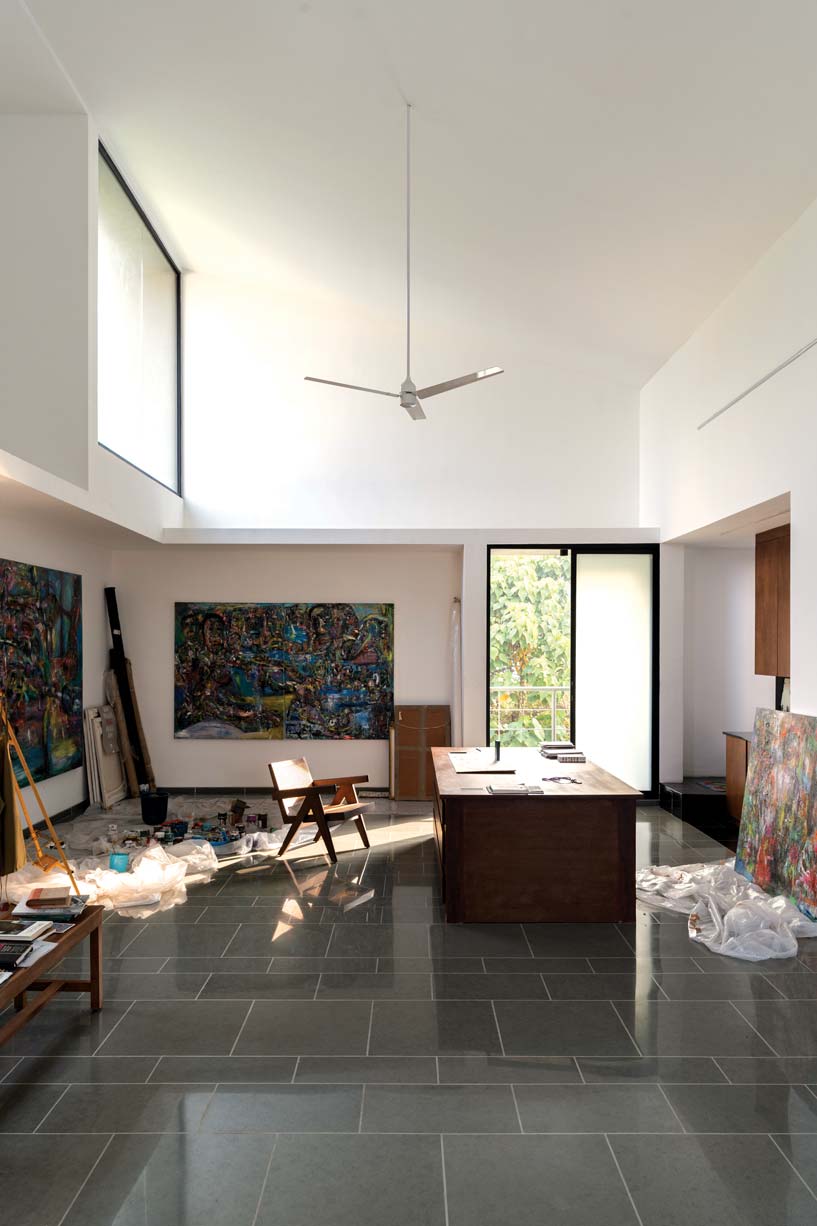
The artist’s residence and atelier is an exploration of modernism in the tropical context of Kerala. The plan of the residence is composed of a cluster of additive forms with juxtaposing geometries. The auspicious line running along the east-west direction sets the composition of the clustered forms. The main house, which is a square in plan, creates tension with its auxiliary components - the car porch and staircase. The square plan is a humble variation of the 9-grid, simultaneously taking care of the house functions on the ground level and the artist’s atelier on the first floor. The house opens up to an expansive garden on the north, and all the bedrooms towards the south have little or no hierarchy in size or position. One of the requirements the artist wanted was a strict separation between his workspace and his home, and thus the circulation system was designed in such a way that he takes a long and haptic journey to his studio every day. The studio/atelier is a double-height space flooded with sunlight from large north-facing openings. The house form is a bare cuboid, or rather the remnant
Location: Thiruvankulam, Kerala
Type: Residence, Atelier
Status: Completed
Area: 3,800 sqft
Client: P.R Sateesh
Design Team: Madhushitha CA, Lijo John Mathew, Sidharthan Sally Paul, Nandagopal M
Photographs: Syam Sreesylam
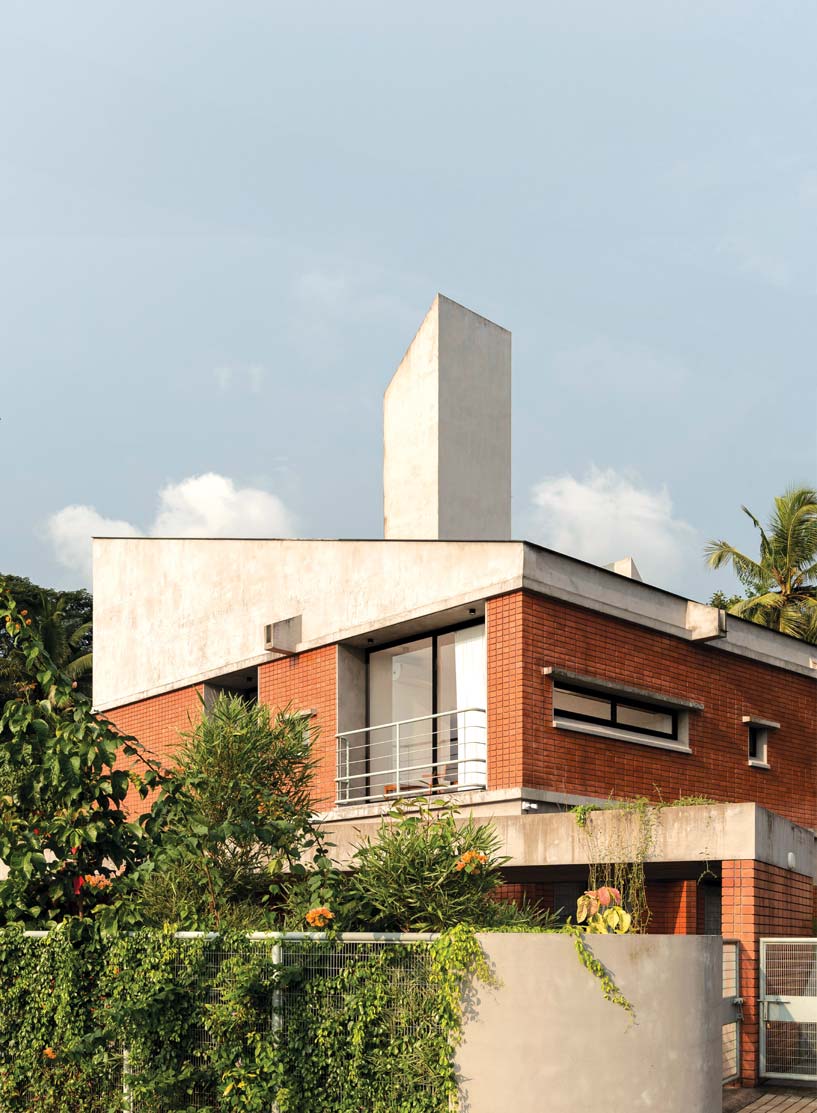
The terrace at the southern end of the roof opens up to a view of the fields nearby. The tower at the southern terrace acts as a marker and also as a gateway to a residential neighbourhood
of a truncated cube, with symmetrically articulated openings. The intentional grid brick patterns on the exterior of the house make the cladding apparent and it also acts as a protective layer for the walls from the tropical climate. The materials adopted are neutral at places and impart colour and warmth at other places. Polished natural stone for the flooring, exposed concrete ceiling, white plastered walls and colourful square tiles for the interiors. For the exterior, brick red cladding and exposed cement finish. The terrace at the southern end of the roof opens up to a view of the fields nearby. The tower at the southern terrace acts as a marker and also as a gateway to a residential neighbourhood.
JUST LOAF, BANGALORE
Location: Bangalore, Karnataka | Type: Commercial Interior | Status: Completed
Area: 2890 sqft | Client: Just Loaf Hospitality | Collaborator(s): F2F Consultants
Design Team: Madhushitha CA, Lijo John Mathew, Gopika Ramesh
Award: IIA National Awards, Vanitha Veedu Awards 2025
Photographs: Syam Sreesylam, Naresh Andnayan
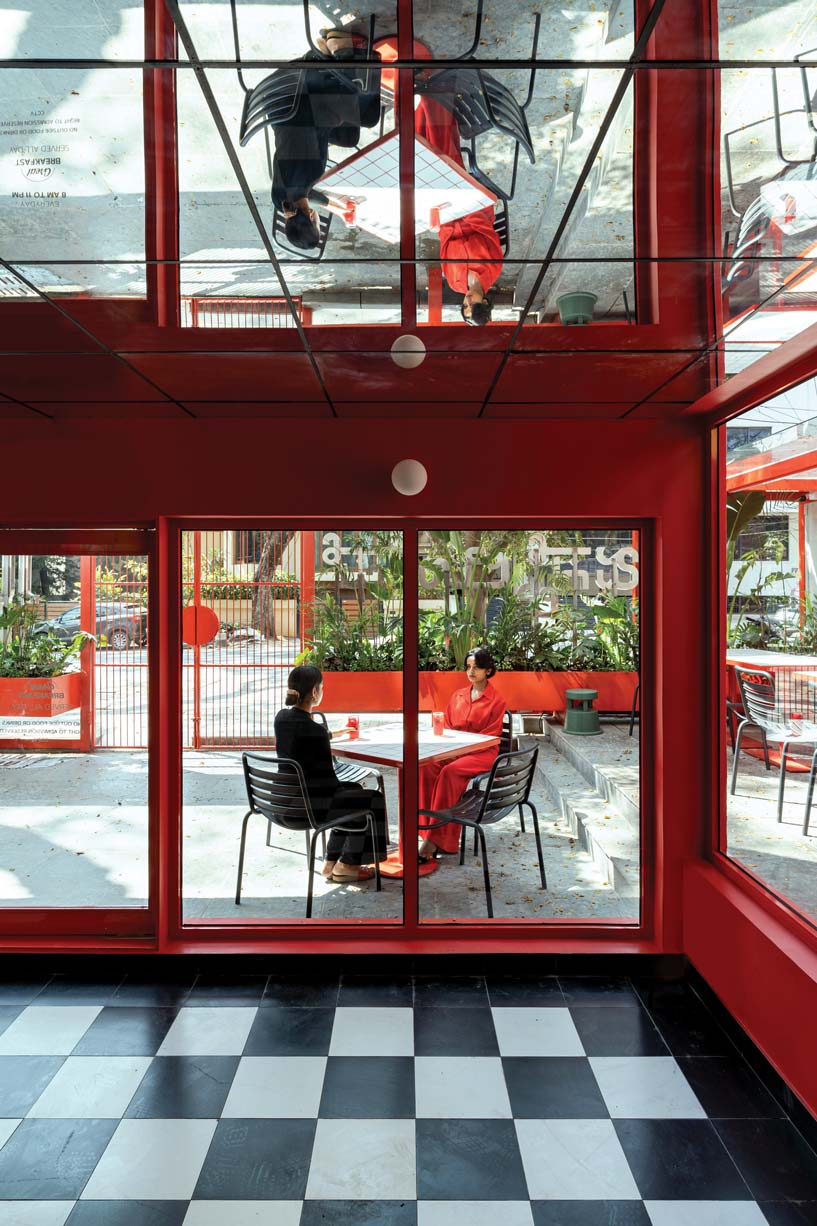
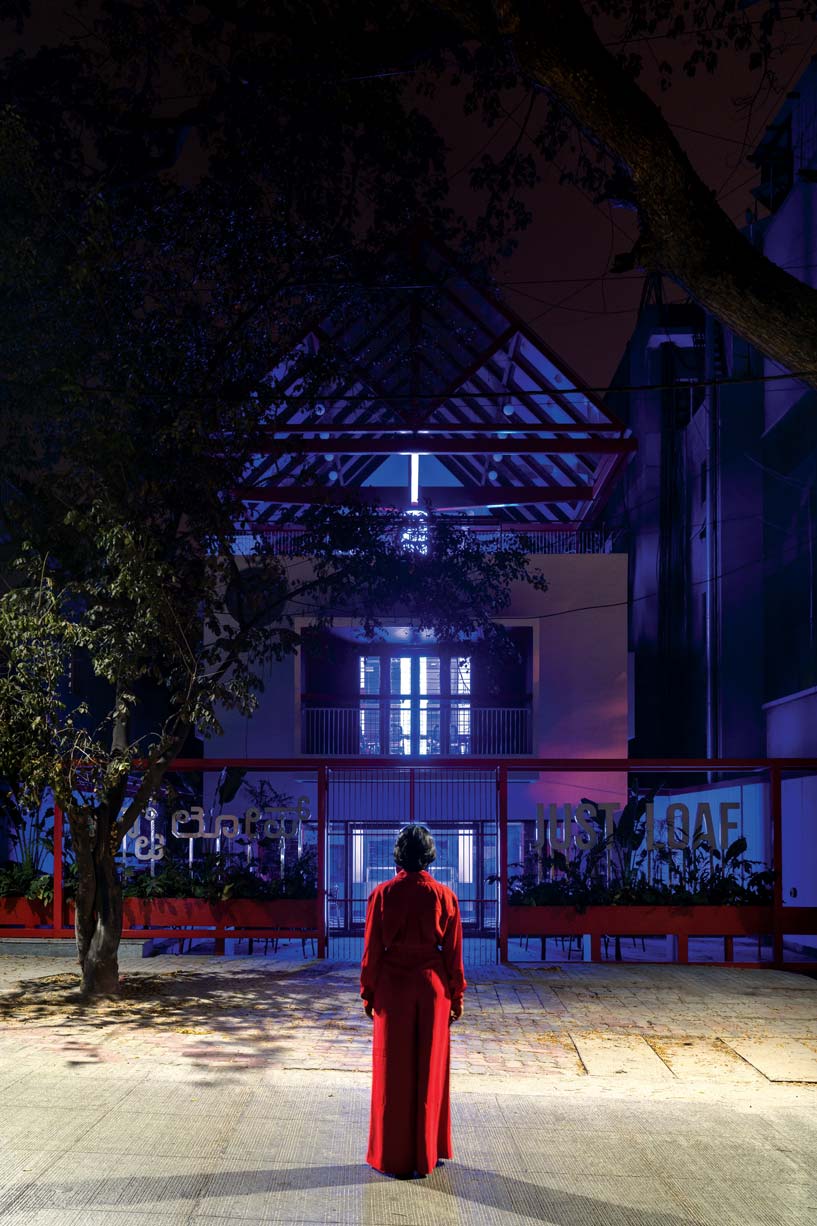
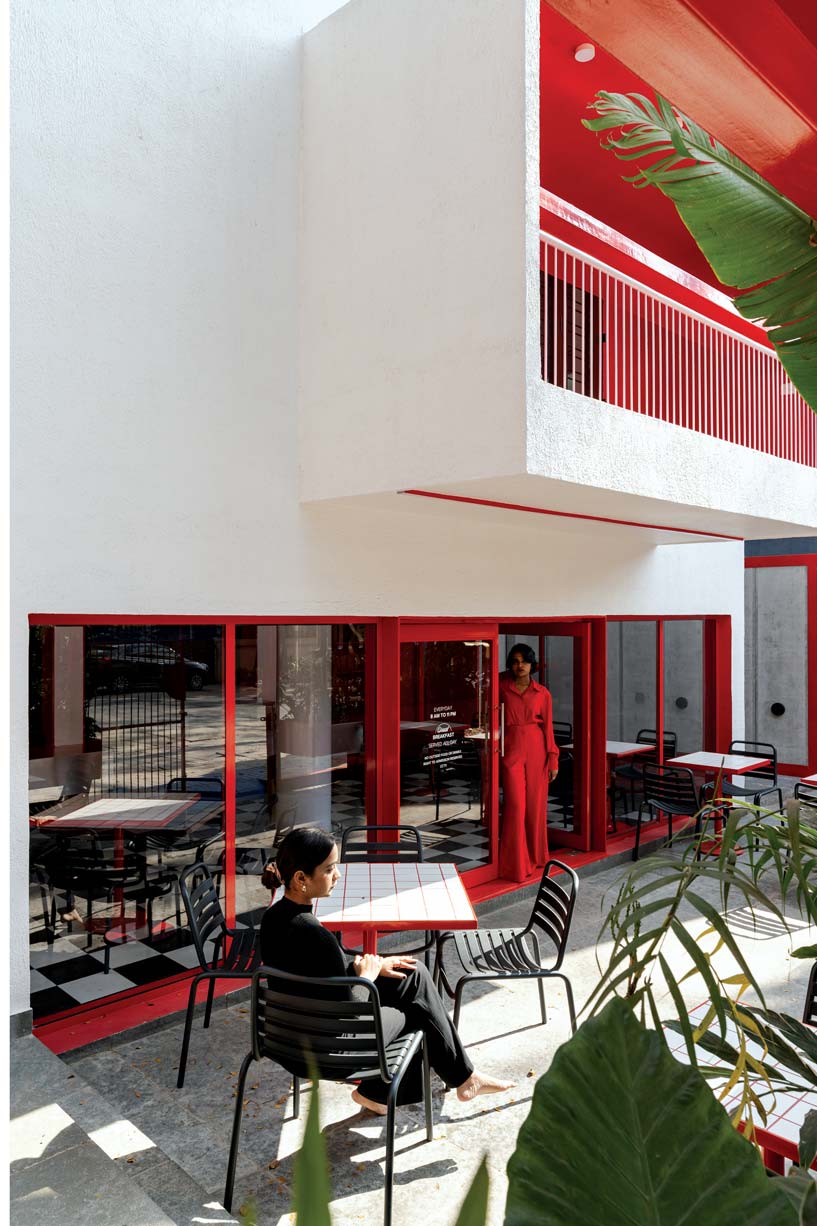
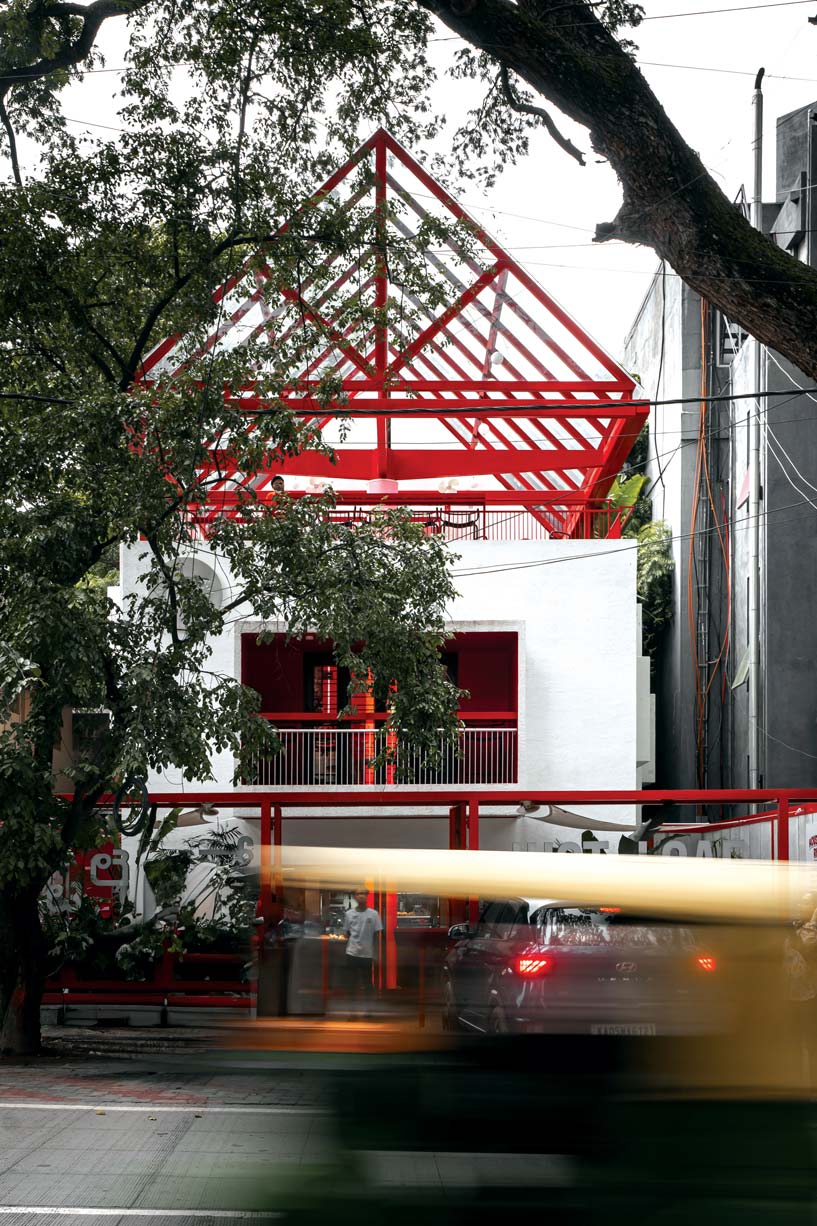
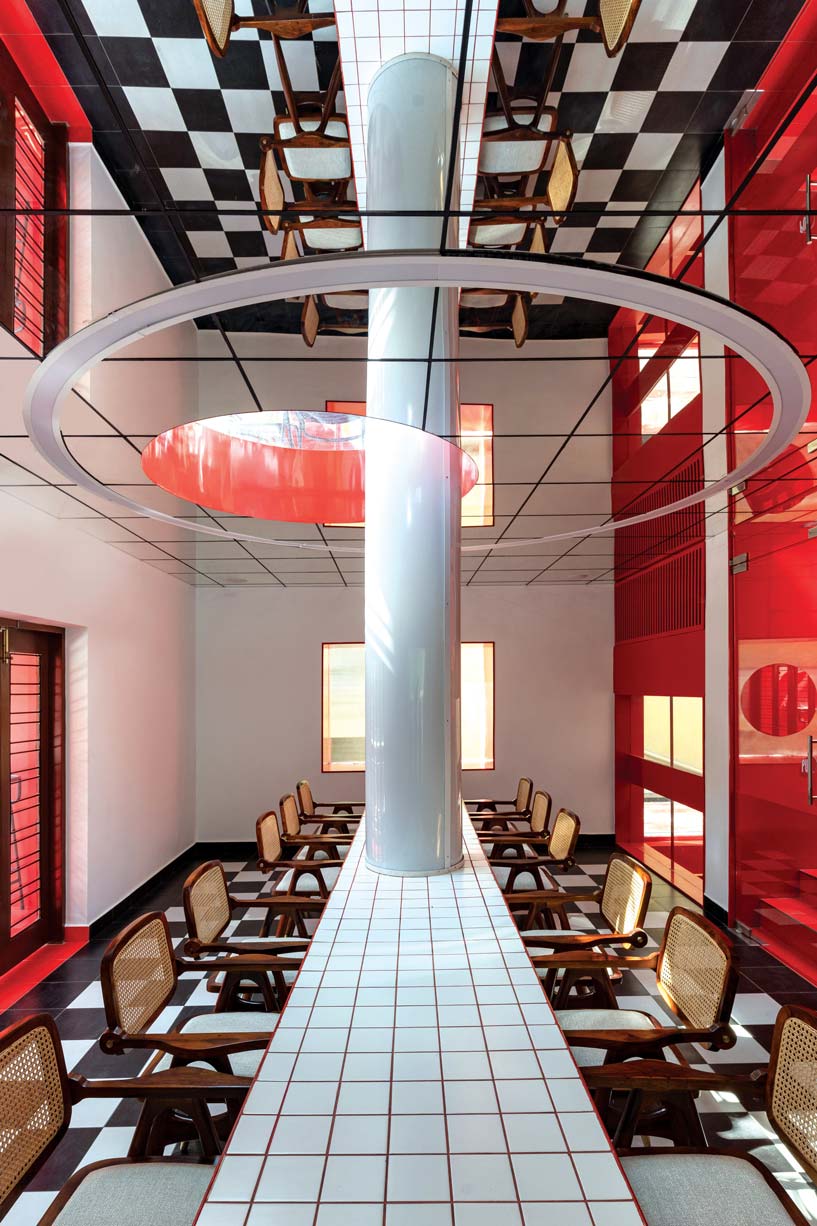
In Bangalore, a modest 40-year-old concrete structure stood shaded by a large rain tree, flanked by neighbouring buildings and open only to the street and sky. Embracing this vertical constraint, the design evolved around split levels and a striking glass roof that echoes the tree’s dappled canopy light. Enshrining the roof added valuable dining space, enhancing commercial viability in a premium urban plot. A central vertical column structurally anchors the roof while visually linking community tables across levels, becoming both aesthetic feature and ambient lighting element. The threshold merges street and interior through a vegetated buffer and coffee counter, activating the front yard. First-floor balcony railings double as high tables overlooking the street. Served and servant spaces are clearly segregated on each floor, maintaining spatial clarity. Mirrored surfaces amplify volume and create the illusion of continuity, while playful lighting transforms the pillar for festive occasions. Vibrant colours recall Bangalore’s pub culture, contrasted by black-and-white chequered flooring reminiscent of American diners. Strategic punctures in floor slabs connect volumes vertically, drawing natural light into lower levels and framing views of the sky, where shifting shadows and the rain tree’s foliage animate the space throughout the day.
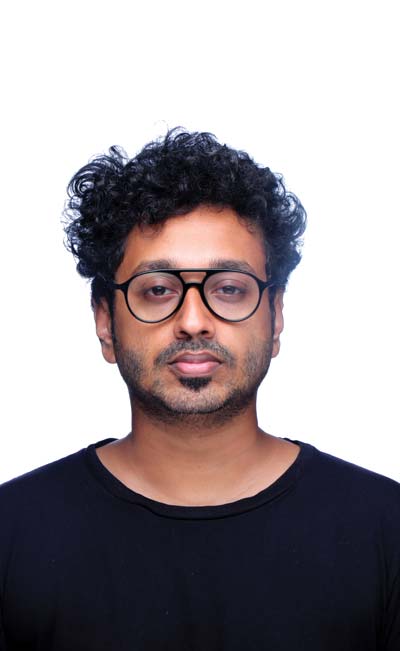
AR LIJO JOHN MATHEW
Founding Partners, Cochin Creative Collective KOCHI, KERALA
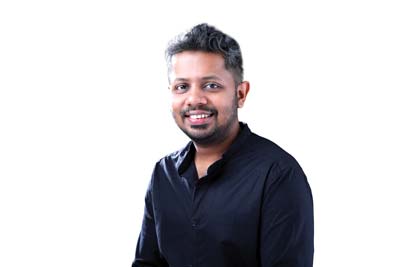
AR MADHUSHITHA C. A
Founding Partners, Cochin Creative Collective KOCHI, KERALA
Ar. Lijo John Mathew, Ar. Madhushitha C.A. - Founding Partners of Cochin Creative Collective - reflect on formative years, a shared academic trajectory, and the organic growth of an award winning multidisciplinary practice. The conversation traces the challenges of establishing a studio in Kochi, a design philosophy rooted in Kerala’s tropical landscape, and a commitment to adaptive reuse and collaboration. Industry recognition, the balance between growth and experimentation, and aspirations to expand into public and civic projects emerge as central themes.