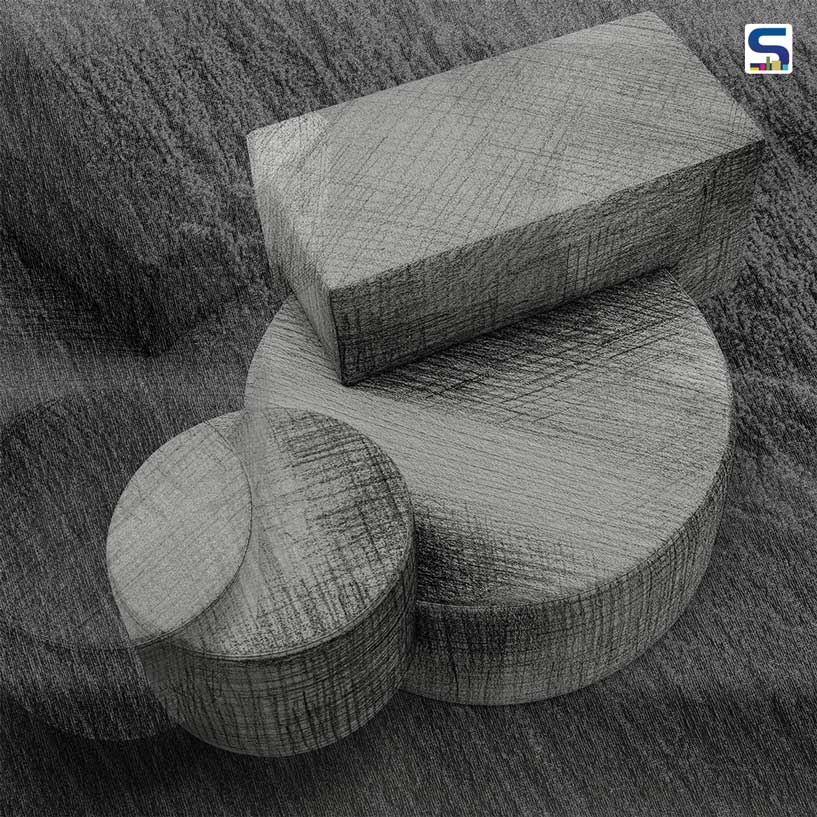
Swedish design studio Front and Italian furniture manufacturer Moroso recently joined forces once again to present Geometriae, a furniture collection that takes the foundational language of technical drawing as its conceptual and visual starting point. Unveiled during Milan Design Week in a dedicated exhibition at Colombo’s Gallery in the Brera district, where drawings were displayed alongside the finished pieces, the collection represented both a natural evolution of the two studios’ ongoing creative partnership and a deliberate shift in direction for Front. Know more about it on SURFACES REPORTER (SR).
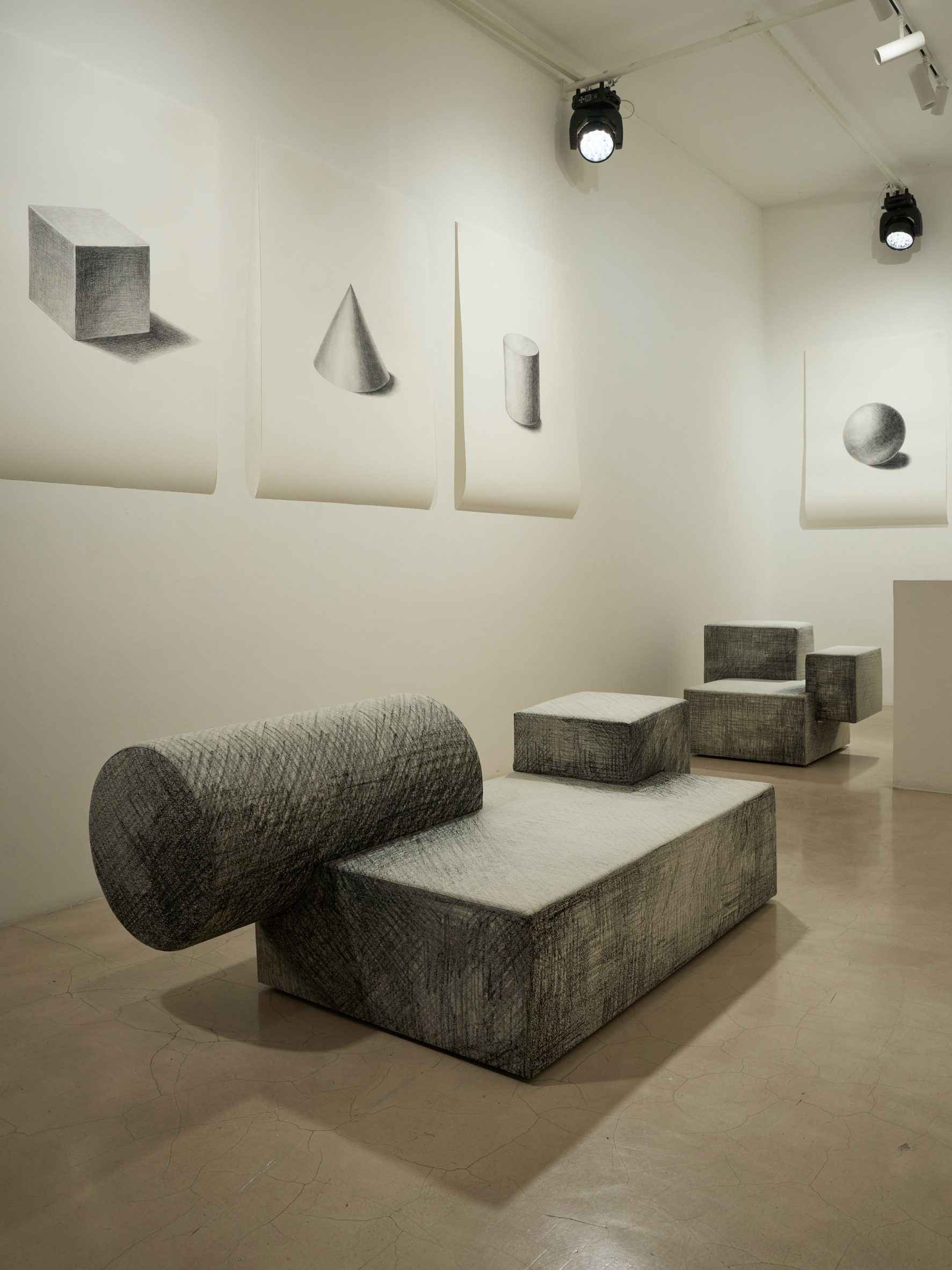
The final textiles were then engineered as flat plans, and precisely mapped to wrap each volume and maintain the illusion of drawn perspective across every face of the furniture.
The drive for the project came from self-initiated research, a characteristic working method for Front, which is led by designers Sofia Lagerkvist and Anna Lindgren. Having previously explored amorphous, nature-derived forms in their Design by Nature series with Moroso, the studio found itself drawn in the opposite direction; a direction toward geometric purity and the clean and precise world of technical draftsmanship. This interest led Lagerkvist and Lindgren to begin producing pencil studies of elementary three-dimensional shapes, exploring how the conventions of 3D perspective drawing with their carefully constructed lines, shading and implied depth might be translated into physical, inhabitable objects.
The furniture pieces that emerged from this research are composed of intersecting cuboids and cylinders where their volumes are arranged into playful configurations that function as seats, backrests, armrests and table surfaces. What makes the collection truly distinctive is not the geometry of the forms themselves but the textile treatment applied to them. Working closely with Moroso’s specialist weavers, Front developed bespoke woven jacquard textiles that replicate across three-dimensional surfaces with it hand-rendered light and shadow effects that is found in technical perspective drawings. The result is a quietly disorienting visual experience where the shading and tonal gradations are woven into the upholstery and subtly contradict or distort the actual physical form of the furniture beneath.
The collection is offered in two distinct textile variations, each referencing a different drawing tradition. The first, Graphite, replicates the rough, textured quality of pencil markings with its sketchy, linear character by adding a tactile dimension to the surface that reinforces the hand-drawn reference. The second Acquerello is more complex in both concept and execution, mimicking the unpredictable behaviour of watercolour paint as it spreads and bleeds across paper, producing soft, shifting colour transitions that exaggerate the way surfaces appear to change under varying lighting conditions.
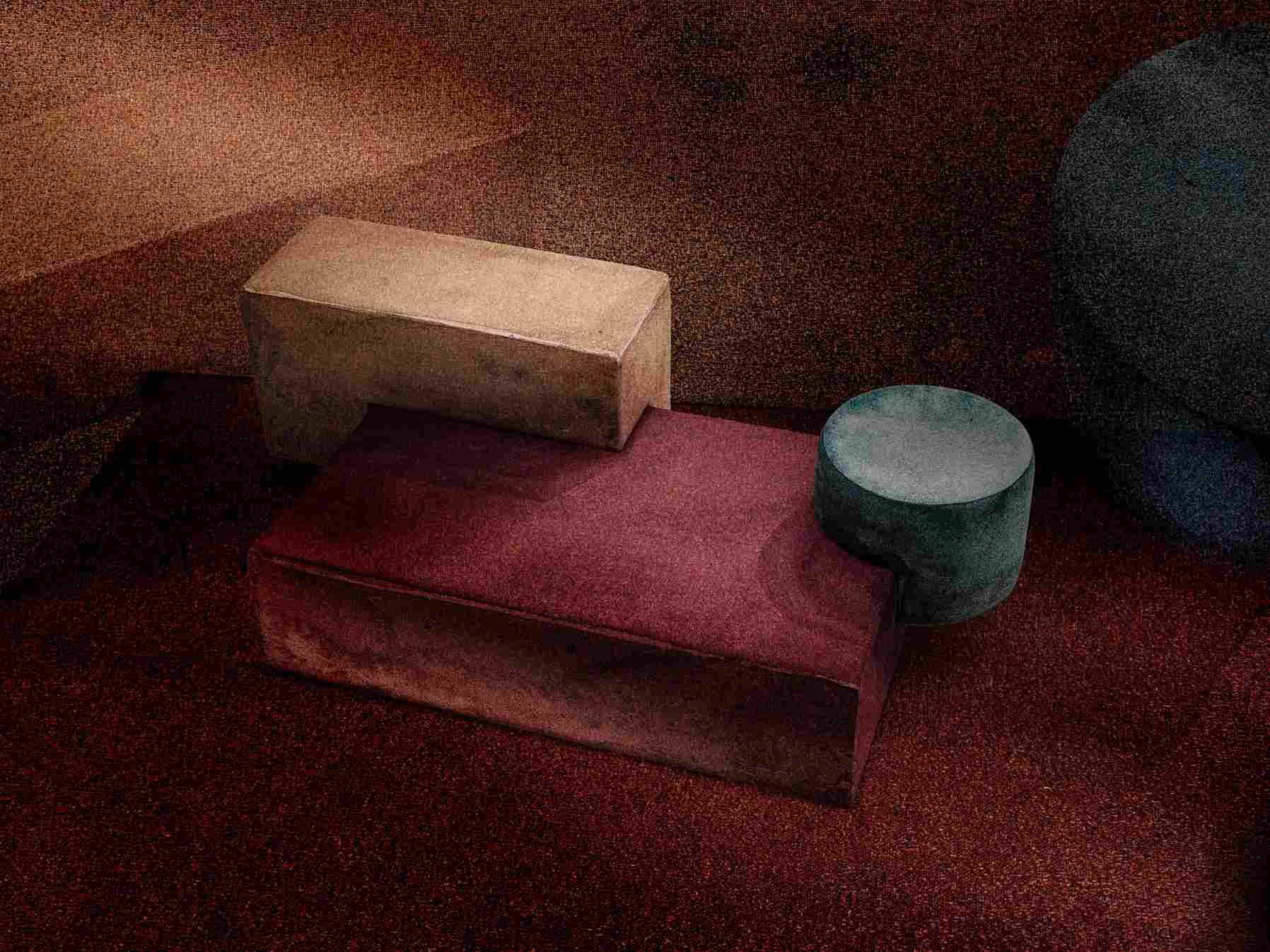
Before committing the designs to textile, the studio studied their geometric compositions under different lighting conditions to identify the optimal balance of light and shadow.
The development of the Acquerello pieces presented a particular creative challenge. Neither Lagerkvist nor Lindgren had previously worked with watercolour as a medium, and mastering its qualities required a genuine process of learning and experimentation. Before committing the designs to textile, the studio studied their geometric compositions under different lighting conditions to identify the optimal balance of light and shadow. The final textiles were then engineered as flat plans, and precisely mapped to wrap each volume and maintain the illusion of drawn perspective across every face of the furniture.
Image credit: Massimo Gardone-Azimut and Lorenzo Bacci