There is a moment in every luxury project that does not get talked about enough.
It is not the render. It is not the walkthrough. It is not even the execution. It is something much earlier, much quieter, and honestly, much more decisive.
And if you have spent time around the construction industry, built environment, architecture and real estate world, you already know this.
Luxury interiors are not born in design software. They are decided in material rooms, sample meetings, and industry floors where people are constantly comparing what feels right versus what actually works.
Luxury is not created, it is shortlisted
What most people call a luxury interior is actually the result of a long elimination process.
Inside any serious project, whether it is driven by builders, developers, real estate developers, project developers, contractors, or construction professionals, there is a constant filtering happening.
Hundreds of building materials, architectural materials, interior products, surface finishes, façade systems, kitchen solutions, wardrobe systems, and hardware options enter the conversation.
But only a few survive. That selection process is where luxury quietly takes shape.Not in inspiration boards, but in hard decisions that balance design intent, durability, availability, cost efficiency, and long term performance.
The pressure point nobody talks about in real estate projects
If you sit inside real project discussions today, you will notice something very real. The pressure is no longer just about building fast. It is about building right, without mistakes that cannot be reversed later.
For builders, developers, and construction professionals, one wrong material choice can affect multiple layers of a project. Design consistency gets disturbed.Site execution gets delayed. Client expectations shift.
And suddenly, a premium vision starts losing its edge. This is why material decisions are no longer casual decisions. They are risk decisions.
Why physical exposure changes everything
There is only so much clarity you can get from digital catalogs or online research.
At some point, every architect, interior designer, contractor, and real estate developer hits the same limitation.
-
You cannot judge texture, scale, finish, or performance through a screen.
-
You need proximity.
-
You need comparison.
-
You need real materials in front of you.
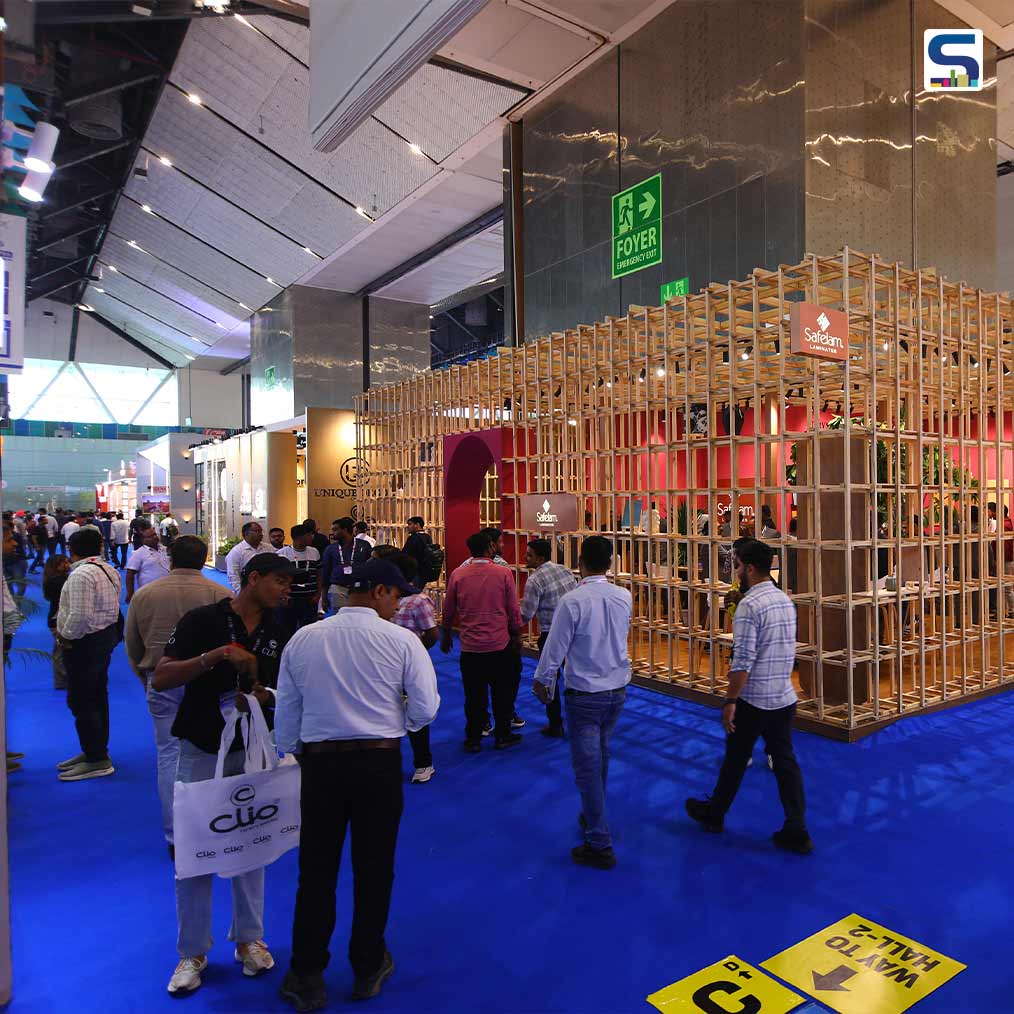
That is exactly why industry environments like MATECIA Building & Interior Products Exhibition have become so important in the ecosystem. Because this is where materials are not explained. They are experienced.
The real decision-making layer inside exhibitions
When you actually walk through a space like MATECIA, something shifts.
It stops feeling like an exhibition and starts feeling like a working environment.
You see building materials, architectural materials, interior systems, façade innovations, kitchen technologies, wardrobe solutions, and construction products placed in direct competition with each other.
And more importantly, you see the people behind the decisions. Builders discussing feasibility.
Developers comparing long term value.Architects testing design alignment.Contractors thinking about execution reality. Procurement teams focusing on reliability and sourcing. This is where decisions become sharper, not slower.
Why the industry ecosystem is larger than just one event
What makes this space even more powerful is that it is not isolated.
It sits inside a much bigger ecosystem.
THE WADE ASIA Architecture Event brings in a very different but deeply connected layer, where women in architecture and design leadership are influencing how the industry thinks about innovation, sustainability, and leadership itself.
India Interior Retailing (IIR) connects interiors with real business movement, sourcing behavior, and retail evolution.
India Furniture Conclave (IFC) brings furniture design, manufacturing thinking, and industry transformation into a single conversation space.
FDT (Furniture Design & Technology dialogues) adds the technical and innovation layer where design meets engineering reality.
And platforms like Surfaces Reporter and Surfaces Salutes continuously document, highlight, and celebrate what is actually moving inside the industry.
Together, this creates something much larger than events. It becomes a live system that influences how the built environment, architecture, interiors, and real estate development evolve.
The part that defines luxury without saying it
Luxury interiors are not defined by what is expensive. They are defined by what survives scrutiny. And scrutiny only happens when materials are tested against real expectations, real projects, and real decision makers.
That is the hidden step. Not glamorous. Not visible in the final space. But absolutely responsible for everything that follows.
Why this matters more today than ever
The construction industry and real estate sector are moving faster than they ever have.
Trends change quickly. Client awareness is higher. Global influence is constant.
And competition is unforgiving. In this environment, the distance between “good” and “exceptional” is very small. And that gap is filled in this hidden stage of material discovery and validation.
The real truth behind every luxury interior
What you finally see in a luxury space is only the outcome. The real story sits much earlier.
In choices, comparisons, conversations, and physical experiences that happen before anything is built. And the professionals who stay close to this stage are the ones who consistently deliver spaces that feel ahead of time.
Because they are not guessing what luxury should look like. They are seeing what it becomes before everyone else.
Upcoming MATECIA Editions
MATECIA National Edition : 20 to 23 August 2026, Delhi | Click Here for Visitor Registration
MATECIA East and Northeast Edition : 12 to 14 February 2027, Kolkata
booking@matecia.com | madhu@surfaces.in
WhatsApp 9625805731, 9867333972
www.matecia.com | www.surfacesreporter.com