Before a single foot could hit the steps of the world’s most photographed spaces, India had already claimed the Met Gala, literally underfoot. For the fourth consecutive year, the 2026 Met Gala’s iconic red carpet was woven in Cherthala, Kerala by Neytt by Extraweave. Nearly 400-500 artisans spent 90 days weaving 57 rolls of hand-sorted natural sisal, specially sourced from Madagascar for its exceptionally pale, blemish-free fibre. This year’s carpet evoked a stone garden pathway, which was designed to feel as though it had existed long before the gala arrived around it. However, over the years, Indian craft at the Met has evolved from ethnic detailing into something far more significant; in the sense spatial design, material engineering and living heritage systems.
SURFACES REPORTER (SR) narrates how India’s ancient craft traditions have quietly commanded the world’s most watched fashion stage, right from the ground beneath the gala to the garments upon it because the story is no longer limited to only fashion but construction.
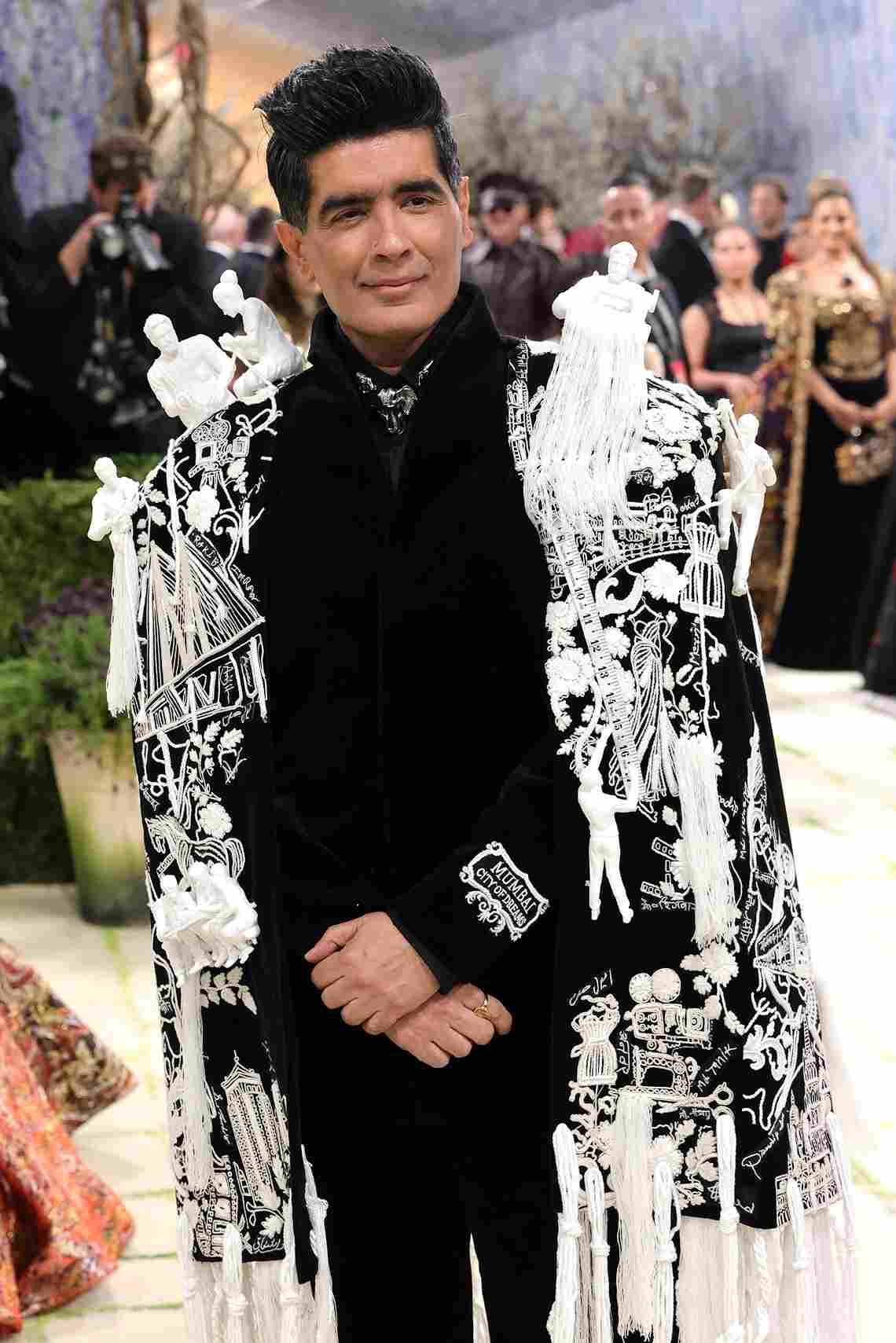
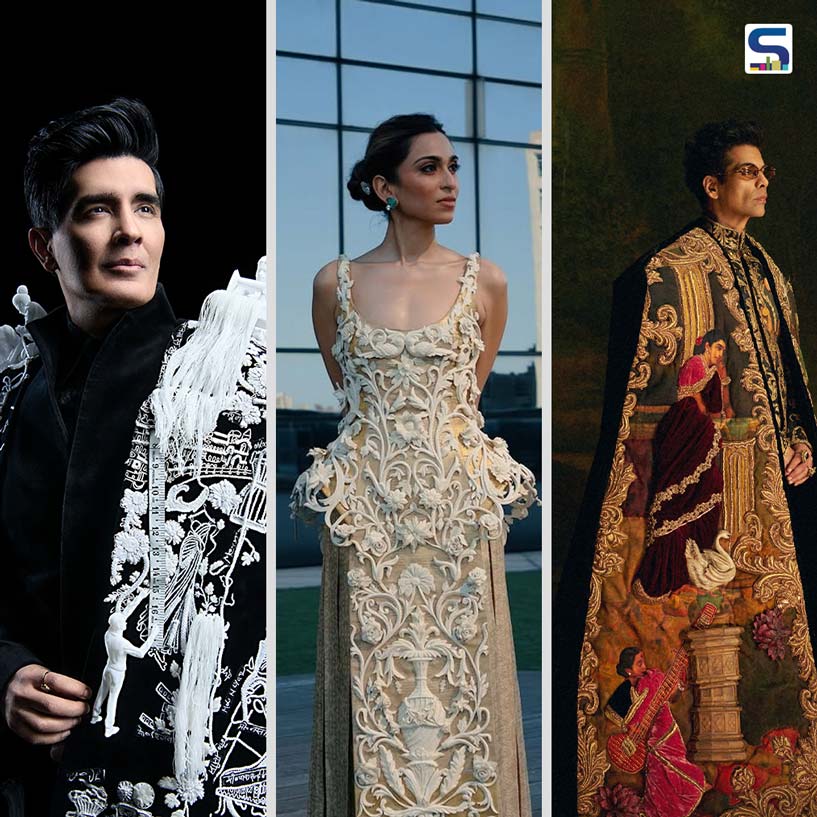
Wearable Architecture and an Ode to Mumbai
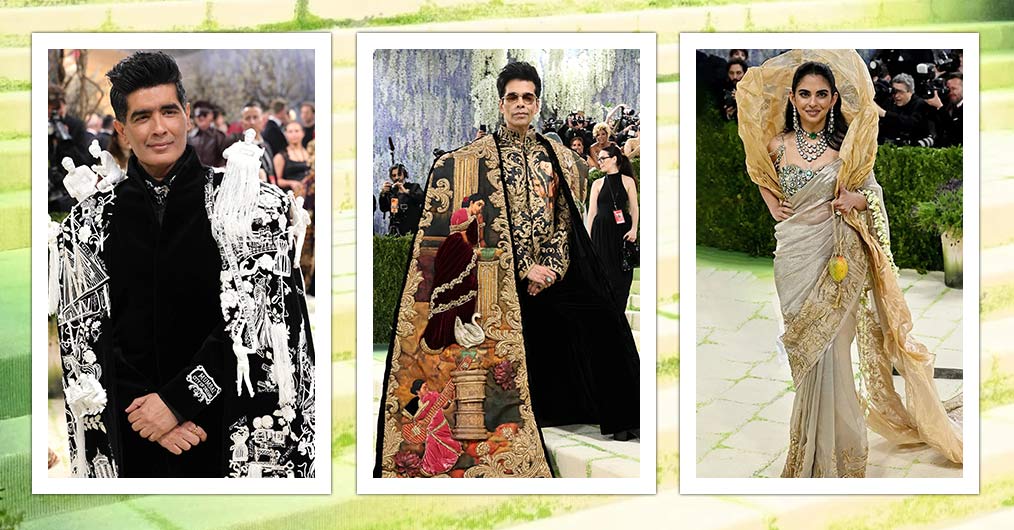
Instead of treating metallic embroidery as ornament, the silk cape behaved like an urban elevation drawing. Miniature depictions of karigars, signatures of artisans and references to Mumbai’s cinematic landscape transformed Manish Malhotra’s garment into a living archive of labour. This may be one of the first major Met Gala looks where the artisans were intentionally made visible as part of the final couture.
Velvet and silk base | Metallic embroidery | Hand-painted textile pigments | Structured cape construction
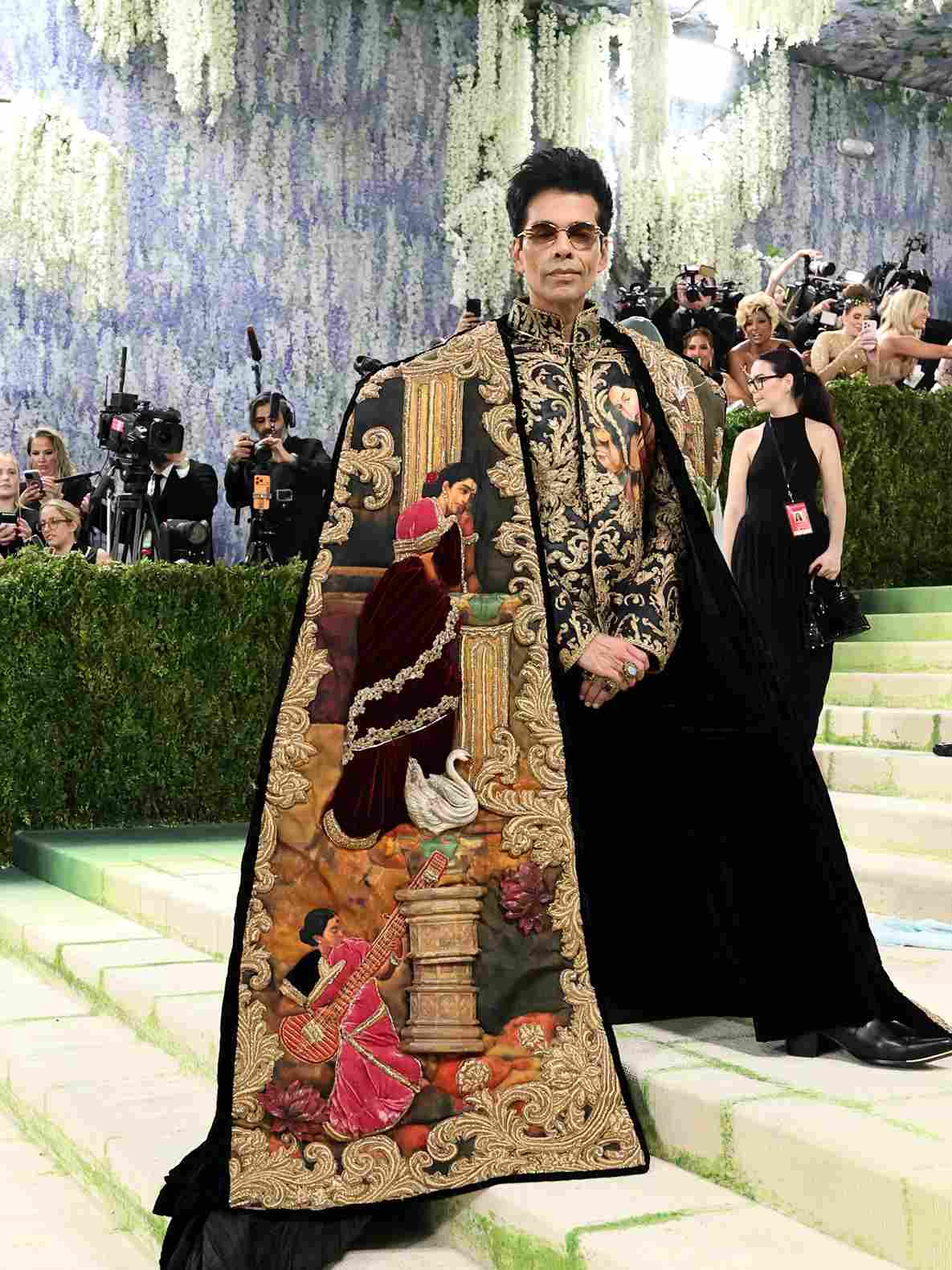
Reimagining Raja Ravi Varma’s Work
Manish Malhotra’s cape for Karan Johar was built upon the figurative paintings of the 19th century artist Raja Ravi Varma, who was himself the first Indian to place the classical European oil-painting idiom in service of Indian mythological subjects. Malhotra translated Varma’s flat painted imagery back into three-dimensional fabric using the Met Gala as the exhibition space. While a zardozi border formed the entire perimeter, three-dimensional embroidery comprising lotuses, swans and architectural pillars emerged from the fabric surface, reversing the illusion of depth in Varma’s original paintings.
86 days | 5,800 artisan hours | 3 craft traditions
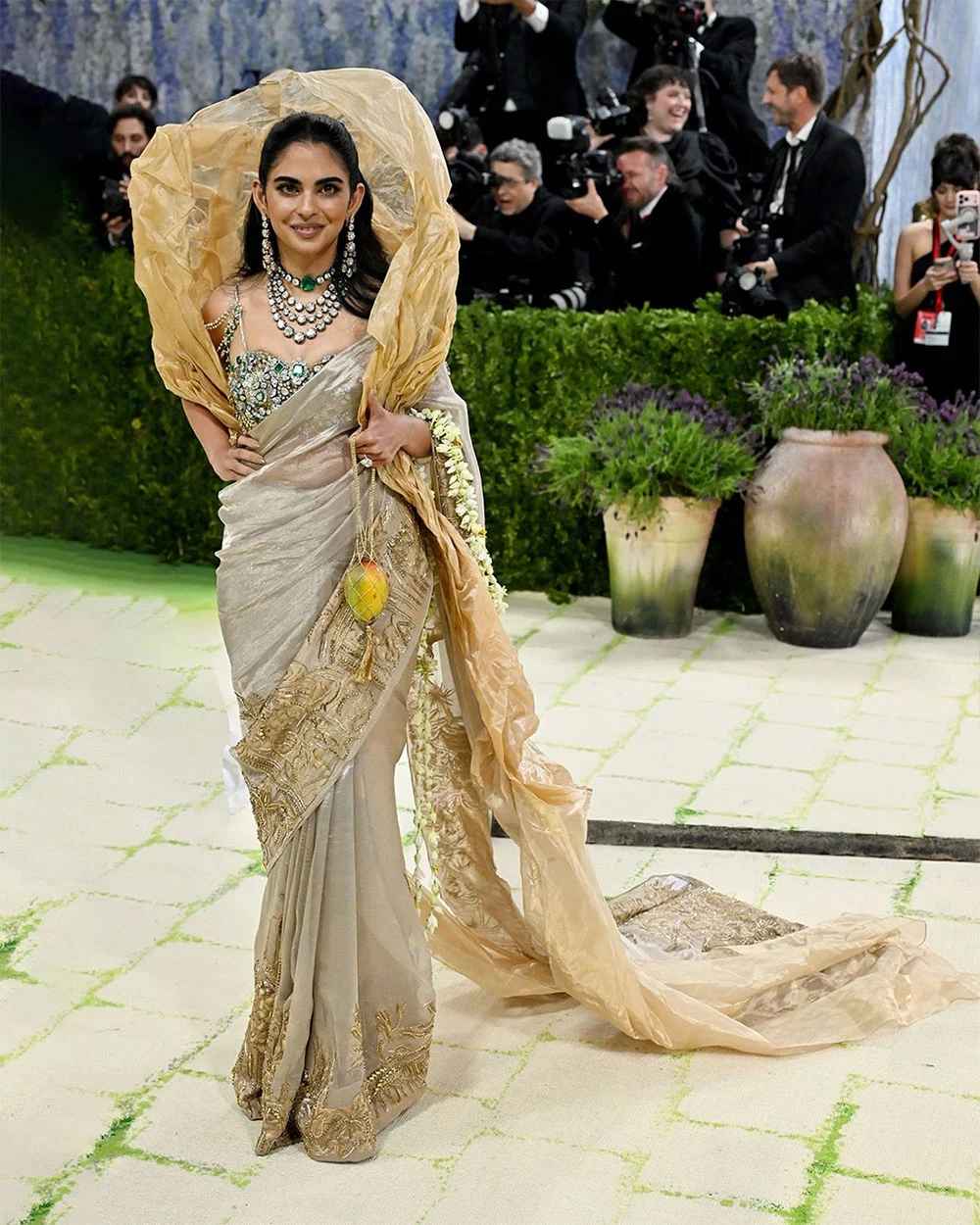
The Golden Saree
Woven with pure gold threads by master artisans at Swadesh, Isha Ambani’s saree referenced ancient Indian fresco and devotional paintings, specifically the Pichwai tradition of Nathdwara, where dense narrative scenes are worked into painted cotton textiles for temple display. The jewel set blouse incorporated over 200 old-cut diamonds alongside emeralds, polki and kundan, techniques drawn from Mughal court goldsmithing, borrowed from Nita Ambani’s personal collection. The Subodh Gupta steel mango clutch introduced industrial object art into couture styling.
Pure zari weft woven | Hand-painted Pichwai border motifs | Kundan setting | Polki diamonds
The Inherited Chiffon
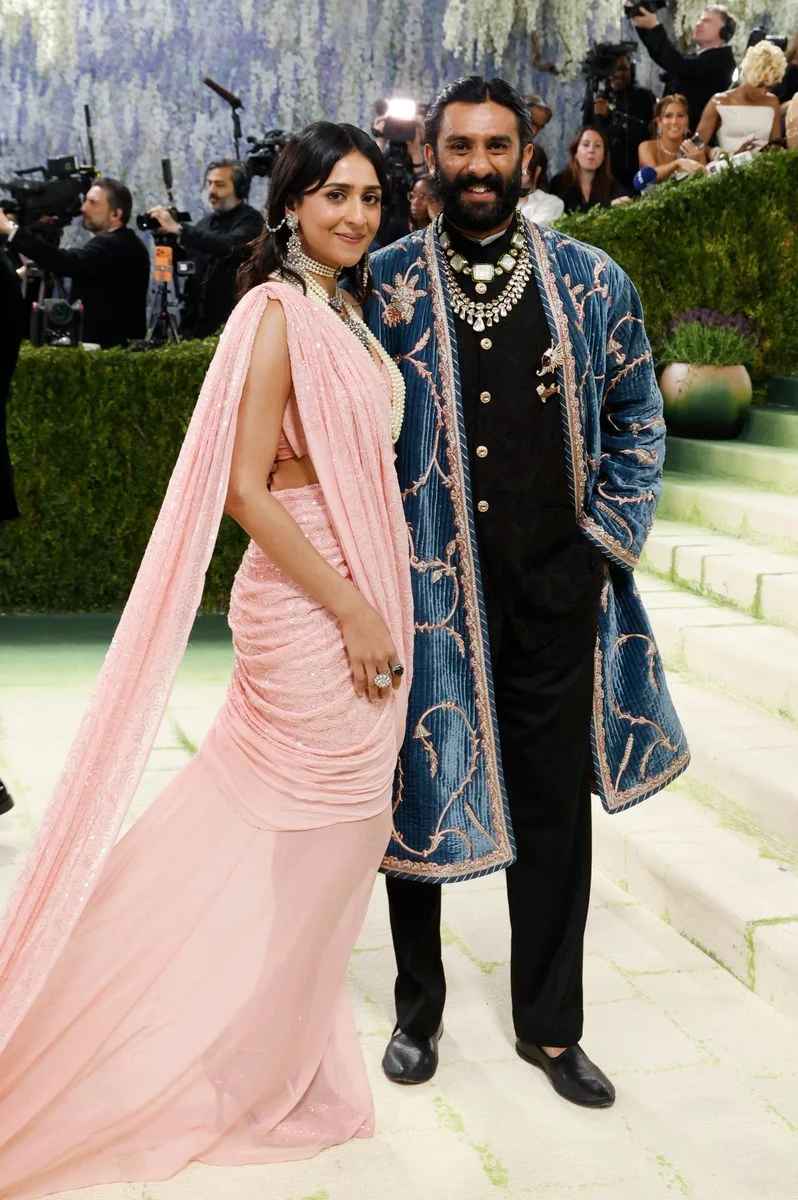
The most architecturally interesting Indian garments of 2026 were the sibling pair. Princess Gauravi Kumari wore a chiffon saree that had originally belonged to her grandmother Maharani Gayatri Devi, Prabal Gurung worked the vintage fabric into a new gown without altering how the chiffon moved or draped. Her brother Sawai Padmanabh Singh’s piece was the structural counterpoint with deep velvet quilted with cotton and overlaid with over 600 hours of aari and zardozi embroidery, finished with dabka and resham, assembled by a Jaipur atelier.
Chiffon | Aari embroidery | Dabka | Resham | 600+ embroidery hours
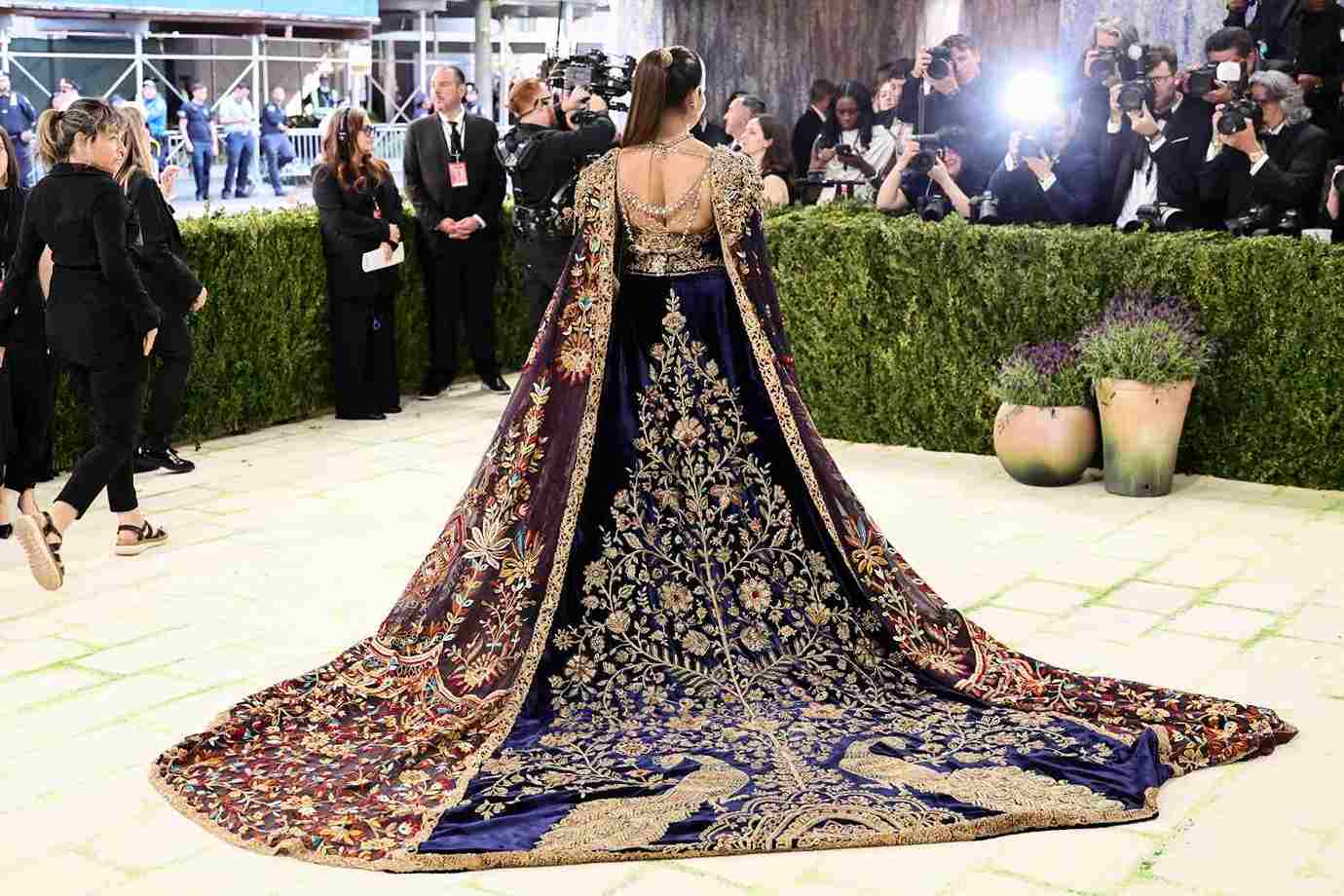
Kalamkari as Structural Couture
Sudha Reddy in Manish Malhotra drafted a design language weaving Kalamkari, zardozi, marodi and resham work with metal embroidery. Kalamkari was transformed into a corseted sculptural surface, resembling carved temple relief panels wrapped around the body.
3,459 hours | 90+ artisans
Shola as Global Couture
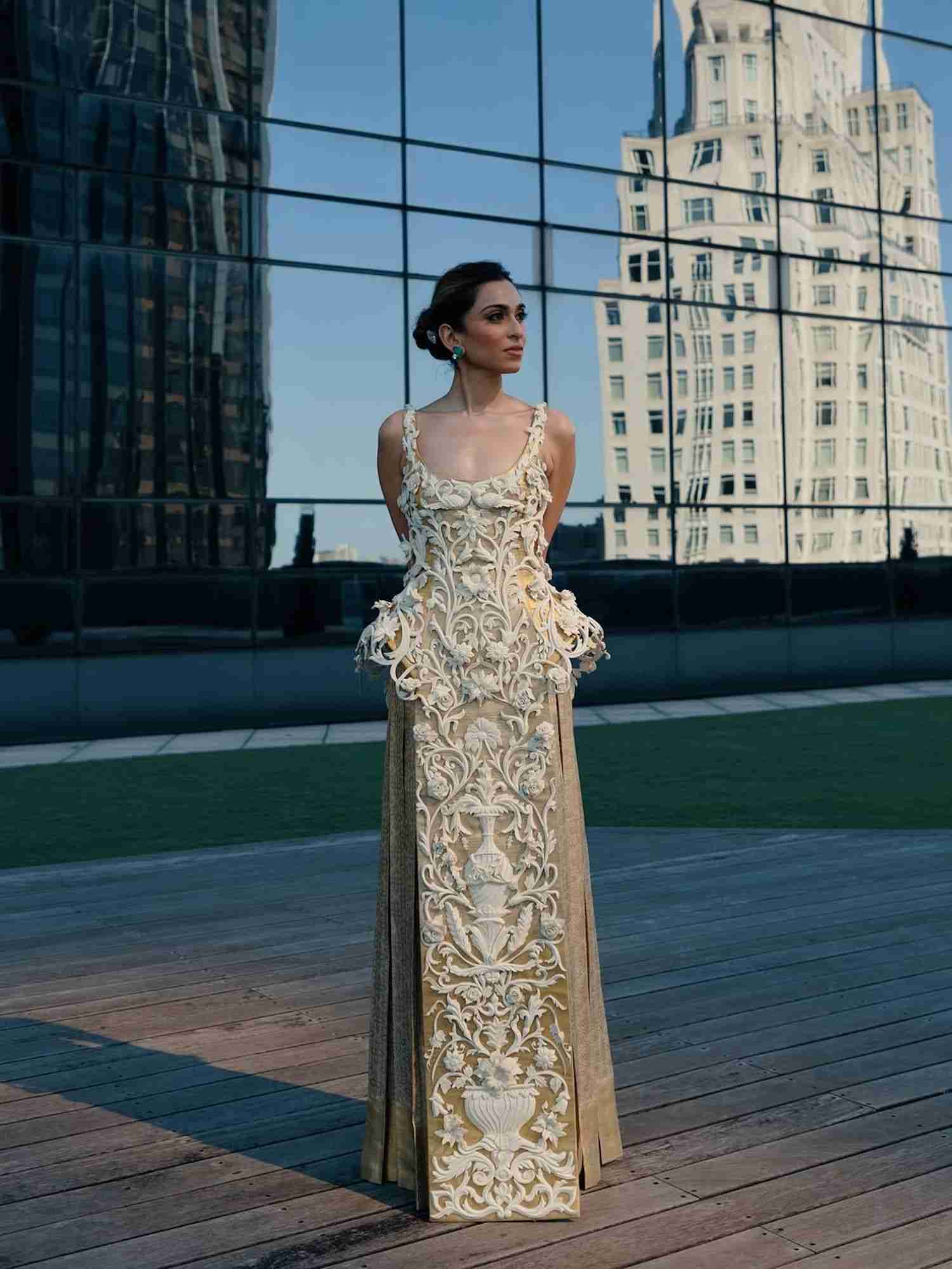
Diya Mehta Jatia in Mayyur Girotra showcased the Shola pith craft from Bengal with Kanjeevaram silk weaving and gold and silver zari threads. This was one of the rare Met looks where a fragile regional craft associated with ritual decoration became a three-dimensional couture installation. The shola carvings resembled plaster ornamentation, relief sculpture and paper architecture.
Indian Materials that Dominated the Met Gala
Zardozi (Lucknow, Delhi)
Metal-wire hand embroidery where gold or silver wire is coiled, couched and stitched onto heavy silks to create intricate, dense structural texture. It was historically used on royal robes and ceremonial armour.
Aari Embroidery (Rajasthan / Kashmir)
A hook-needle, chain-stitch technique that allows fast, continuous filling of large pattern areas. The stitch forms an interlocked loop chain on the fabric surface.
Dabka (North India)
A coiled metal spring (either copper or brass, wound tightly) couched onto fabric using a needle and thread. It creates raised, dimensional outlines and is often used with zardozi to define edges.
Kundan Setting (Rajasthan / Gujarat)
A goldsmithing technique where 24-carat gold foil (kundan) is pressed into the gaps between uncut or flat-polished gemstones to create an unbroken surface of stone and gold.
Polki (Rajasthan)
Unprocessed, flat-cut natural diamonds, rough on the back and polished on the front are set in traditional Indian jewellery. The stone’s natural surface irregularities are considered part of its beauty and not a defect to be corrected.
Zari (Surat / Varanasi)
Thread made by wrapping metal (traditionally real gold, now often silver-coated copper) around a silk or cotton core. It is woven into fabric as a weft thread to create lustrous, metallic patterns. This is a dominant material in formal Indian textiles for centuries.
Pichwai (Nathdwara, Rajasthan)
Devotional textile paintings hung behind the shrine of Lord Shrinathji are often painted on cotton using stone-ground natural pigments and gold leaf. Each Pichwai depicts a specific story from Krishna’s life matching a particular season or festival.
Shola Craft (West Bengal)
The pith of the sola plant carved and assembled into delicate ornamental structures. Almost weightless, this is traditionally made for bridal and deity adornment at festivals. The pith must be worked within days of harvest, before it dries out and becomes unworkable.
Beyond Fashion: The Hands that Wove the World
The Met Gala’s India story is not just limited to celebrities anymore. It is a tale of ateliers coming across from the regions of Cherthala, Jaipur, Lucknow, Nathdwara and Kanchipuram, of karigars whose names appear nowhere on the red carpet but whose skills are captured in every photograph taken there. It is the subtle art of storytelling through handcraft into this digitized fast-fashion culture.
As the couture becomes the case, it is the craft and art that is the evidence of this iconic rising…a revolution where Indian craft at the Met is no longer just a decorative element but an archive of labour, a form of spatial thinking, material technology, a force of evolving engineering and architectural intelligence.