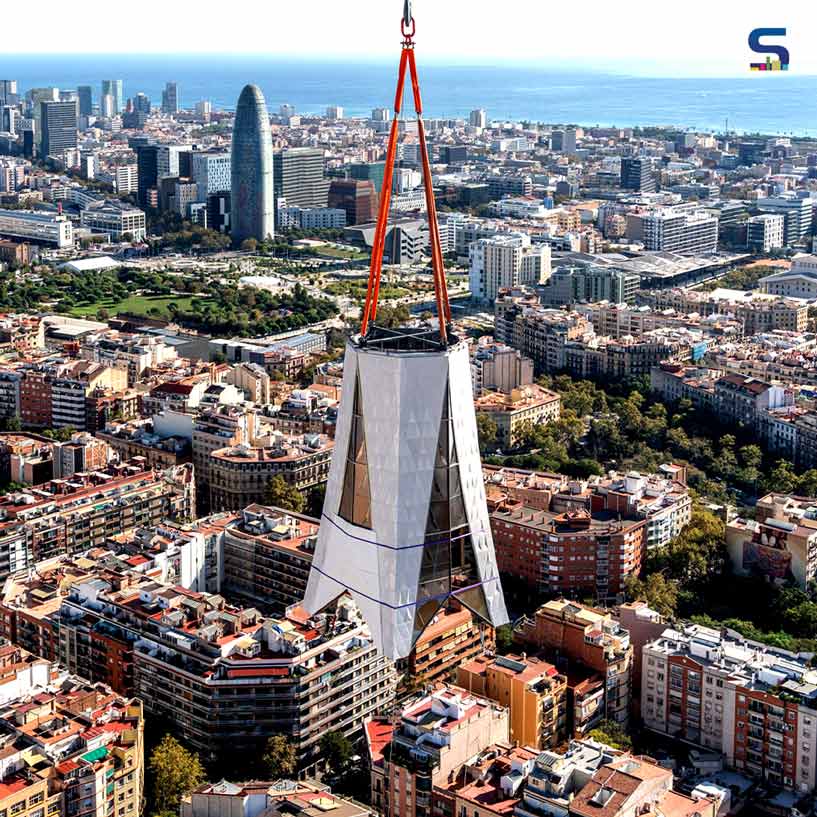
The Sagrada Familia in Barcelona has officially become the tallest church in the world following the installation of the latest component, atop the Tower of Jesus Christ. A newly released video documents the moment when the lower section of a monumental cross was hoisted into position on the basilica’s central tower. This milestone signals the beginning of the concluding stage of construction for Antoni Gaudí’s iconic masterpiece, a project that has been underway since 1882. Here is a detailed report on SURFACES REPORTER (SR).
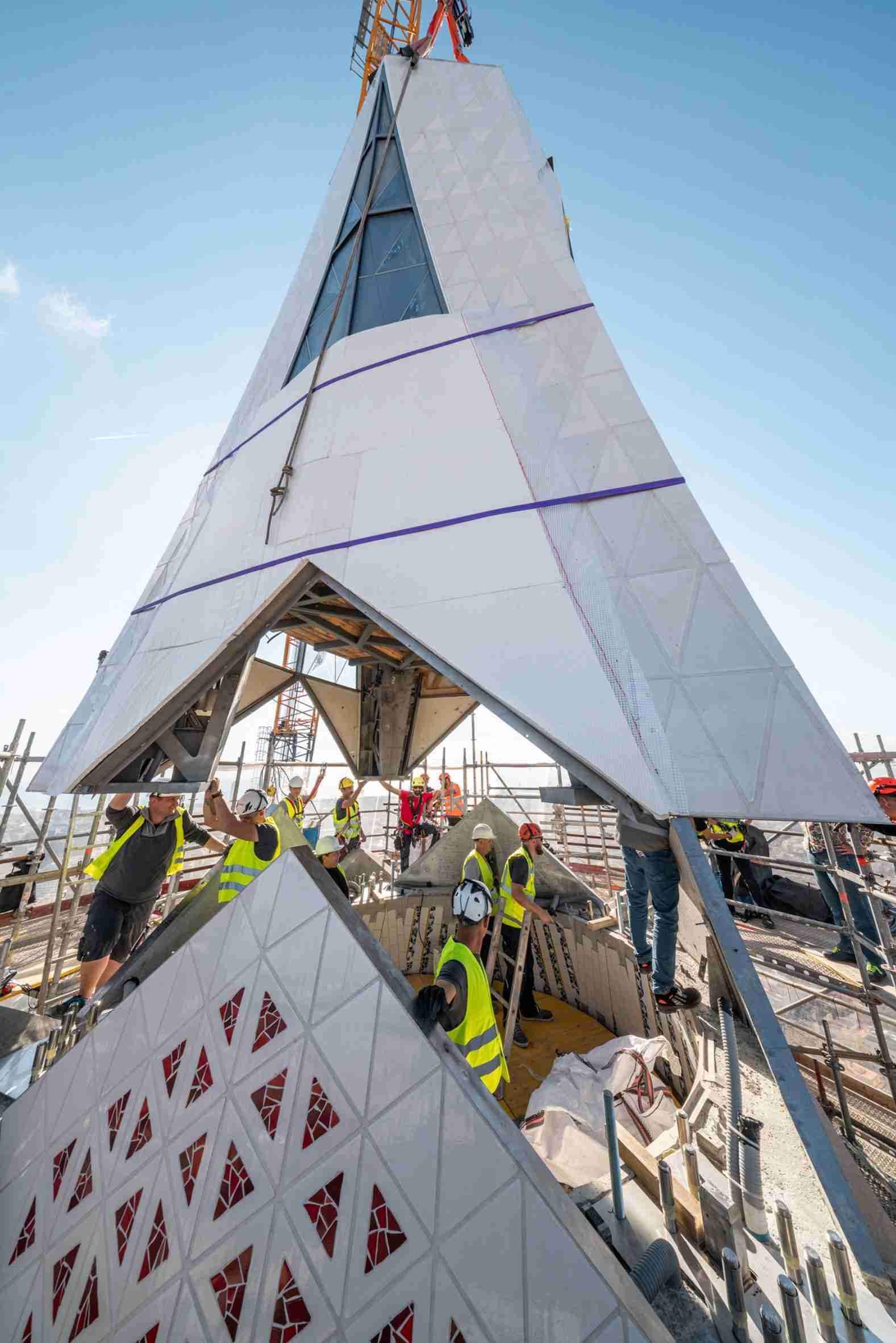
The Tower of Jesus Christ is the last of the basilica’s planned 18 spires and is scheduled to reach its full height of 172m by 2026.
With the placement of this 7.25m tall element, the basilica now reaches a height of 162.91m. This new elevation allows the Sagrada Familia to reportedly surpass the previous record holder, Germany’s Ulm Minster, which stands at 161.53m. The Tower of Jesus Christ is the last of the basilica’s planned 18 spires and is scheduled to reach its full height of 172m by 2026. The completion year has been reportedly intentionally aligned with the centenary of Gaudí’s death, adding symbolic significance to the long-awaited finalisation of the structure.
The newly positioned segment, which weighs an impressive 24 tonnes, forms the lower arm of what will eventually become a 17m tall cross crowning the main tower. Its design features a square base that transitions into an octagonal upper form, finished with white glazed ceramic and glass panels that reflect Gaudí’s dedication to material richness and visual luminosity. In recent years, construction has progressed at a notably faster pace. This acceleration is largely attributed to the introduction of prefabricated stone panels engineered by Arup. These lightweight yet durable components have helped streamline the building process and reduce the load on the basilica’s massive structural elements, including the Tower of the Virgin Mary.
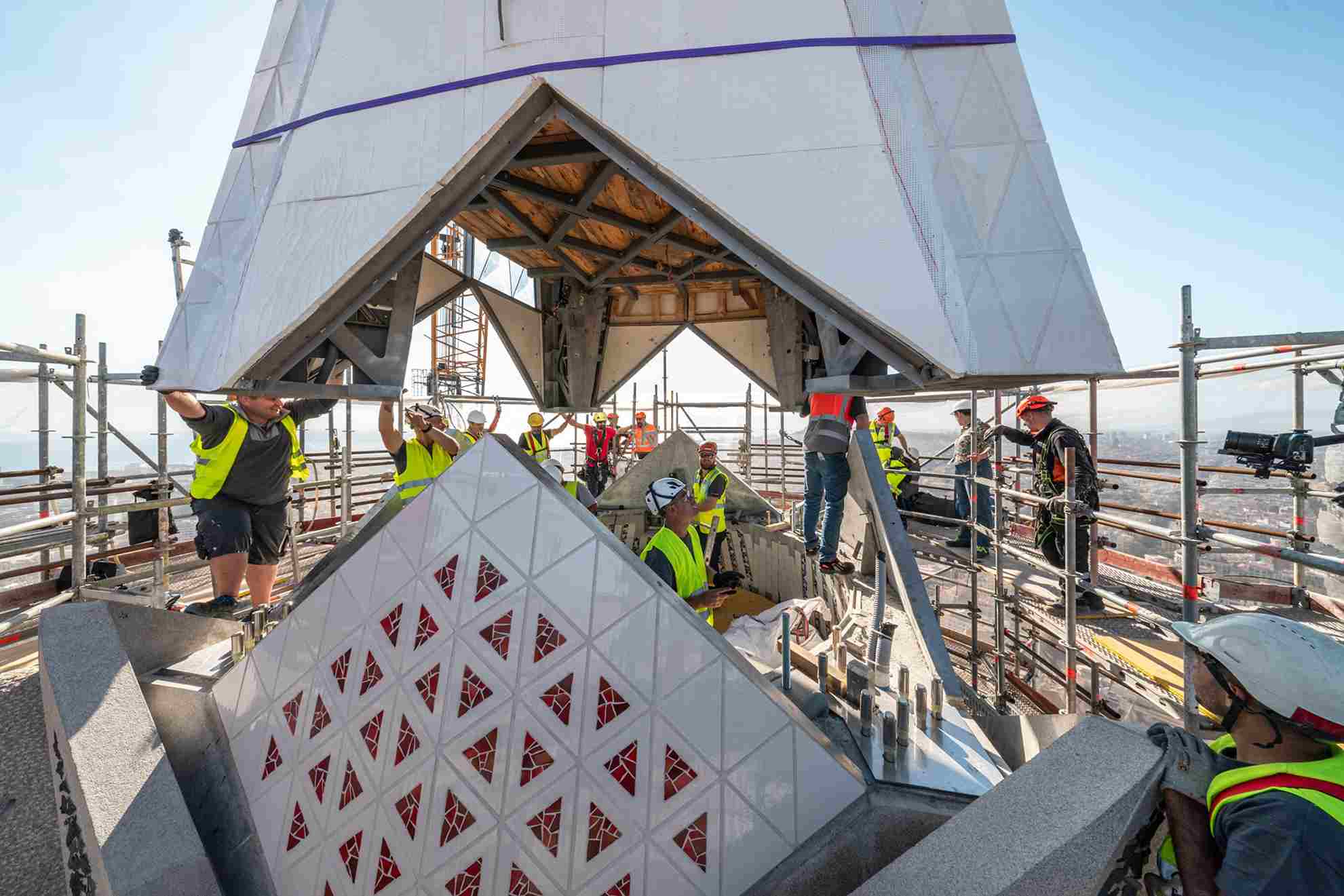
The newly positioned segment, which weighs an impressive 24 tonnes, forms the lower arm of what will eventually become a 17m tall cross crowning the main tower.
The journey to complete the Sagrada Familia has been marked by numerous challenges. When Gaudí assumed control of the project in 1883, he dramatically altered the original plans set by the preceding architect, who had stepped down. By the time of Gaudí’s death in 1926, less than a quarter of the church had been realised. Subsequent decades brought further delays due to financial constraints and the outbreak of the Spanish Civil War, during which many of Gaudí’s initial drawings and models were destroyed. Despite these setbacks, the basilica continues its steady march toward completion, honouring Gaudí’s visionary legacy more than a century later.
Image credit: Foundation Construction Board of the Expiatory Temple of the Sagrada Familia