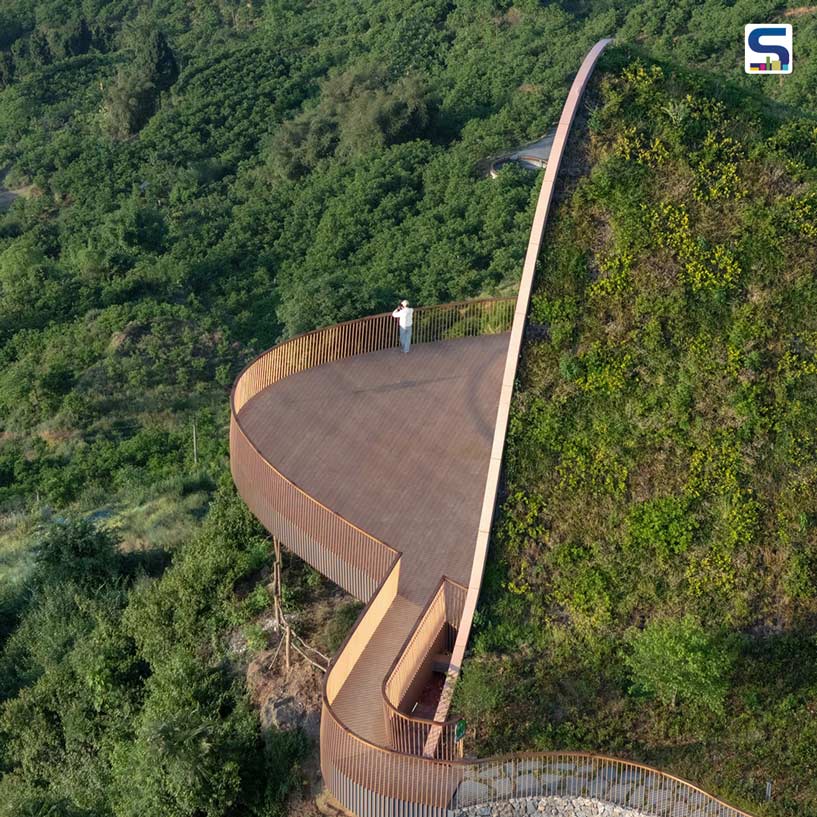
Dutch architecture studio MVRDV recently unveiled the Pujiang Platform, a timber pavilion crowned with a grass-covered domed roof, set within the rolling hills on the southern edge of Chengdu, China. Designed as a sensitive intervention within a scenic landscape, the pavilion has been added to an existing viewpoint and carefully shaped to merge with its surroundings rather than dominate them, where the structure appears less like a building and more like a continuation of the terrain itself. Know more about the project on SURFACES REPORTER (SR).
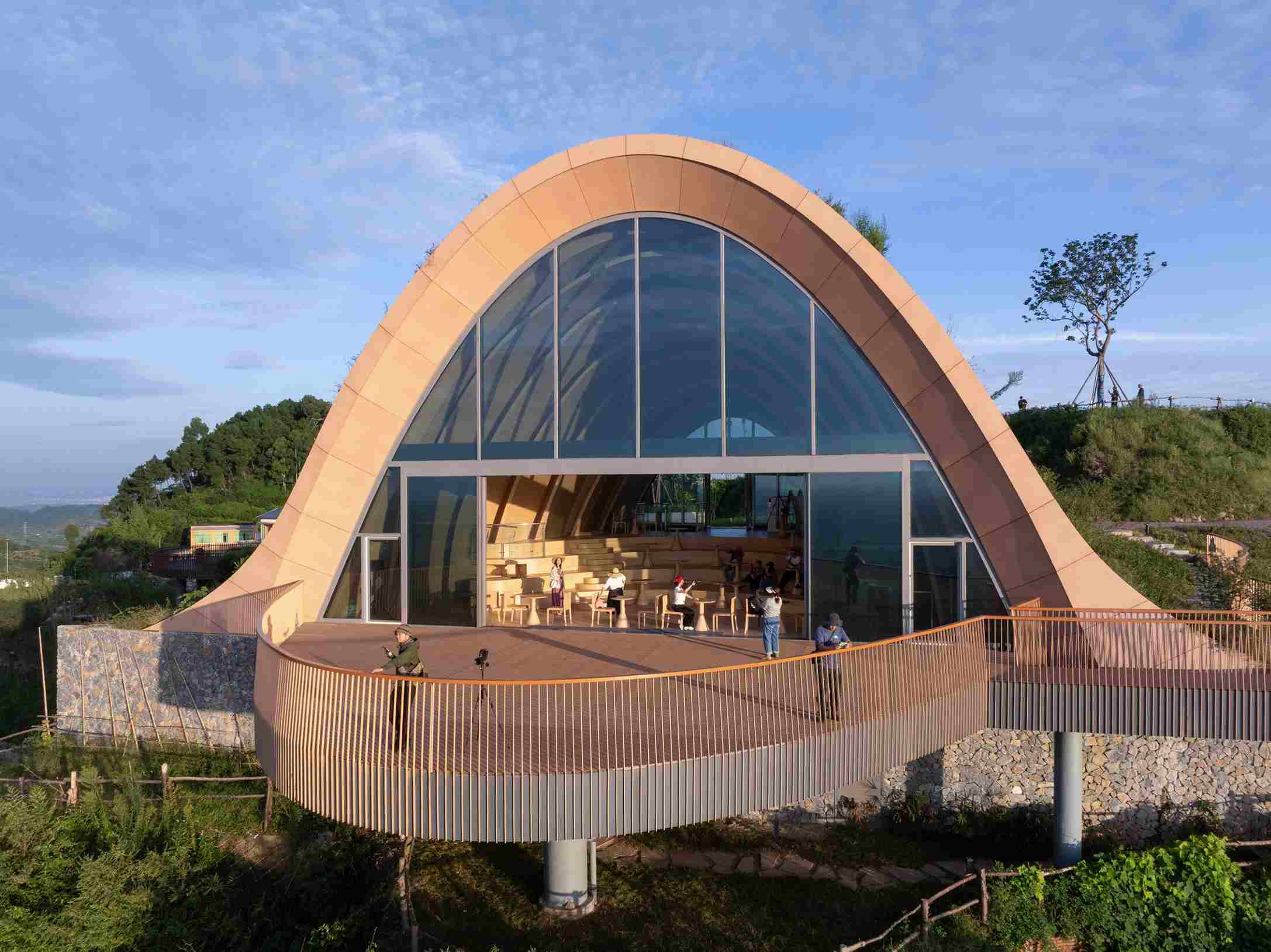 This window, measuring 10m in height, incorporates sliding doors that open directly onto the balcony, blurring the boundary between interior and exterior.
The Pujiang Platform pavilion occupies a location where a small hill once stood before being levelled to accommodate an earlier lookout point. MVRDV’s design concept responds directly to this alteration of the landscape by reintroducing the hill in architectural form. The grass-covered roof recreates the profile of the lost landform, thus allowing the timber pavilion to visually disappear into the rolling topography when viewed from a distance. In doing so, the project restores the site’s original character and also provides a renewed purpose for the viewpoint.
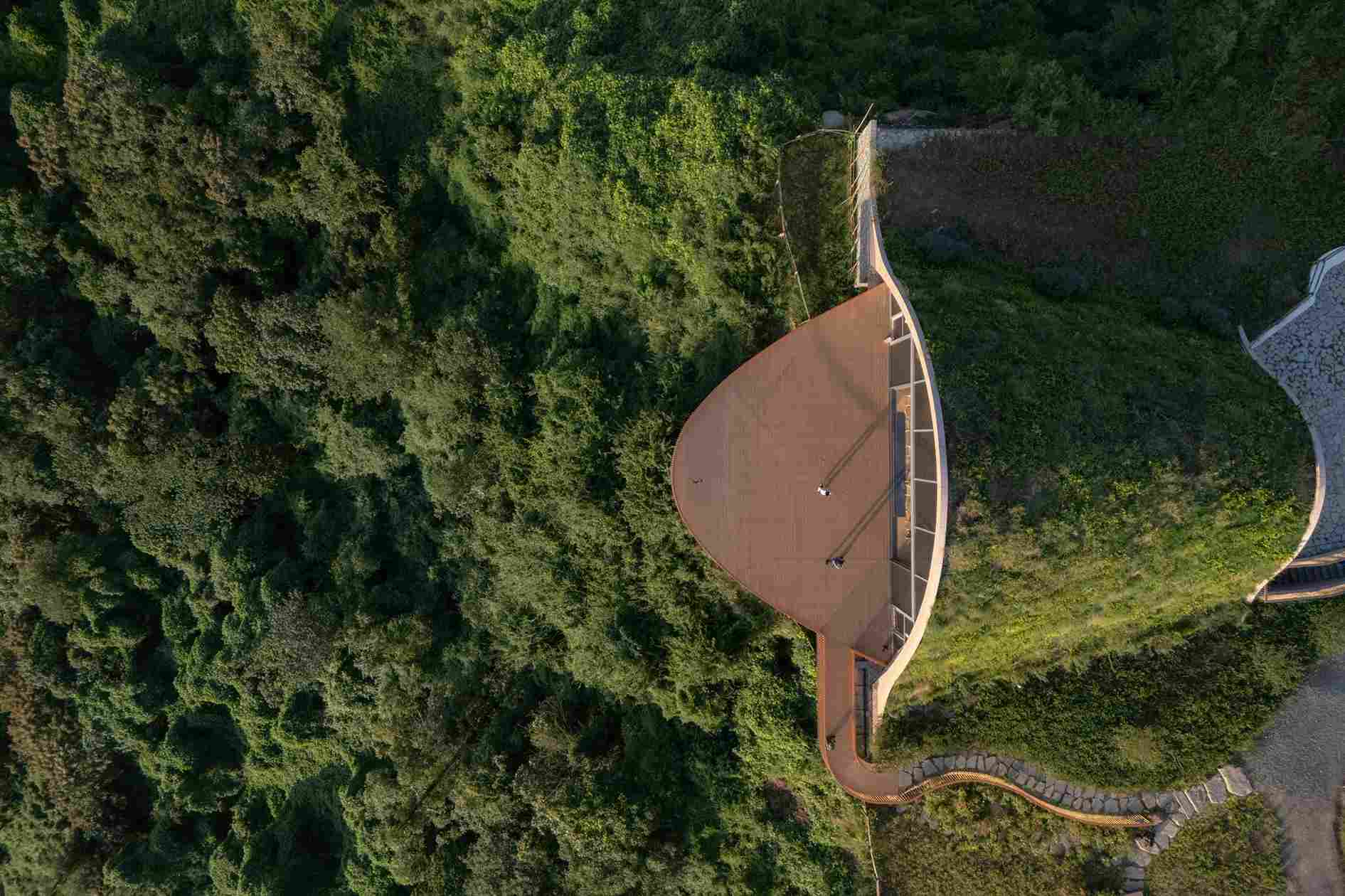
The grass-covered roof recreates the profile of the lost landform, thus allowing the timber pavilion to visually disappear into the rolling topography when viewed from a distance.
The Pujiang Platform now functions as a sheltered observation point, an event space and a visitor destination, while also introducing a dramatic cantilevered balcony that extends out over the slope. From this elevated position, visitors get the panoramic views across the developing new town of Pujiang and towards the distant Qionglai Mountain range. According to MVRDV, the project’s green roof and landscape strategy are intended to strengthen the site’s existing ecology, encouraging the growth of native grasses, flowering plants and low shrubs that further anchor the pavilion within its environment. According to the team, one of the key challenges was to maximise the spectacular views while minimising disruption to the landscape. By shaping the pavilion like a hill and covering it with vegetation, the studio sought not only to reduce its visual impact but also to symbolically reconstruct what had previously been removed. This philosophy of respect for nature informed every aspect of the design and construction process.
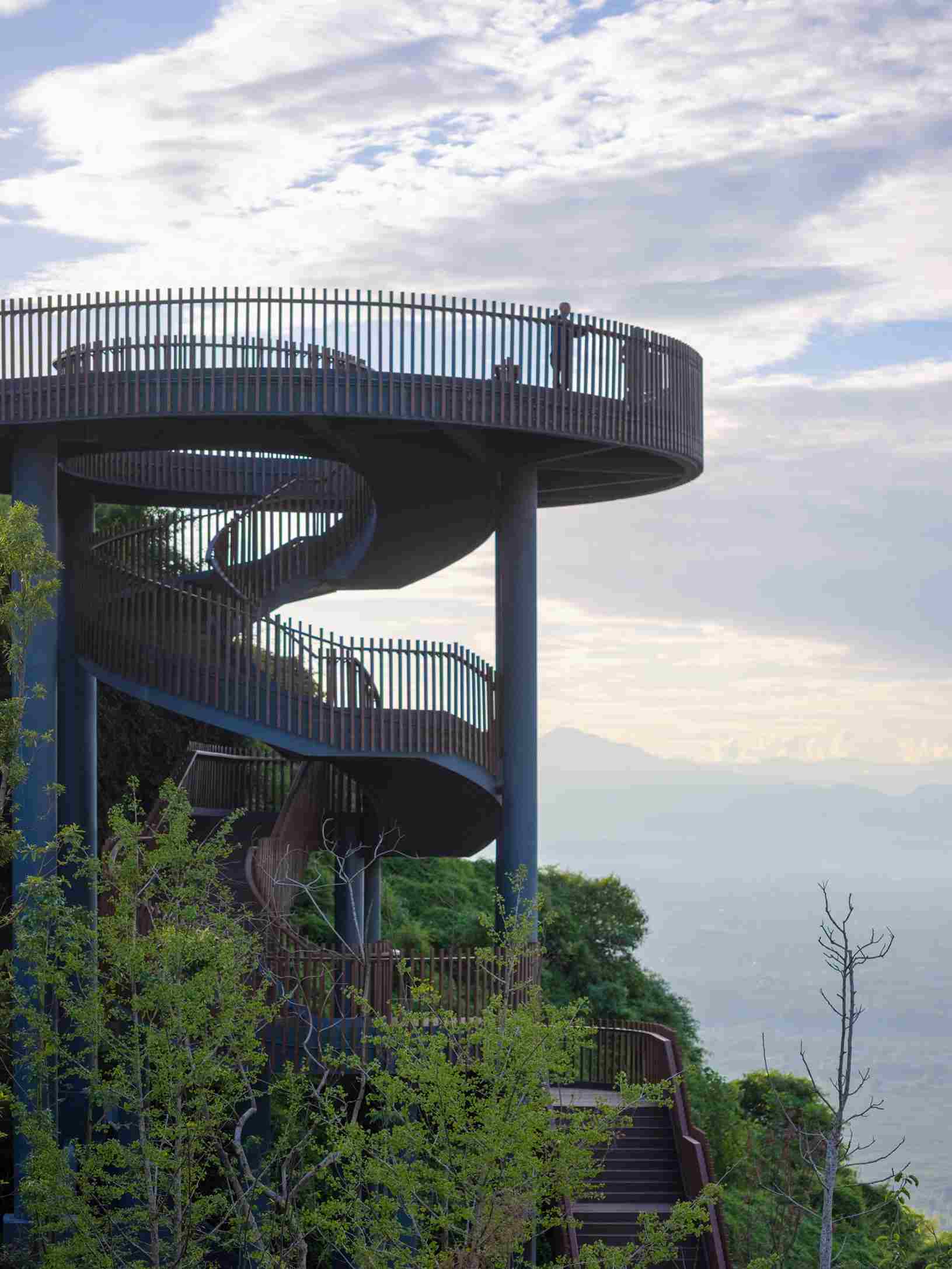
A spiral staircase has been added to creating connectivity for the visitors to a secondary viewpoint and also to enhance accessibility across the site.
The pavilion had been commissioned by the Pujiang County Planning and Resources Bureau as part of a broader effort to enhance public infrastructure and viewpoints in the region. Visitors get to access the structure through a modest glass entrance on the southeast side. Once inside, the interior geometry creates a dynamic spatial experience where the roof rises upward as the floor slopes downward, creating a telescopic effect that naturally draws the eye toward the expansive viewing window and the projecting balcony beyond. This window, measuring 10m in height, incorporates sliding doors that open directly onto the balcony, blurring the boundary between interior and exterior. Beneath the main viewing space, a partially buried support room houses a kitchen. This lower volume is externally clad in stone, helping it blend further into the hillside.
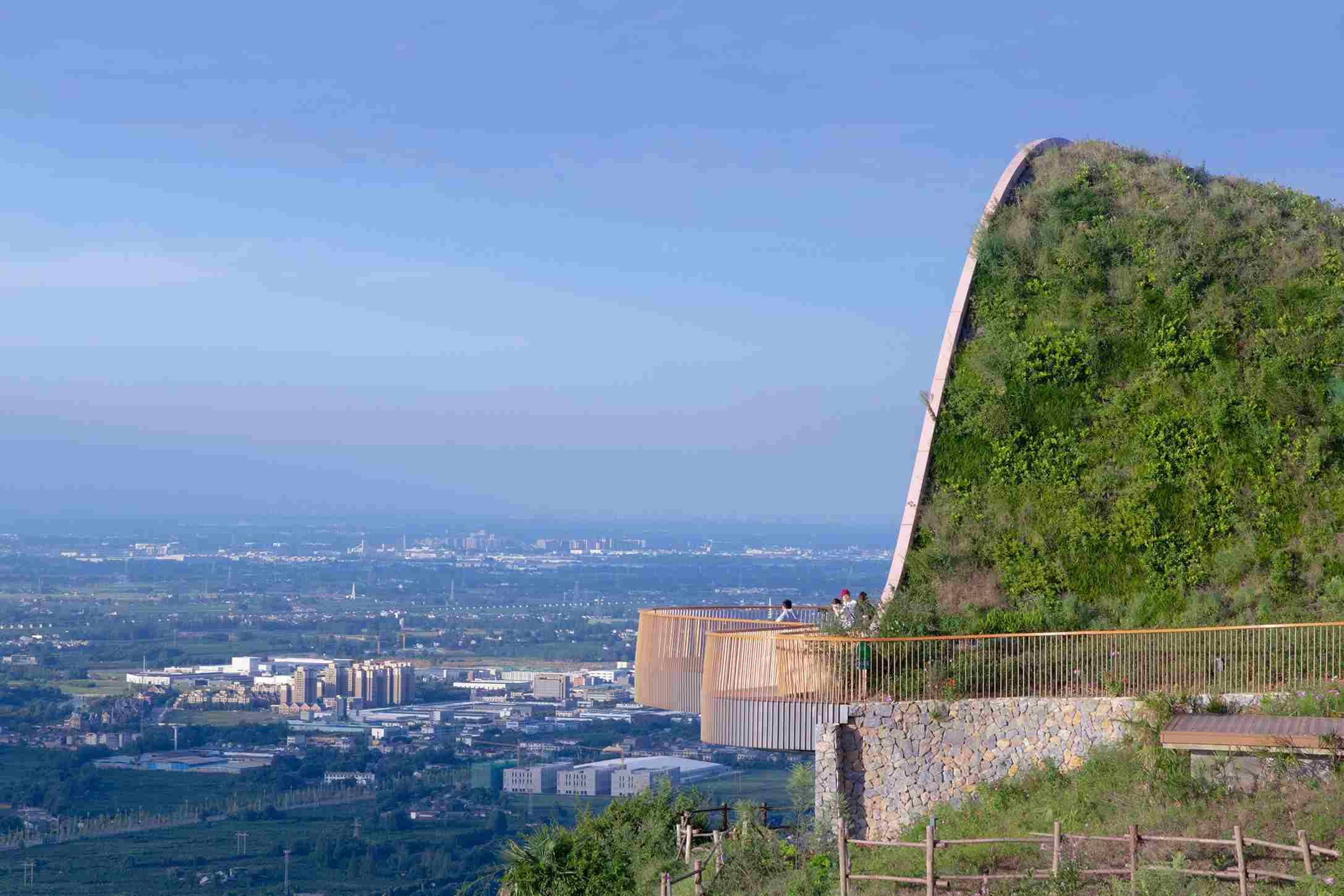
Timber forms the primary structural material, which is selected for its low embodied carbon and alignment with the project’s sustainability goals.
Timber forms the primary structural material, which is selected for its low embodied carbon and alignment with the project’s sustainability goals. According to the team, the use of bio-based materials such as wood reflects the core intention of preserving and respecting the natural environment. Through this approach, MVRDV also hopes to demonstrate the potential of timber construction and encourage its wider adoption in China, where the industry has traditionally been cautious about using wood at scale.
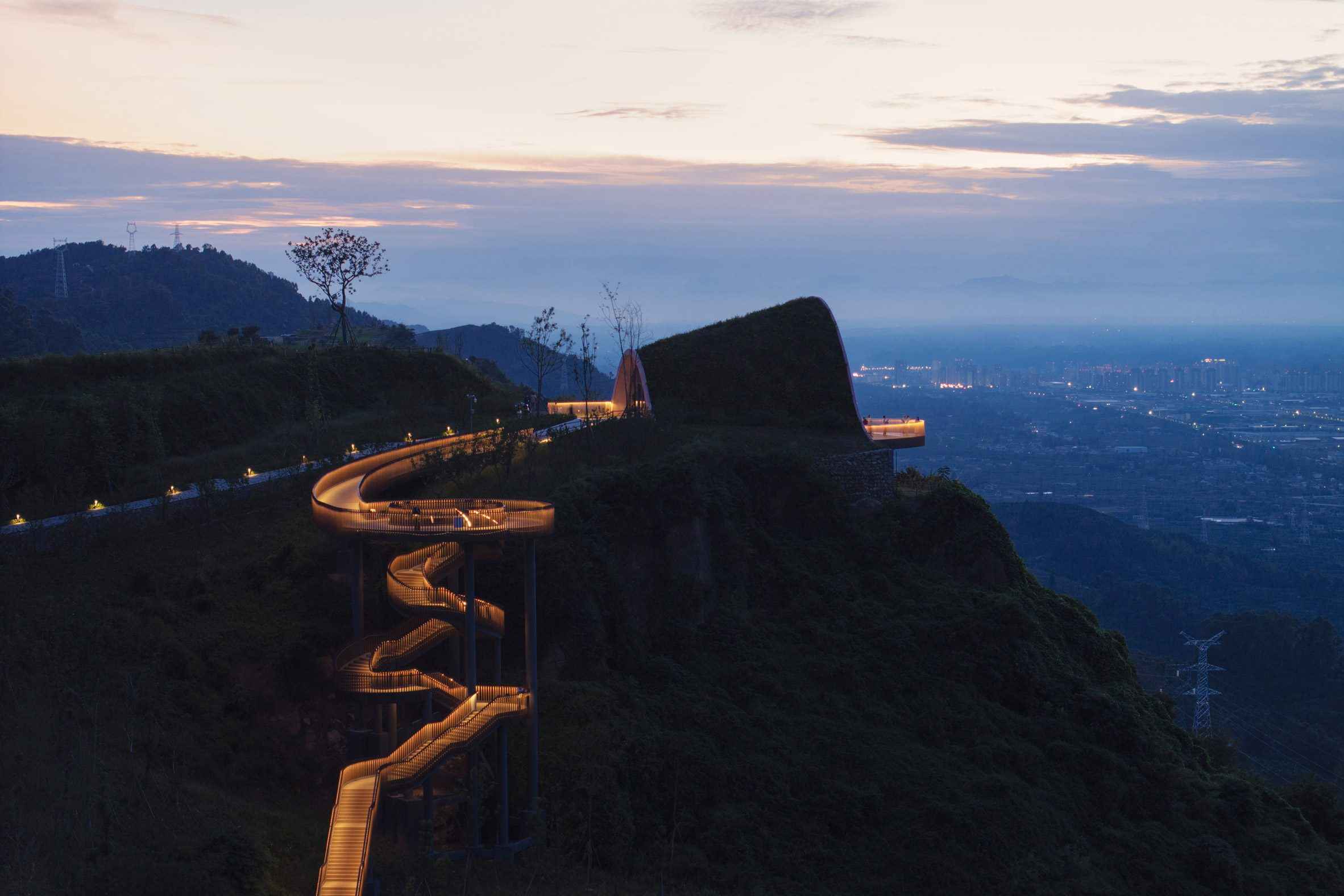
The Pujiang Platform now functions as a sheltered observation point, an event space and a visitor destination, while also introducing a dramatic cantilevered balcony that extends out over the slope.
Beyond the pavilion, the Pujiang Platform project includes upgrades to the surrounding paths and landscape. A spiral staircase has been added to creating connectivity for the visitors to a secondary viewpoint and also to enhance accessibility across the site. Environmental performance has also been carefully considered as natural ventilation is prioritised throughout the structure, a part of the energy demand is met using a geothermal heat pump, and existing waterways have been adapted for rainwater harvesting and irrigation.
Image credit: Arch-Exist