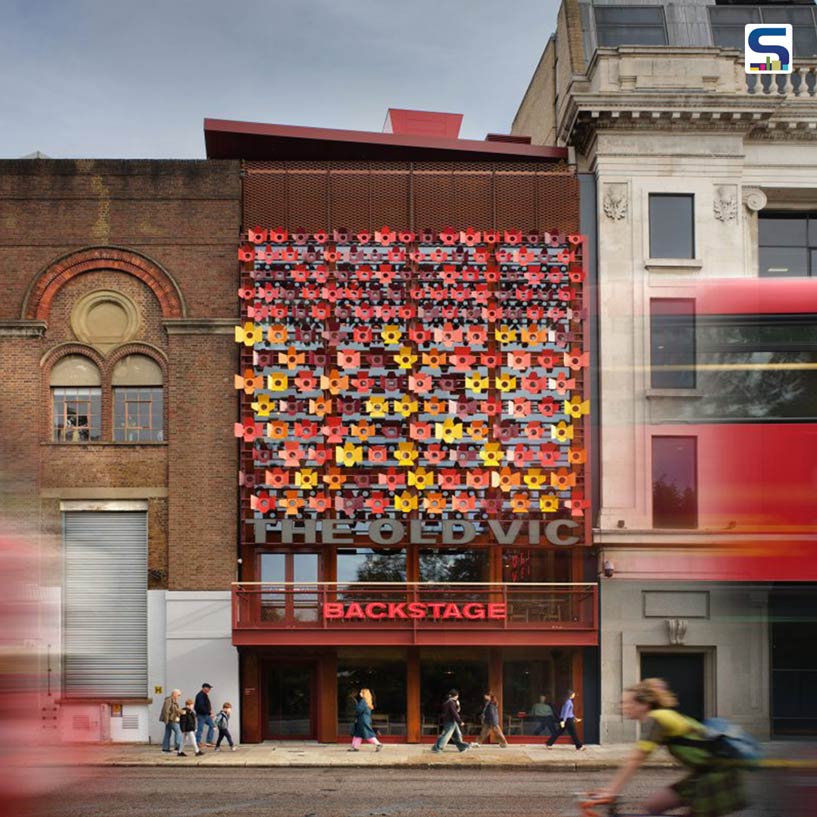
Architecture studio Haworth Tompkins recently completed a sensitively smart yet contemporary extension to London’s historic Old Vic Theatre, creating a dedicated home for its expanding outreach and community programmes while enhancing accessibility across the 200 year old cultural institution. The project, titled Backstage, reimagines a previously underutilised site on Waterloo Road and introduces a bold architectural language that respectfully coexists with the theatre’s Grade II*-listed heritage. Learn on SURFACES REPORTER (SR) the magic of combining heritage sensitivity, sustainable construction and bold contemporary expression.
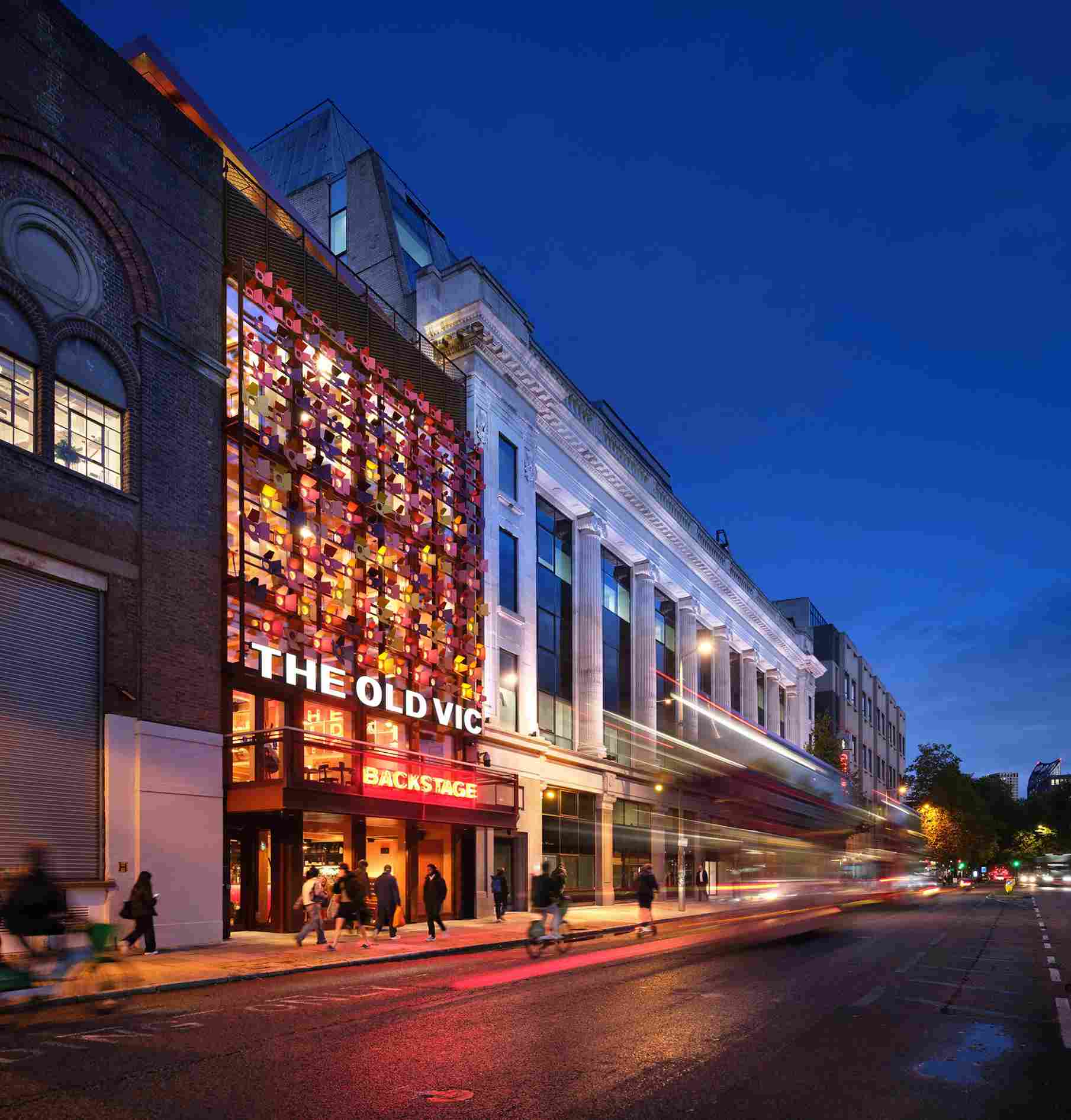
These elements were salvaged, repainted in vibrant hues of red, yellow, orange and purple, and arranged in a striking, flower-like pattern that brings both shading and character to the street elevation.
Sustainable theatre design
Spanning across approximately 1,250 sqm, the Backstage building replaces a former restaurant that once occupied the edge of the Old Vic site. Rather than serving as an ancillary structure, the new extension plays a vital role in the theatre’s future, housing facilities that support engagement with local communities, schools, young people and emerging creative practitioners. Alongside this addition, Haworth Tompkins also undertook crucial upgrades on the opposite side of the site, refurbishing the Webber Street stage door and adjoining backstage areas within the existing theatre building.
The result is a playful yet meaningful reference to the theatre’s technical heritage that is transformed into an architectural feature.
These interventions have delivered a landmark improvement. For the first time in its two century history, The Old Vic is now fully accessible. The project includes renewed dressing rooms, offices and toilet facilities, ensuring that performers, staff and visitors can move comfortably through the building. According to the studio, the design brief called for a place that felt open, welcoming and expressive of creativity, while supporting every aspect of the theatre’s life, right from writing and rehearsals to education and outreach initiatives.
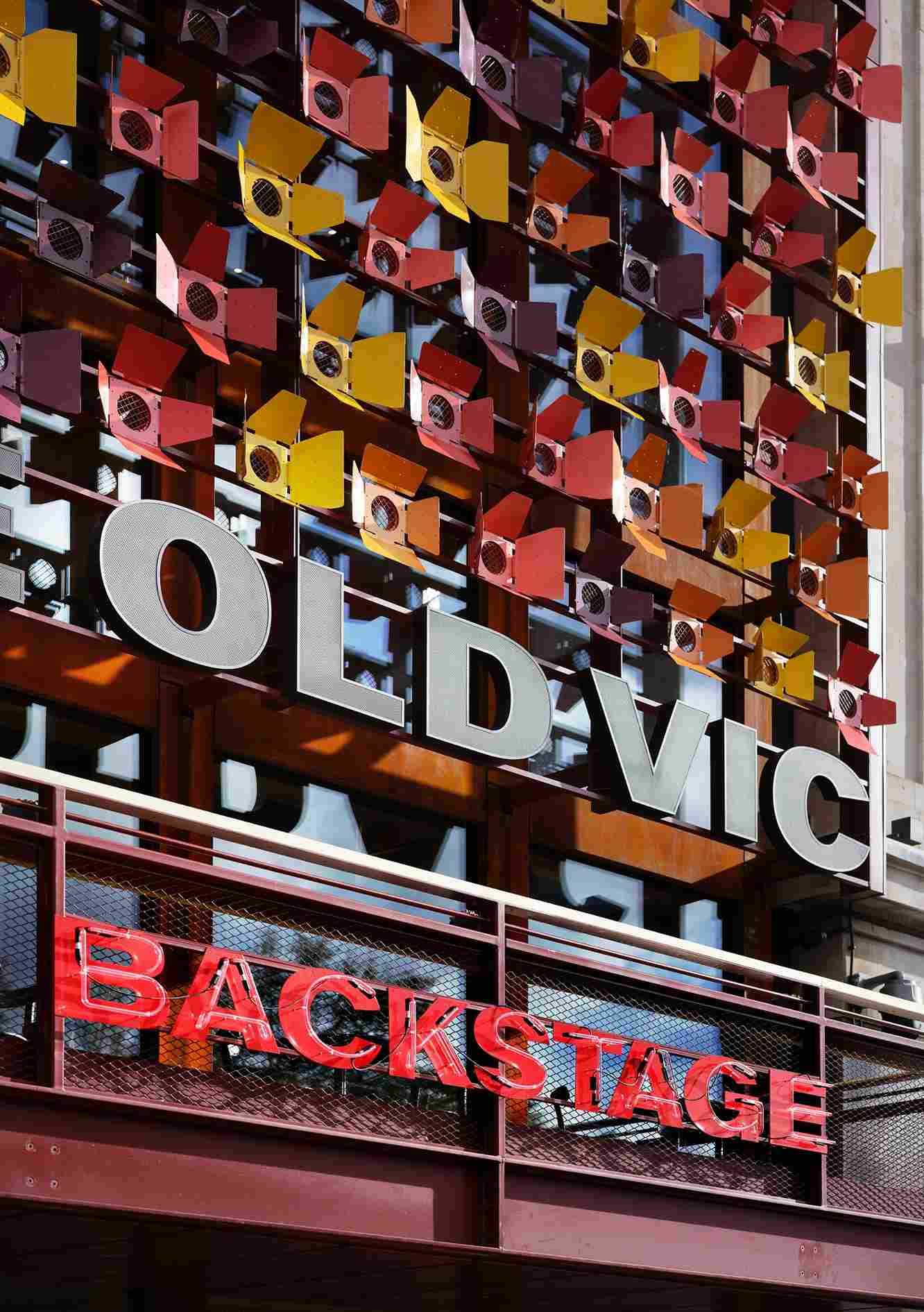
Acting as a brise soleil, the colourful external screen is made from recycled theatre spotlight shutters, also known as barndoors.
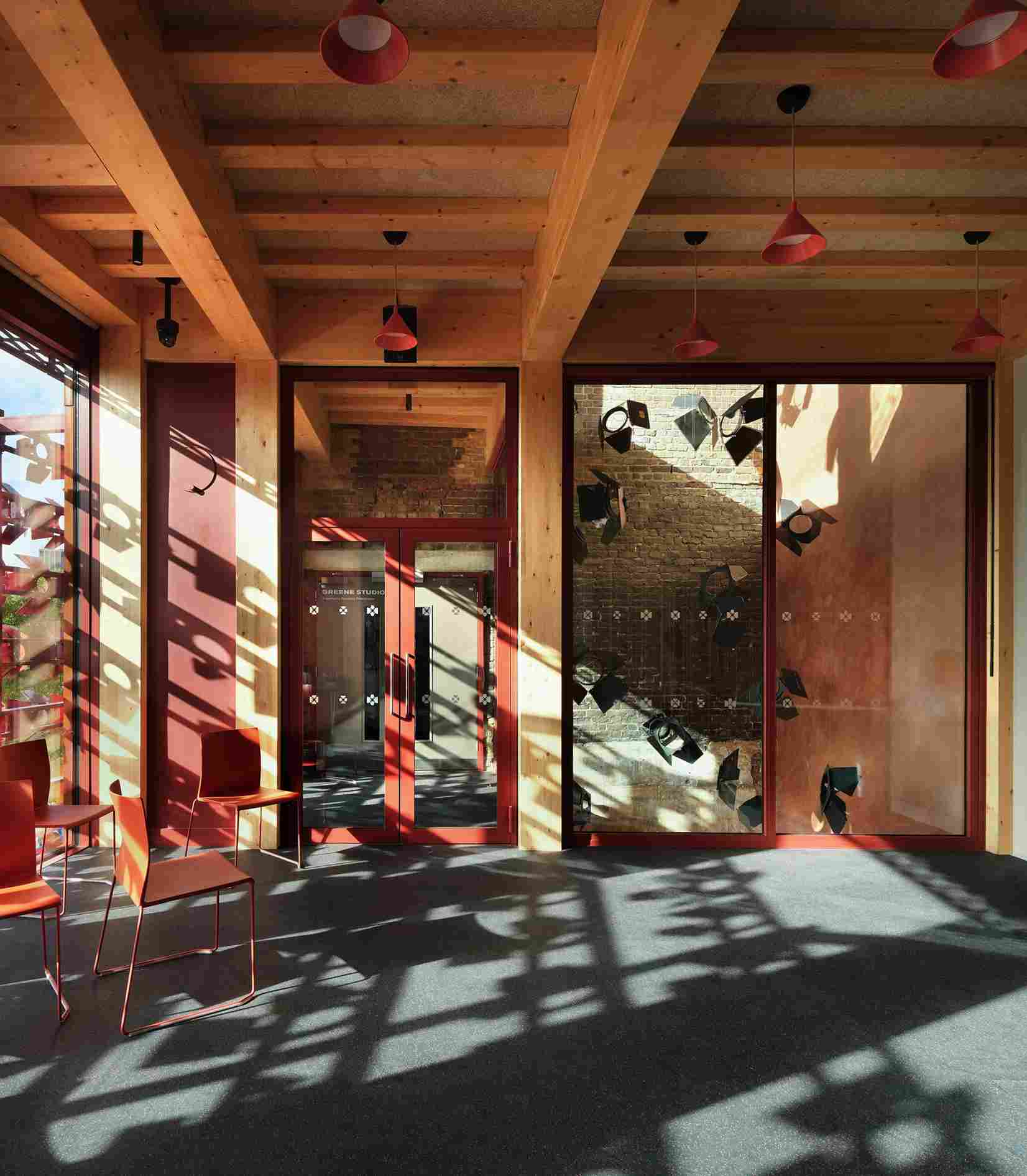
Most importantly, the Backstage extension does not attempt to mimic the historic architecture of the Old Vic itself. Instead, it establishes a distinct identity, clearly contemporary yet deeply respectful of its context. This approach allows the new building to complement the existing theatre rather than compete with it, acknowledging the value of contrast in heritage-led design. The six storey building, which includes a basement level, is organised around a dramatic triple height café and bar that acts as the social heart of the project. Framed with a newly constructed glued-laminated timber (glulam) structure, this space opens directly onto Waterloo Road through a fully glazed façade, creating a strong visual and physical connection between the theatre and the city. The café is designed as a welcoming public space, drawing in visitors and passersby while fostering informal interaction between artists, students and the wider community.
.jpg)
According to the studio, the design brief called for a place that felt open, welcoming and expressive of creativity, while supporting every aspect of the theatre’s life, right from writing and rehearsals to education and outreach initiatives.
Heritage blends with recycled materials
Surrounding this central hub are a variety of learning, rehearsal and creative spaces. These include studios for workshops and practice sessions, a dedicated script library and a writing room that supports playwrights and emerging voices. On the fourth floor, a flexible multi-purpose events space provides room for talks, performances and gatherings, with direct access to a compact roof terrace that offers a moment of outdoor break within the dense urban setting. Sustainability played a key role in shaping the project. While the glulam structure of the café was newly built, the overall design prioritized the retention and reuse of existing materials wherever possible. Many of the original walls were preserved, reducing demolition waste and the need for new construction materials. Acting as a brise soleil, the colourful external screen is made from recycled theatre spotlight shutters, also known as barndoors. These elements were salvaged, repainted in vibrant hues of red, yellow, orange and purple, and arranged in a striking, flower-like pattern that brings both shading and character to the street elevation. The result is a playful yet meaningful reference to the theatre’s technical heritage that is transformed into an architectural feature.
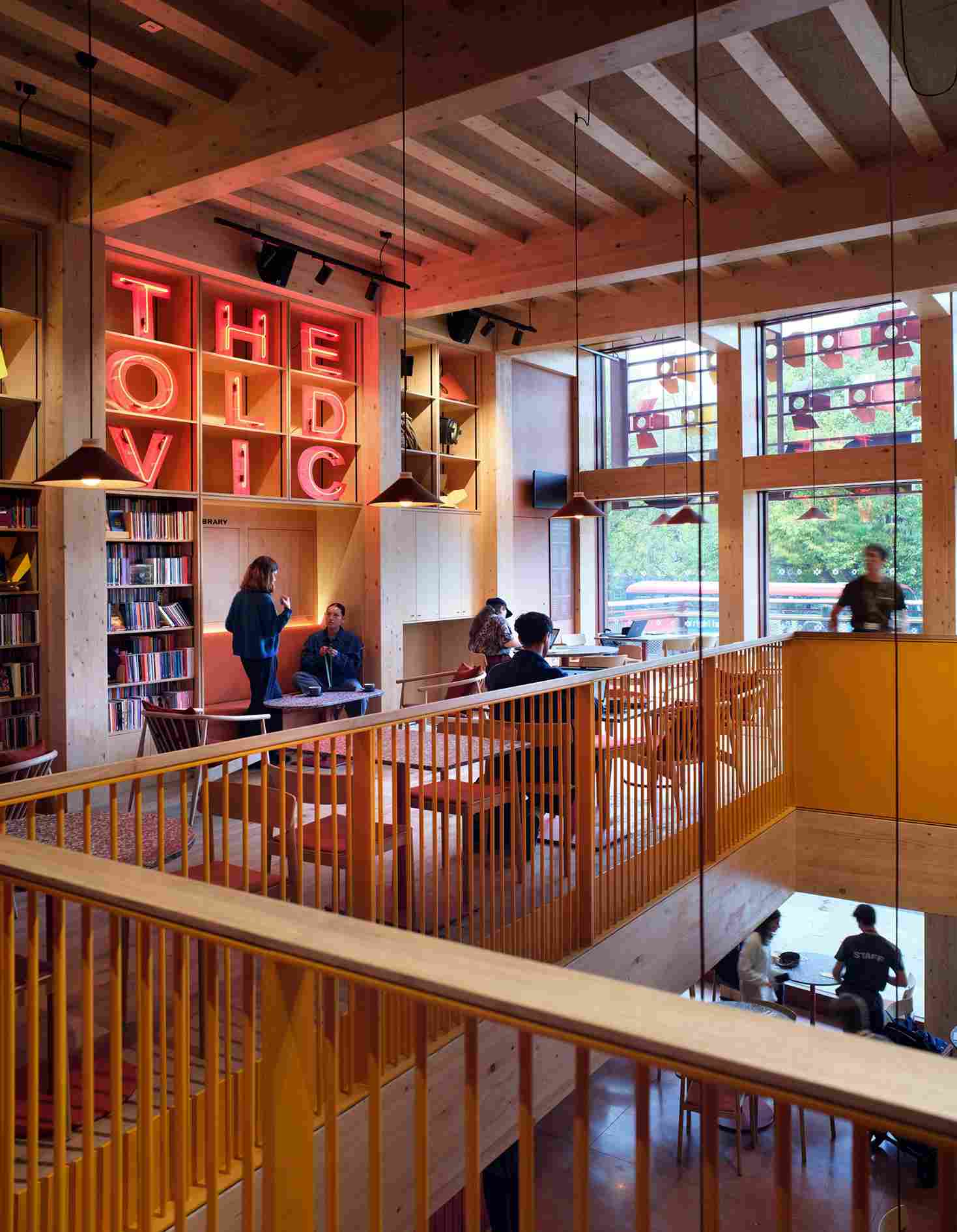
While the glulam structure of the café was newly built, the overall design prioritized the retention and reuse of existing materials wherever possible.
Additionally, internally also, the relationship between old and new is carefully articulated. The historic rear stage wall of the Old Vic has been left exposed and celebrated as a found surface within the interior. This wall becomes a key point of connection, where circulation routes link the existing theatre with the Backstage extension. A new ramp from the refurbished stage door leads directly to the lift in the new building, ensuring seamless and inclusive movement between spaces.
Image credit: Philip Vile