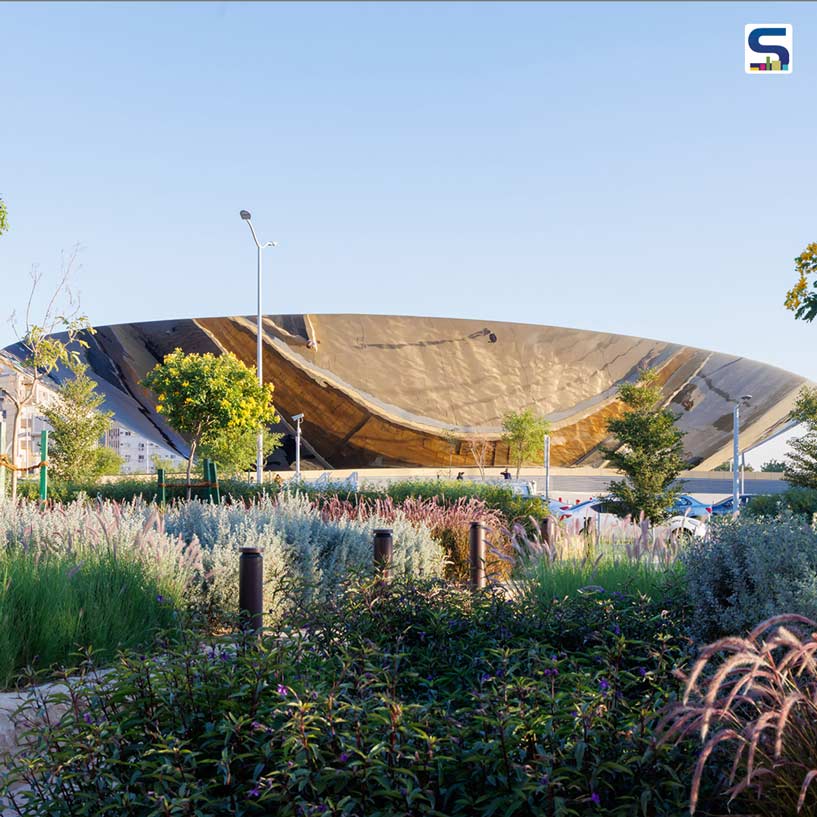
Norwegian architecture studio Snohetta has unveiled one of its most ambitious and culturally resonant projects to date named the Qasr AlHokm Metro Station in Riyadh, Saudi Arabia. The station, which forms part of the Saudi capital’s expansive new metro network, is a bold architectural statement that marries cutting-edge engineering with a deep sensitivity to local heritage, climate and community life. Know more about it on SURFACES REPORTER (SR).
Its most arresting feature comprising a sweeping, bowl-shaped canopy finished in a mirror-like surface that simultaneously draws the eye upward and folds inward toward the heart of the building.
Metro station that mirrors the city
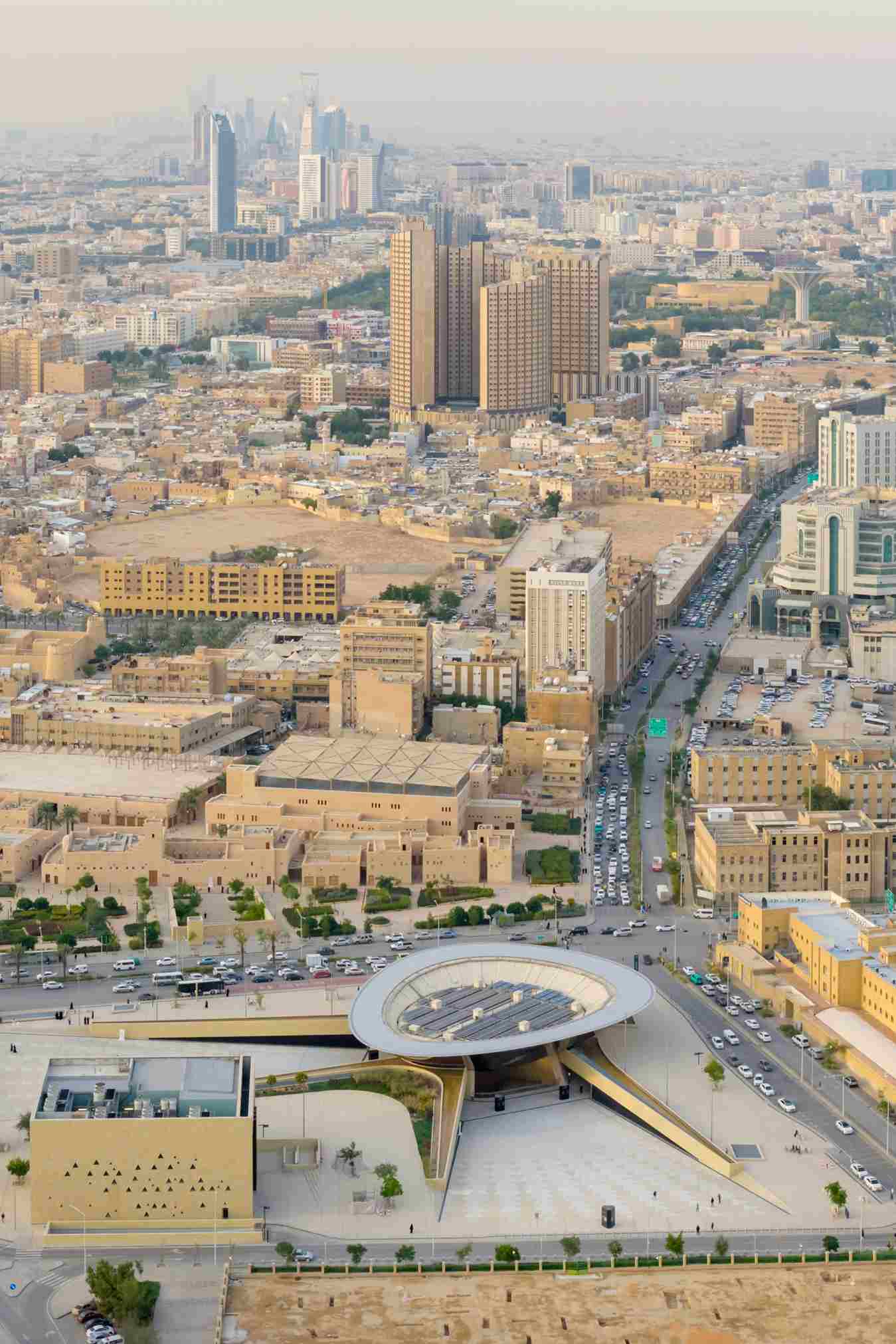
The Qasr AlHokm station is one of four principal hubs within Riyadh’s metro system, a landmark infrastructure project that reached full operational capacity in January 2025 and is reportedly designed to serve up to 3.6 million passengers every single day. Set within a generous public plaza, the station immediately distinguishes itself from conventional transit architecture through its most arresting feature comprising a sweeping, bowl-shaped canopy finished in a mirror-like surface that simultaneously draws the eye upward and folds inward toward the heart of the building.
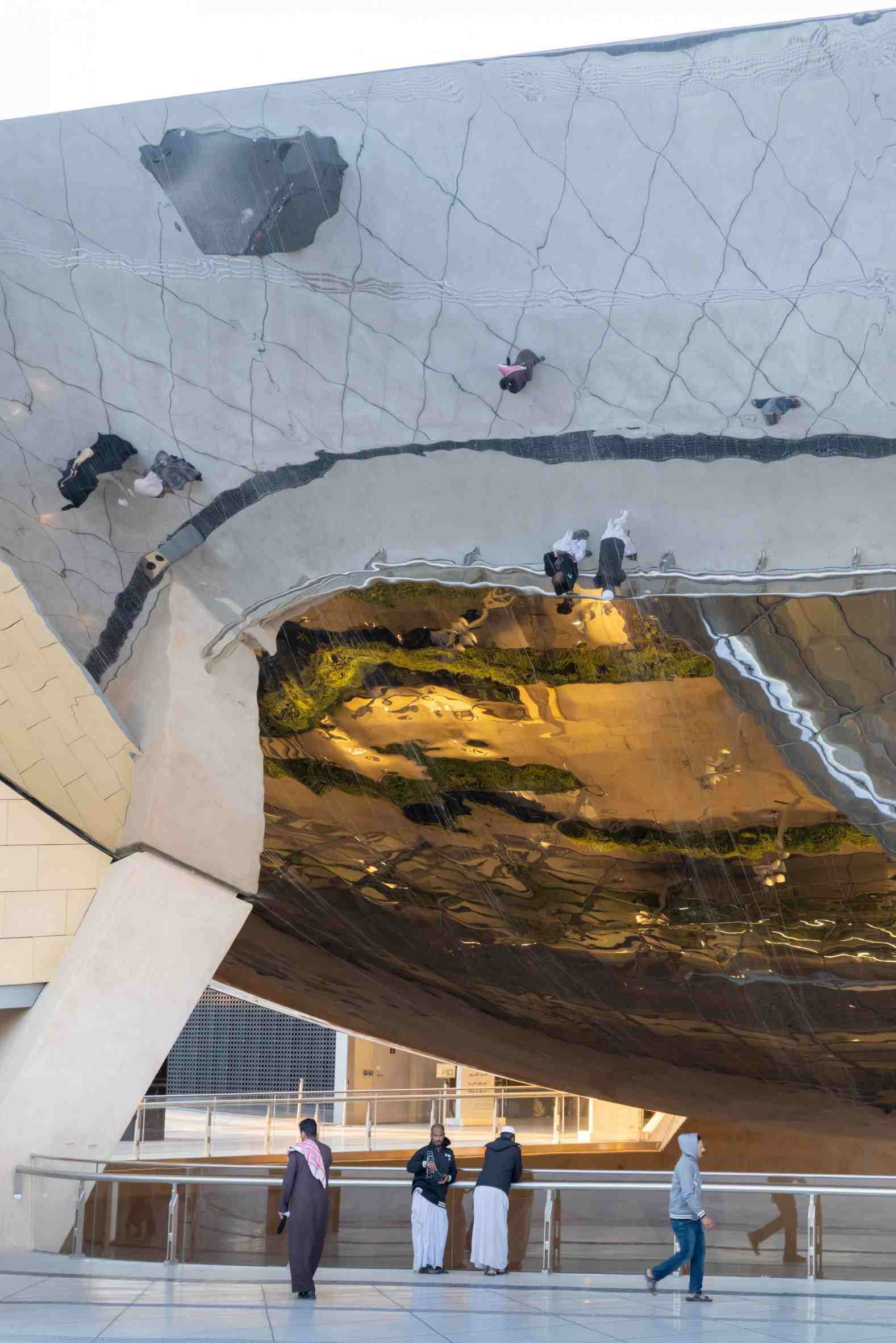
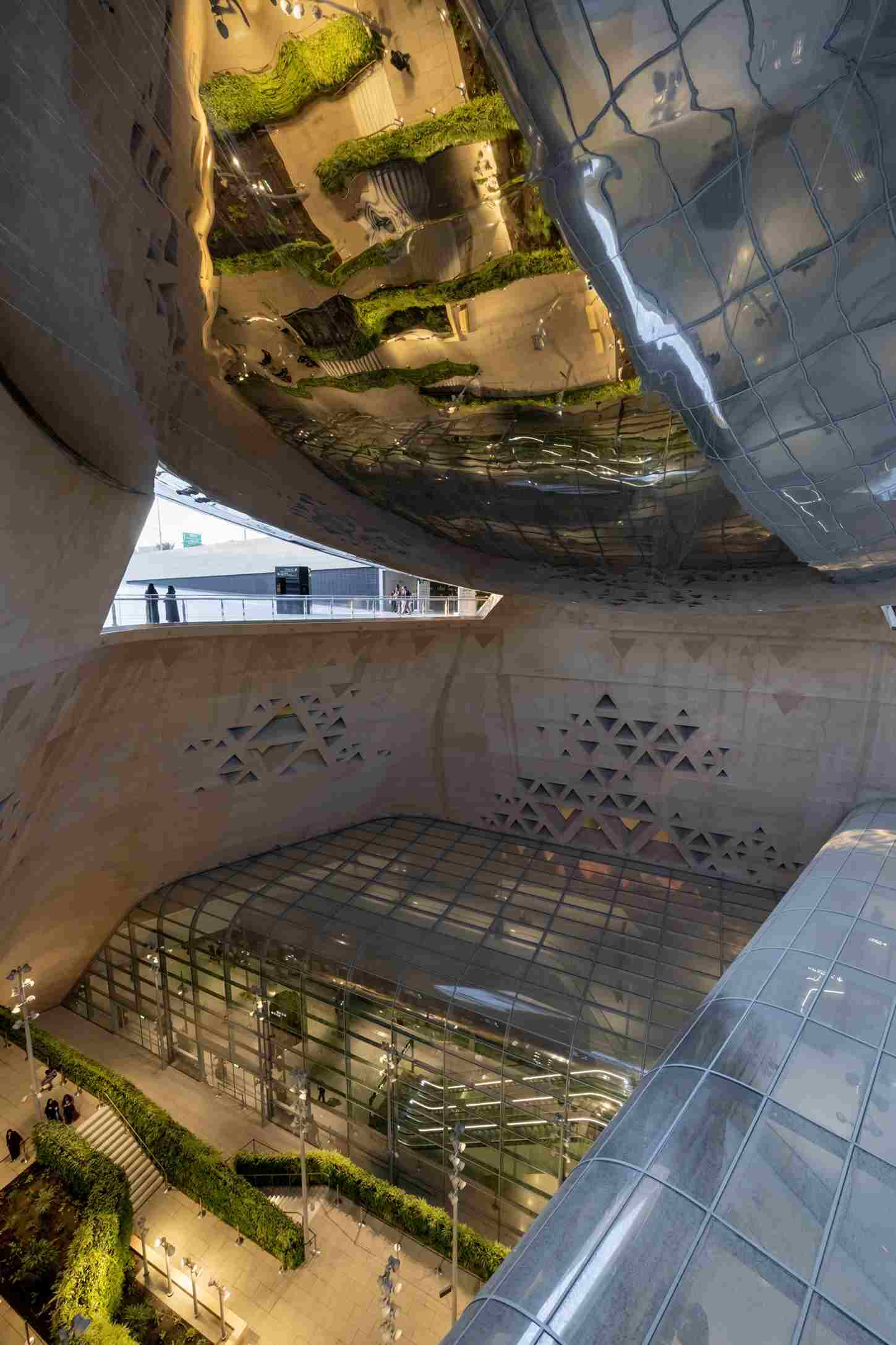
The underside of the canopy acts as a vast curved mirror, capturing and projecting a continuous 360-degree panorama of the city above.
Fabricated from double-curved stainless-steel sheets that were individually welded together and then meticulously polished to achieve a seamless, highly reflective finish, it functions as both a structural and experiential centrepiece. The underside of the canopy acts as a vast curved mirror, capturing and projecting a continuous 360-degree panorama of the city above. For a commuter emerging from the underground platforms below, glancing upward offers an immediate, panoramic orientation with a reflected image of the surrounding urban landscape that communicates precisely where one stands within Riyadh. Conversely, for someone approaching the station from the plaza above, looking up into the canopy reveals a living reflection of everything unfolding beneath it, creating a dynamic visual dialogue between the station’s interior world and its exterior surroundings.
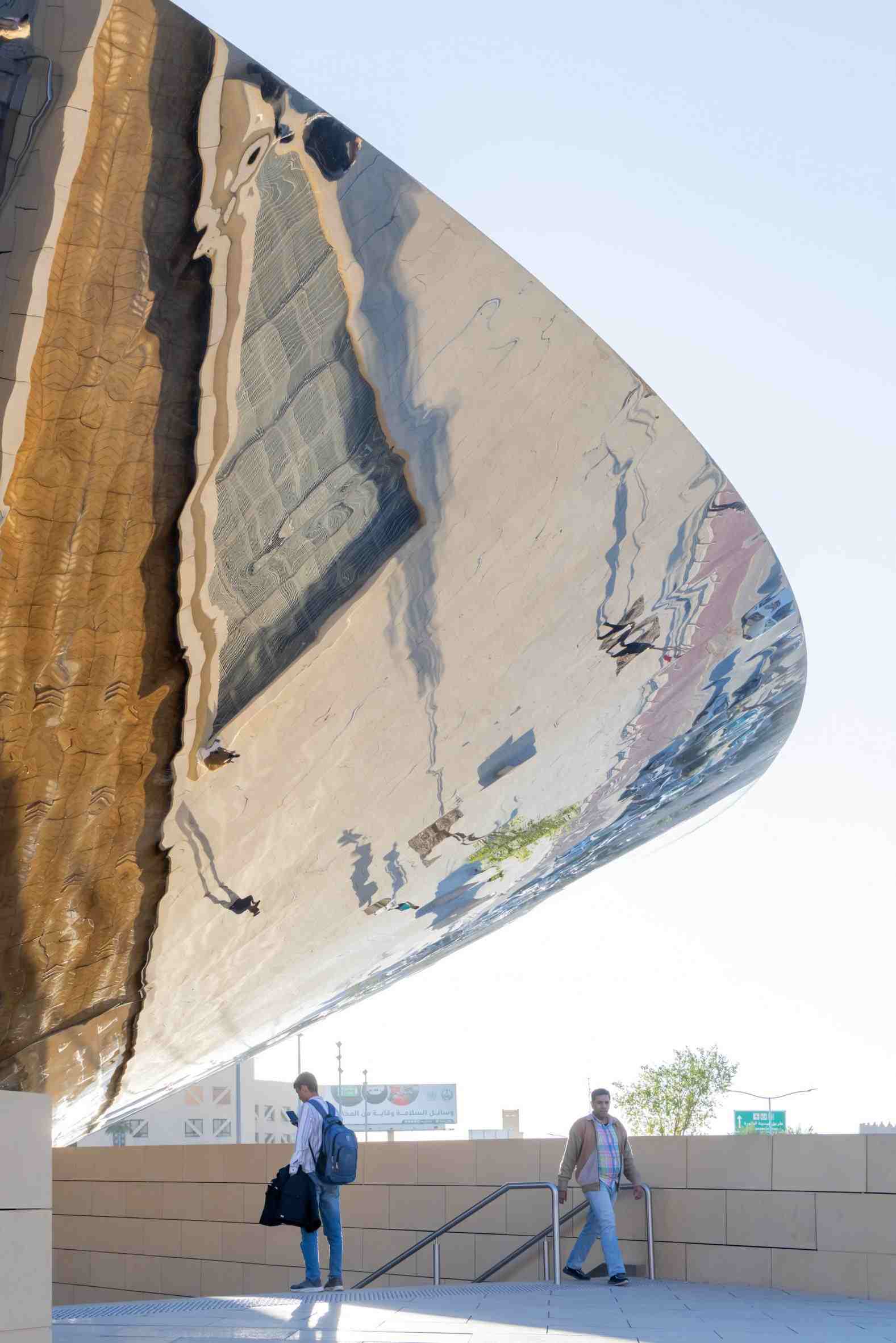
Structurally, the canopy is supported by a steel spaceframe that rests atop a truncated, cone-shaped wall situated inside the station.
Weaving heritage into transit
Structurally, the canopy is supported by a steel spaceframe that rests atop a truncated, cone-shaped wall situated inside the station. A system of adjustable tie rods connects the polished steel panels to this spaceframe, allowing for precision in alignment and finish. Topping the entire assembly is an array of photovoltaic panels to ensure that the canopy contributes to the station’s energy requirements while maintaining its striking visual character.
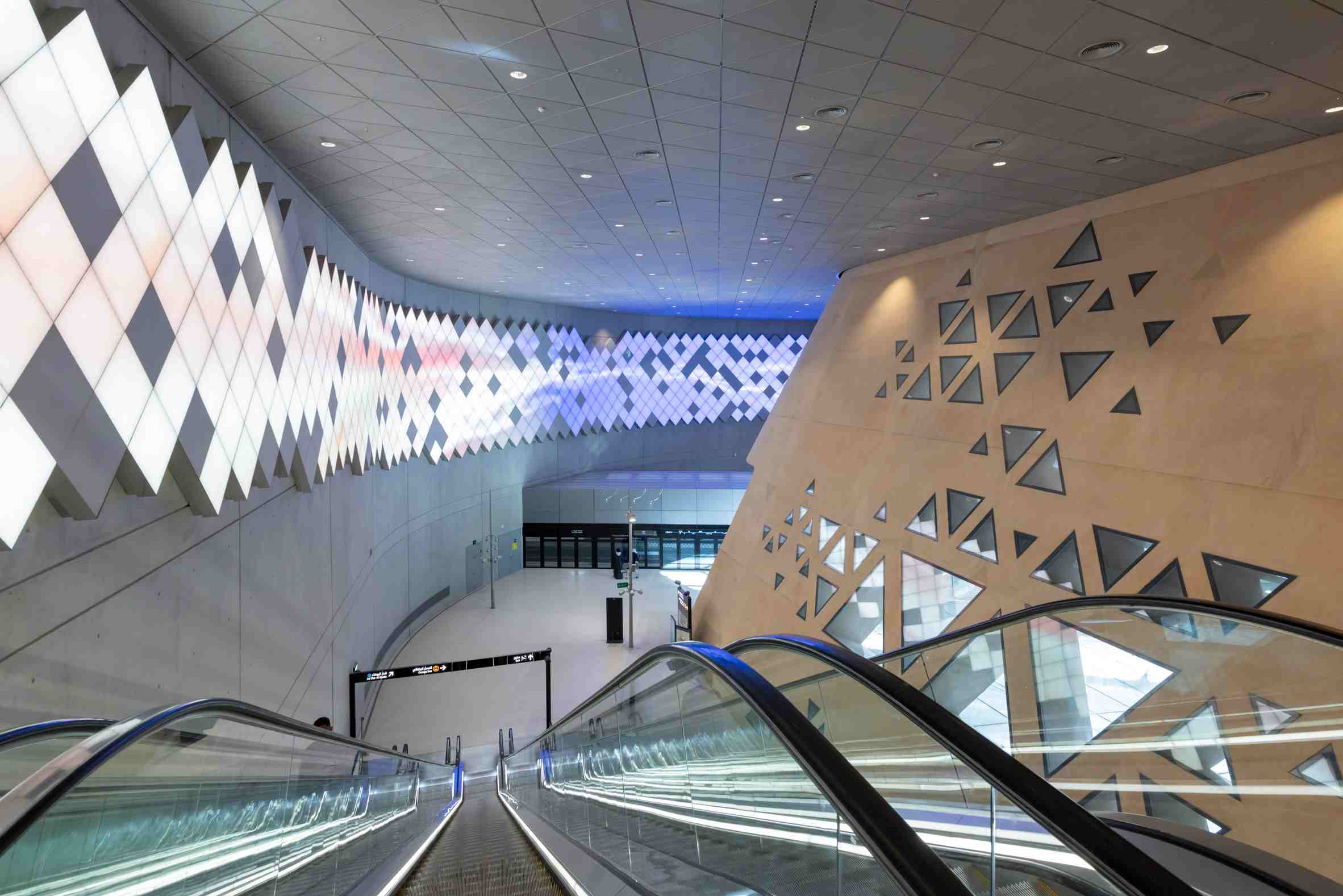
Inside the station’s outer elevation, a media art installation composed of square panels wraps the interior walls, offering passengers calming visuals that soften the functional hardness of transit environments.
The cone-shaped wall is not merely a structural element but it defines and encloses an underground garden, which one of the station’s most unexpected and delightful spaces. Lush planting and green walls transform the atrium within the cone into a tranquil retreat, conceived as a place where passengers can pause and decompress from the intensity of daily commuting. The subterranean location of this garden is a deliberate and practical choice, as the underground environment naturally moderates temperature, helping to maintain a cooler, more comfortable atmosphere in a city defined by extreme heat. This climate advantage is complemented by a water collection system integrated into both the canopy roof and the surrounding plaza, which harvests and channels water directly to irrigate the garden below.
The public plaza and underground garden are envisioned as genuinely shared civic spaces.
Wayfinding, a persistent challenge in large, multi-line transit hubs, has been addressed through a thoughtful spatial device. The glazed enclosures housing the two metro lines that serve the station protrude visibly into the atrium, making them immediately legible to passengers navigating the space. The public plaza and underground garden are envisioned as genuinely shared civic spaces. The neighbouring Al-Daho district is characterised by traditional Najdi architecture, and teh studio drew directly from this vernacular heritage in designing the cone wall. Triangular openings of three distinct sizes punctuate its surface, referencing the geometric patterning and craftsmanship associated with the region’s architectural tradition. Inside the station’s outer elevation, a media art installation composed of square panels wraps the interior walls, offering passengers calming visuals that soften the functional hardness of transit environments.
Image credit: Iwan Baan