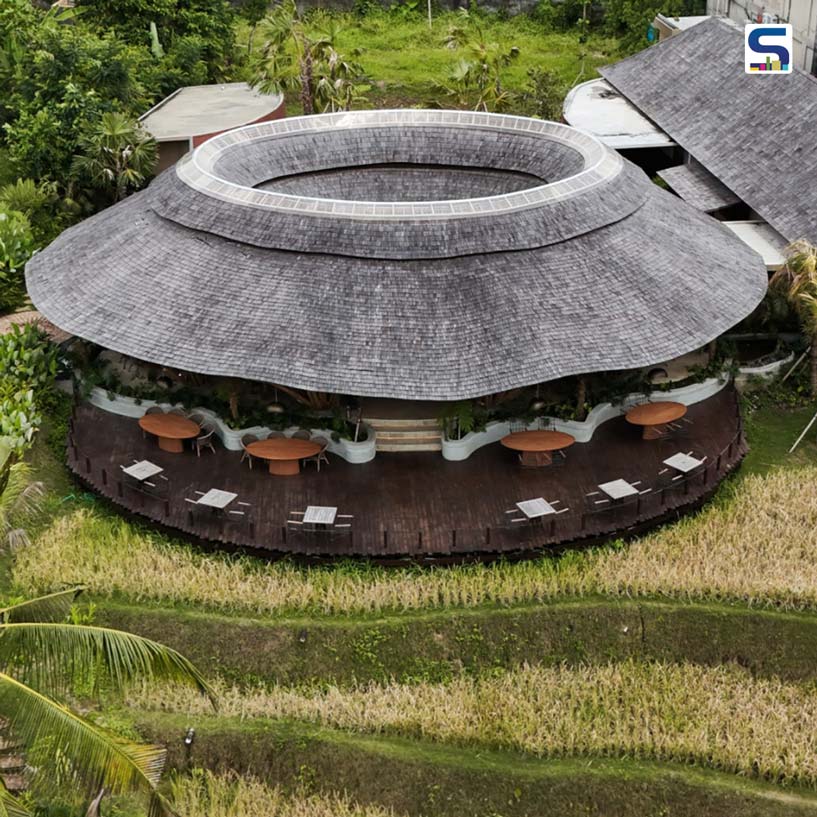
Designed by Pablo Luna Studio and situated on Jalan Arjuna in Ubud on an elevated site that overlooks a river and rice fields to the west, Juna is a structure that treats climate as a co-designer. The project is organized around a single, assertive circle. In plan, the circular layout follows the natural contours of the land, establishing a clear human scale while simultaneously creating an internal opening that allows light and air at the centre. Know more about it on SURFACES REPORTER (SR).
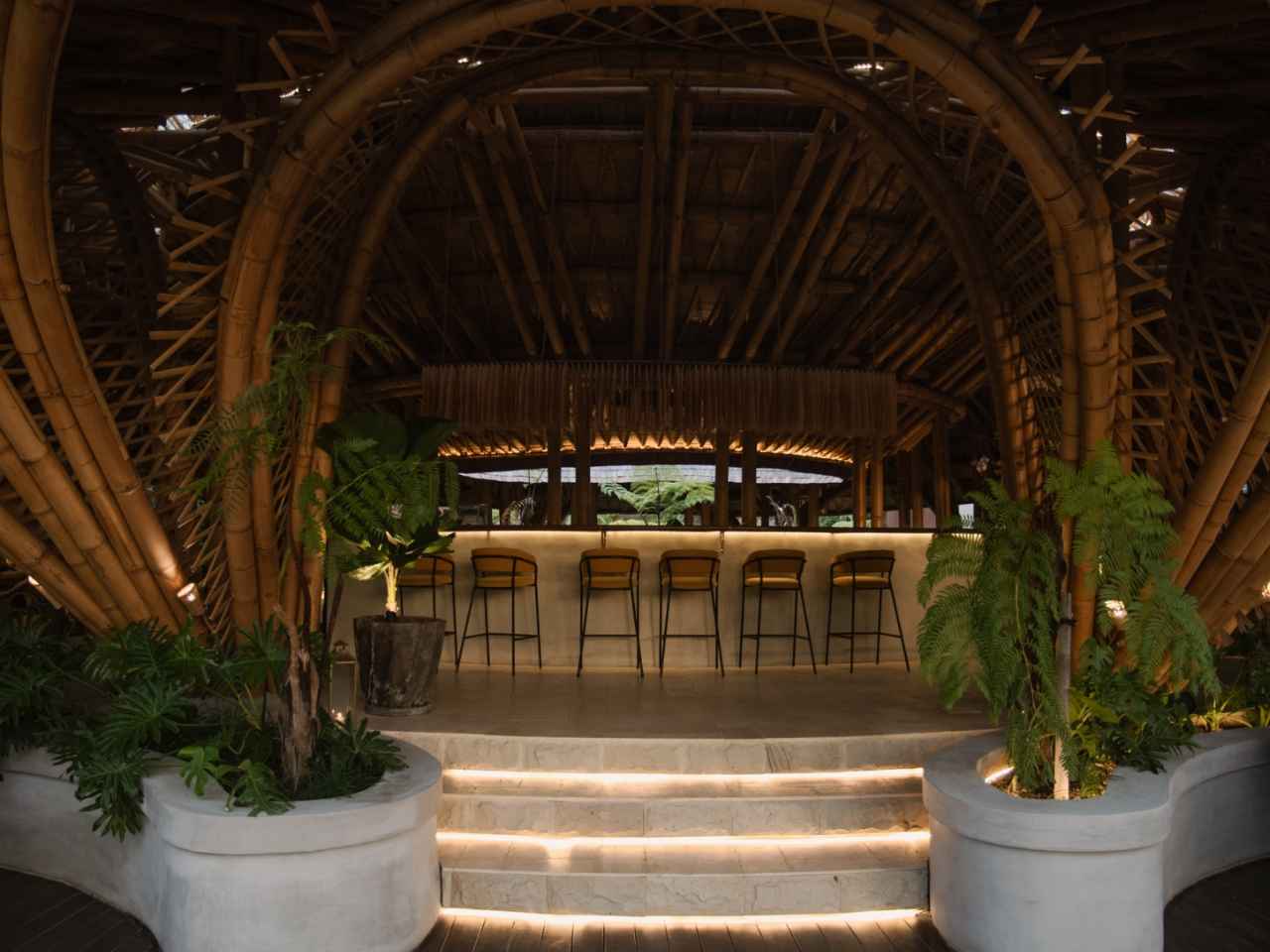
Inside, the coordination between kitchen, bar and dining areas has been developed with operational efficiency in mind, ensuring smooth service and a close relationship between staff and guests.
Architectural climate control
The decision to work with a ring rather than converge toward a single apex was deliberate and structurally significant for the team. A roof that rises to one point would have enclosed the interior and demanded an excessively tall structure. Instead, the roof steps and vents progressively toward the middle, maintaining openness at eye level while channeling rainwater inward to a central focal point. The result feels simultaneously like a stadium.
At the centre, where the tiered roof opens, a skylight constructed from SolarTuff panels sits on a steel frame that has been finished to visually recede into the surrounding bamboo.
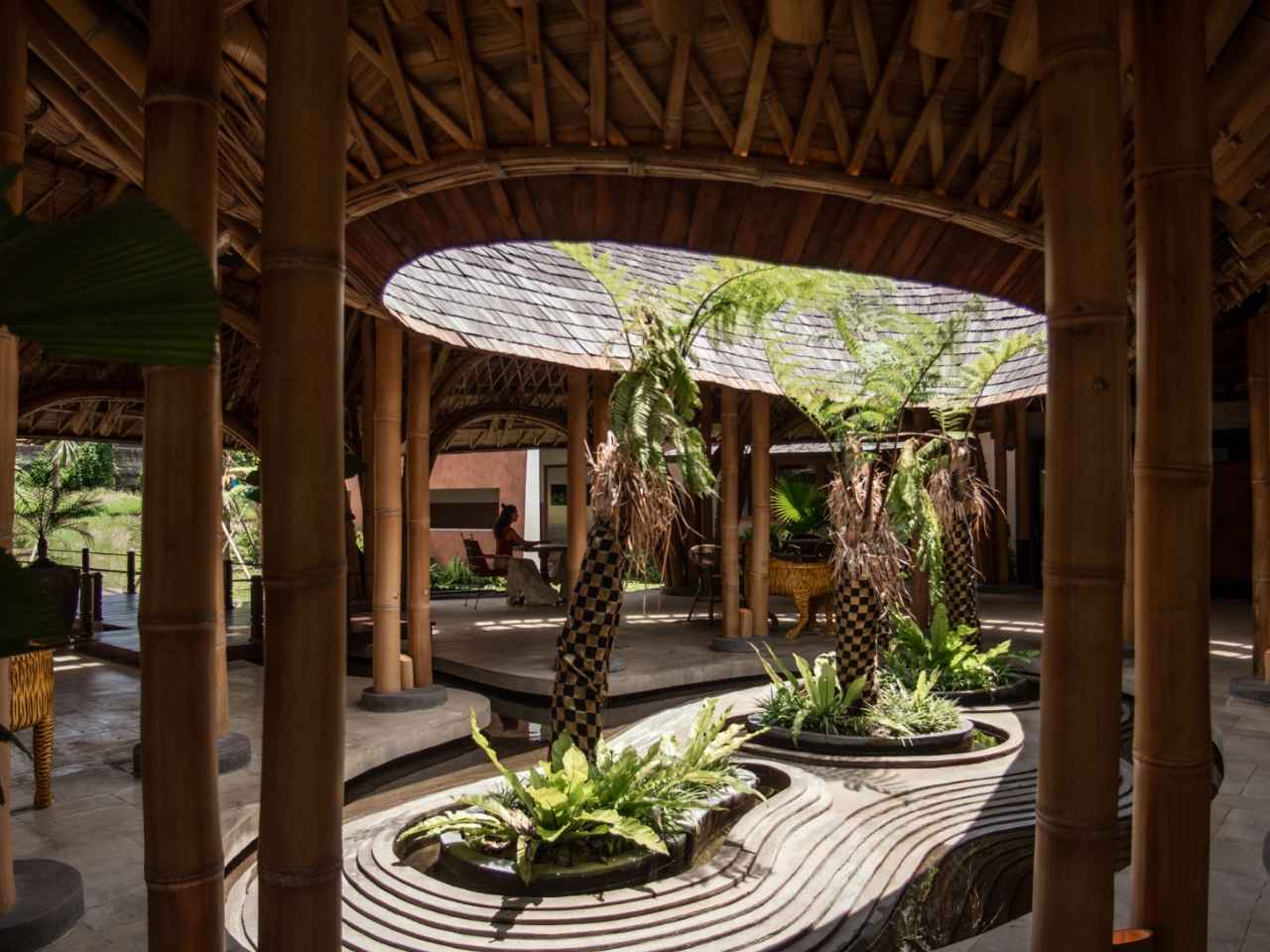
At the heart of the building sits a courtyard containing a pond and abundant planting. This is where the rain that the roof so carefully collects completes its journey, feeding a micro-landscape that lowers ambient temperature and reflects the canopy above. The relationship between roof, rainfall, pond and planting forms a passive cooling loop that requires no mechanical intervention. Hot air exits naturally through the ventilated roof gap, while cross-ventilation is sustained through the open plan and inner courtyard, and the combination of water, greenery and controlled air inlets works in concert to maintain thermal comfort throughout the space. Water supply is mainly managed through an on-site deep well and elevated storage system, enabling gravity-fed distribution and significantly reducing the need for mechanical pumping.
Completing the roof assembly, Ulin wood shingles which are executed by local craftsmen, cover the entire volume.
Design dialogue
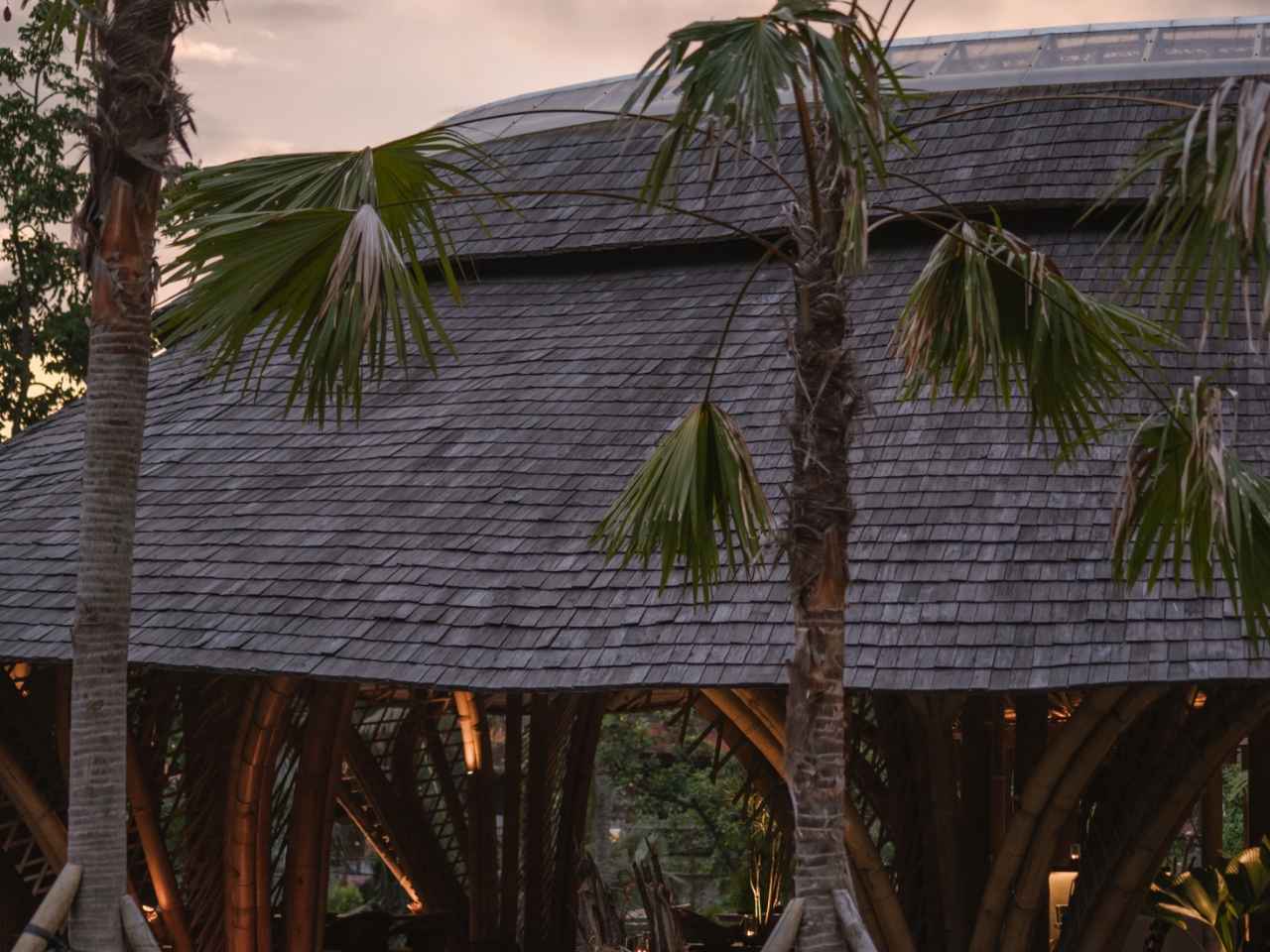
The structural language of the building is equally thoughtful with a forest of bamboo arches and A-frames that defines the dining enclosure. The bamboo is handled with graphic precision, tracing curves, spans and thresholds as cleanly as a drawn line. Up close, the joinery reveals itself as both handcrafted and engineered. The project is explicitly grounded in vernacular construction practices, drawing on traditional details, joints and roof craft, while pushing them into a clearly modern spatial system.
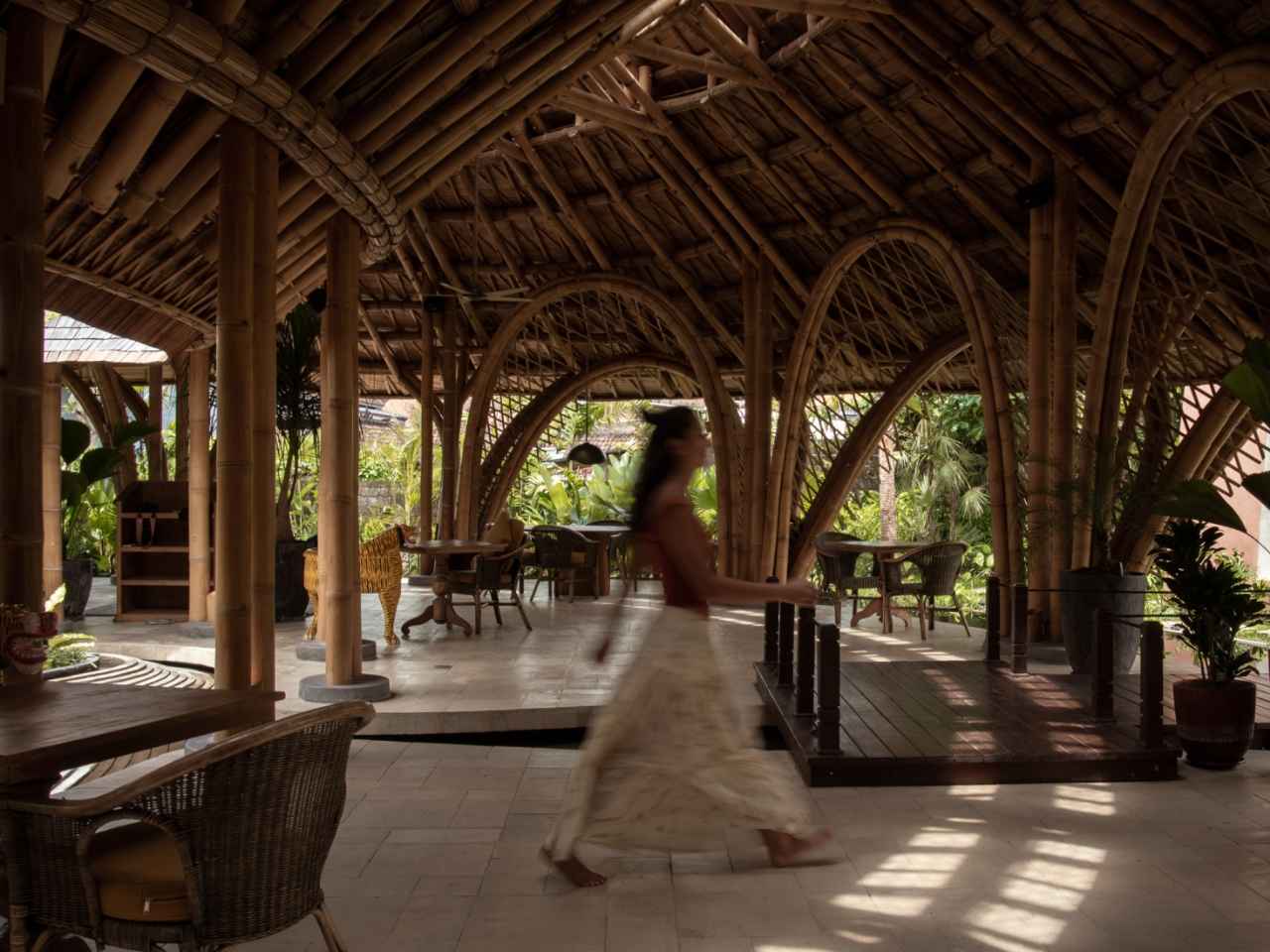
The bamboo is handled with graphic precision, tracing curves, spans and thresholds as cleanly as a drawn line.
Completing the roof assembly, Ulin wood shingles which are executed by local craftsmen, cover the entire volume, giving the exterior a tactile, scaled surface that appears to have accumulated organically over time, giving the effect to the building of quietly growing on this hillside for decades. At the centre, where the tiered roof opens, a skylight constructed from SolarTuff panels sits on a steel frame that has been finished to visually recede into the surrounding bamboo. The panel provides a flat, watertight surface without interrupting the impression of an entirely natural canopy. Open sides and carefully positioned arches direct sightlines outward toward the western landscape, so that a casual glance from any seat becomes a composed view of rice fields and river.
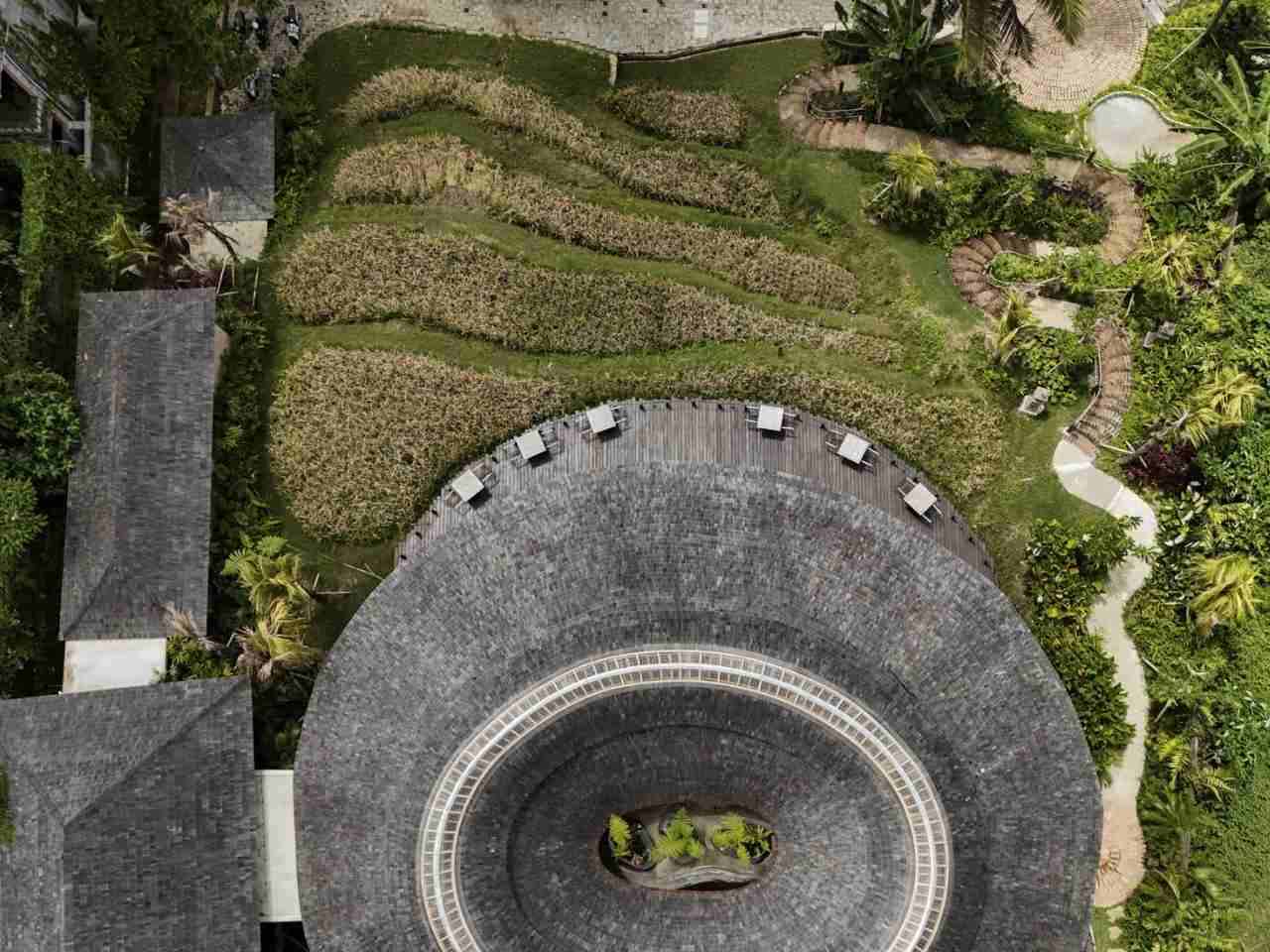
At the heart of the building sits a courtyard containing a pond and abundant planting.
Inside, the coordination between kitchen, bar and dining areas has been developed with operational efficiency in mind, ensuring smooth service and a close relationship between staff and guests. Large interior openings sustain continuous airflow and generous daylight throughout the dining space. The circular plan draws everyone into a shared spatial field while the layered roof structure and rhythm of arches simultaneously break the room into more intimate pockets. The collective energy of the whole space is palpable, yet each table retains its own sense of enclosure and scene.
Image credit: Pablo Luna Studio