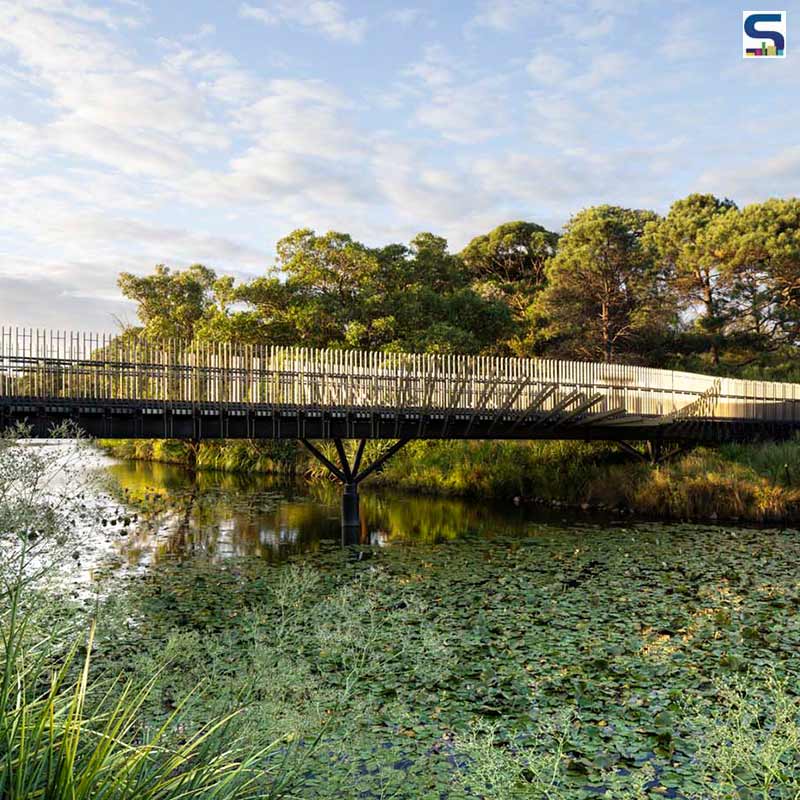
Designed to replace a decaying and inaccessible pedestrian bridge, Sam Crawford Architects created the Bara Bridge in Sydney, Australia. Spread across 40m on the Kensington Pond, the Bara Bridge has been established to generate a critical, accessible, southern pedestrian and cycle gateway to the Centennial Parklands and reinforce the Parklands masterplan of linking the Light Rail and Kensington residents to the broader ponds pedestrian/cycle network. Here is a detailed report on SURFACES REPORTER (SR).
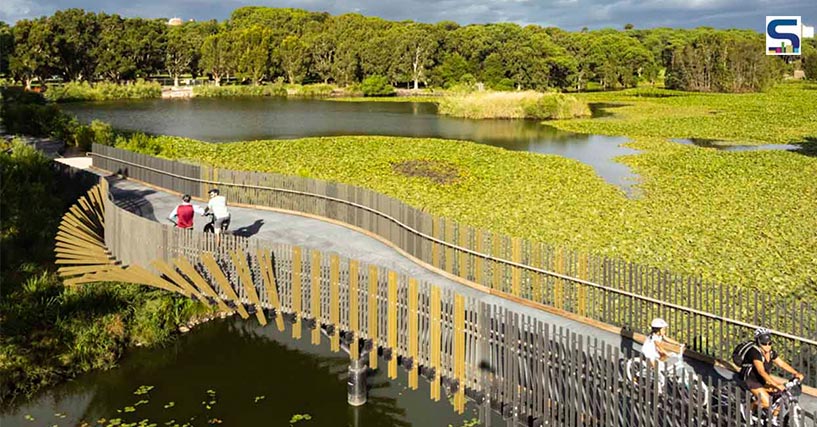 The Bara Bridge draws inspiration from these long-finned eels and draws attention to their migratory pattern.
Bara is a long-finned eel found in the ponds and waterways of Parklands. Often a valued food source for the Dharawal people, bara’s natural presence and their migratory patterns have carried a significant meaning in their culture. These long-finned eels journey their way to the warm waters of the Pacific to reproduce, while the grown-up eels swim south from the park’s ponds through the stormwater drains. However, their hatchlings return to the very same ponds a year later.
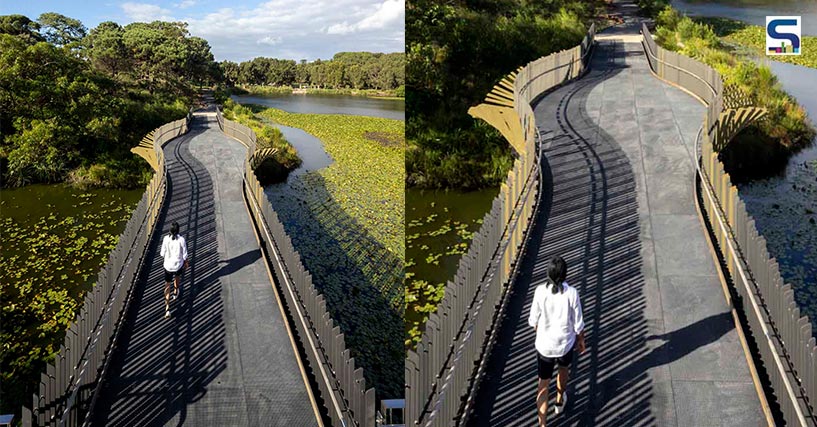 The Bara Bridge provides a passage for cyclists and pedestrians.
The Bara Bridge draws inspiration from these long-finned eels and draws attention to their migratory pattern, thereby celebrating the marine life and its importance in Aboriginal culture. It allows pedestrians to view eels and other aquatic life. To avoid disturbing the habitat of marine life, the team erected three piles which were driven into the pond bed. Each pile has a four-prong cruciform steel structure that supports the bridge and provides lateral and longitudinal stability.
 The deck of the bridge is made of durable lightweight, non-slip fibreglass reinforced plastic (FRP) which can be fully recycled.
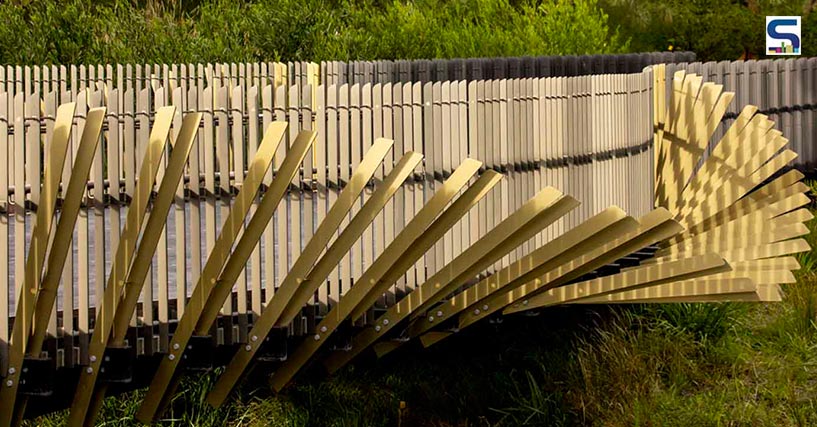
Anodized aluminium balusters peel away and shimmer in the sunlight as it reflects on the surfaces of the pond. The balusters are 100 per cent recyclable and have been specifically chosen for their colour, sheen and colourfastness. Additionally, the painted steel super-structure is also 100 per cent recyclable.
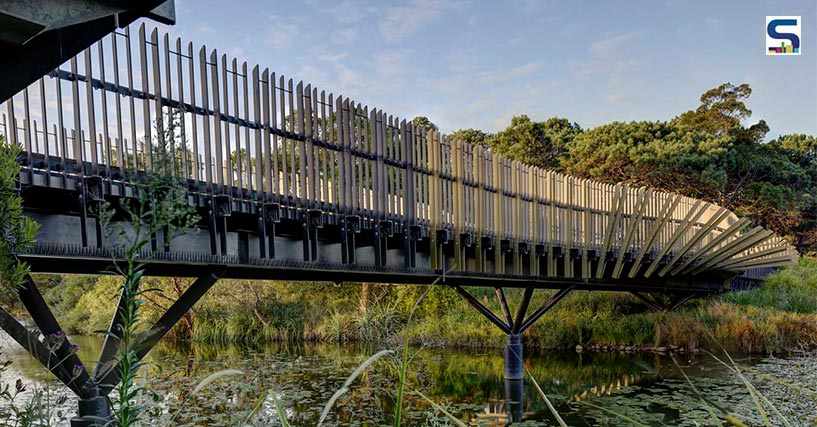 The balusters are 100 per cent recyclable and have been specifically chosen for their colour, sheen and colourfastness.
The balusters had been assembled in a workshop in Sydney to ensure accuracy and minimize any wastage. They were then disassembled and reassembled on site. The detailing of the design had been undertaken with builders, metal fabricators, engineers and client representatives with 3D shop drawings. The deck of the bridge is made of durable lightweight, non-slip fibreglass reinforced plastic (FRP) which can be fully recycled.
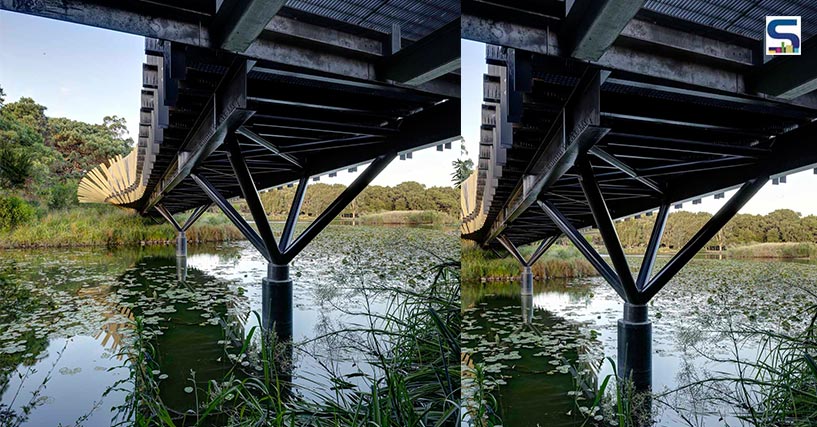 One of the main challenges the team came across was reconciling competing levels of construction tolerance.
One of the main challenges the team came across was reconciling competing levels of construction tolerance. The driven piles had a tolerance of up to 50mm, the primary steel structure a tolerance of 10mm and aluminium secondary structure less than 3mm. The tolerances and critical connections were then matched in close collaboration with structural engineers, builders and fabricators.
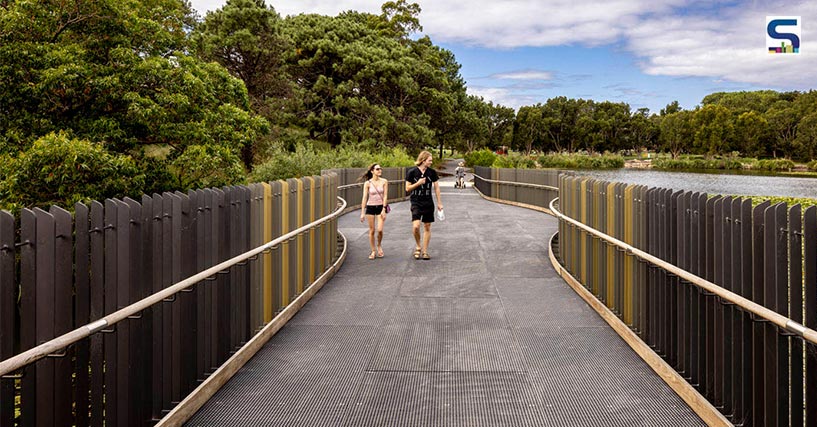 To avoid disturbing the habitat of marine life, the team erected three piles which were driven into the pond bed.
By linking the Parklands to Light Rail infrastructure, the Bara Bridge provides a passage for cyclists and pedestrians. Although awaiting approval, the second stage of the project aims at providing an interpretation and wayfinding.
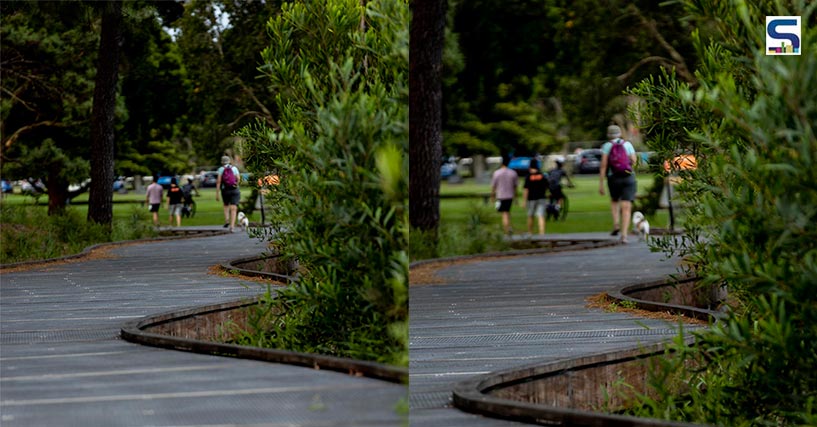 Spread across 40m on the Kensington Pond, the Bara Bridge has been established to generate a critical, accessible, southern pedestrian and cycle gateway.
Project details
Client: Centennial Park & Moore Park Trust
Project team: Sam Crawford, Ben Chan, Imogene Tudor and Ken Warr
Consultants:
Interpretation strategy: Lymesmith with Christie Fearns Graphic Design
Accessibility: Morris Goding Access Consulting
Geotech: JK Geotechnics
Structural engineer: Simpson Design Associates
Surveyor: Opus
Quantity surveyor: Altus Page Kirkland
Builder: Christie Civil
Photographs: Brett Boardman; Courtesy: Sam Crawford Architects