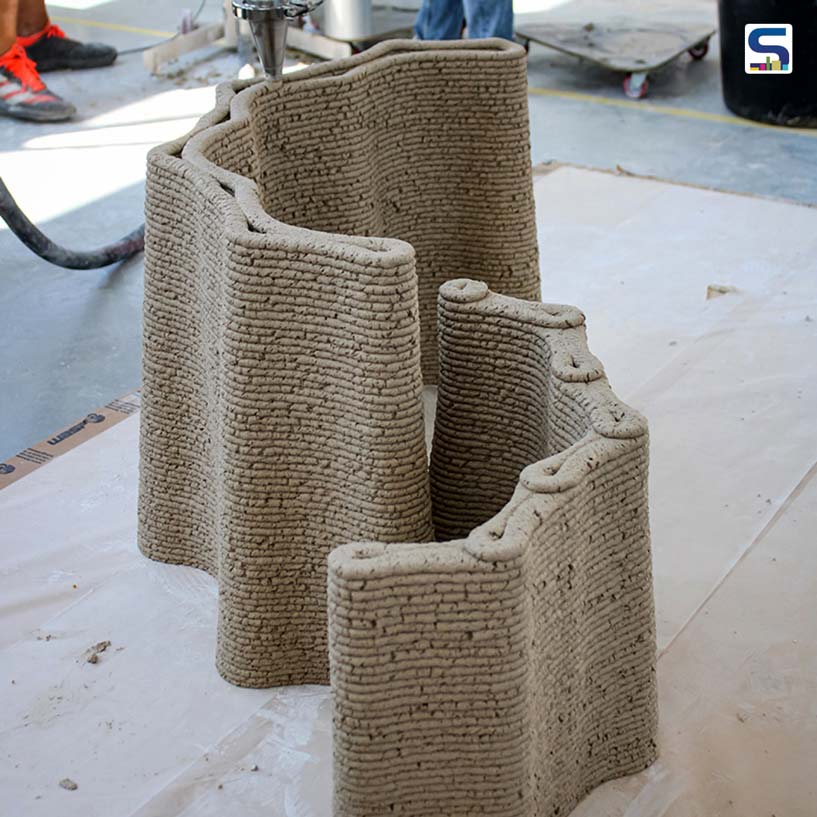
For most people, corn is simply a food crop. At a stretch, it is a source of biofuel. The idea of it serving as a construction material, however, is the kind of proposition that tends to raise eyebrows, until one encounters what Mexico-based design practice Manufactura has been methodically developing. Their innovation, named Corncretl, is a bio-based building composite which harnesses corn waste as a primary ingredient in a next-generation structural material. Know more about it on SURFACES REPORTER (SR).
The process
The composition of Corncretl is both scientifically considered and culturally rooted. It brings together limestone aggregates, dried corn residues and recycled nejayote, which is the calcium-rich wastewater generated during nixtamalization. This ancient process, which involves soaking corn in an alkaline solution, has been practised across Mesoamerica for thousands of years and remains central to the preparation of everyday staples such as tortillas and tamales. The liquid byproduct of this process, typically discarded without a second thought, turns out to be a surprisingly effective binding agent in a contemporary construction composite. The name itself is a deliberate linguistic fusion of corn and concrete, and the concept occupies a compelling space at the intersection of ancestral wisdom and advanced fabrication technology.
In developing Corncretl, Manufactura drew direct inspiration from pre-Hispanic Mayan construction methods, which made extensive use of lime-based materials long before the advent of Portland cement. The studio has taken this centuries-old legacy and reimagined it through the lens of robotic manufacturing. The production process begins with the collection of nixtamal waste, which is then dried, shredded and pulverised to a uniform particle size suitable for extrusion. This processed material is subsequently blended with mineral aggregates and organic binders to create a mixture capable of being fed through a printing system. Printability trials were carried out using a WASP Concrete HD Continuous Feeding System in conjunction with a KUKA robotic arm, resulting in a fabrication process that is precise, automated and consistently reproducible. The outcome is a material that not only resembles a structural product visually but performs as one in practice.
The result
One of the most significant advantages Corncretl holds over conventional concrete is its environmental performance. Cement manufacturing is widely recognised as a major contributor to global carbon dioxide emissions, and this is precisely where the new material makes its most compelling case. Compared to standard concrete, Corncretl achieves a reduction in carbon emissions of up to 70 per cent. This improvement stems in part from the inherent characteristics of lime-based systems. Unlike Portland cement, lime hardens at ambient temperature and requires lower calcination temperatures during production, resulting in substantially reduced energy consumption and fewer greenhouse gases released during the manufacturing process.
Lime also brings additional qualities that enhance the material’s long-term performance. It acts as a natural humidity regulator and possesses self-healing properties, enabling minor surface cracks to repair themselves over time without any external intervention. For a building material, this capacity for autonomous repair represents a remarkable and highly practical attribute.
The project has already advanced beyond theoretical research. A full-scale prototype had been constructed at the Shamballa open-air laboratory in Northern Italy. The project is led by designer Dinorah Schulte and project director Edurne Morales, supported by structural engineers and 3D printing specialists who contributed to optimising the material for practical application.
Image credit: Manufactura