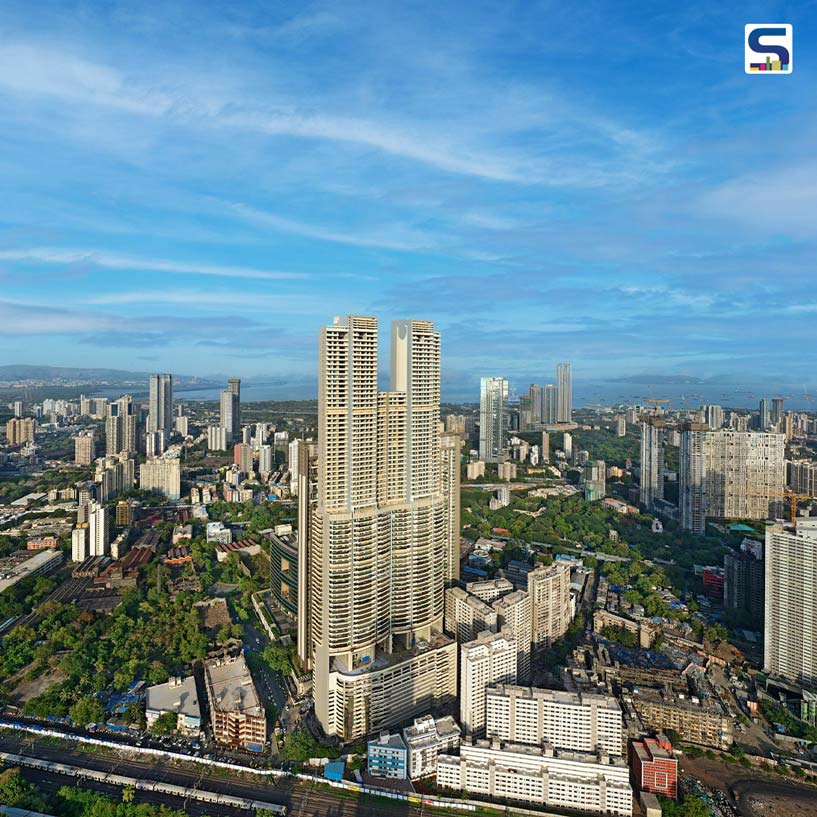
Hafeez Contractor recently unveiled the Minerva Tower, a soaring 301m residential skyscraper that currently holds the distinction of being the tallest fully completed high-rise building in India. Reportedly, the structure stands at an impressive 91 storeys and forms part of an exclusive group of only two supertall buildings in the entire country, a classification reserved for towers that surpass the 300m threshold. Know more about it on SURFACES REPORTER (SR).
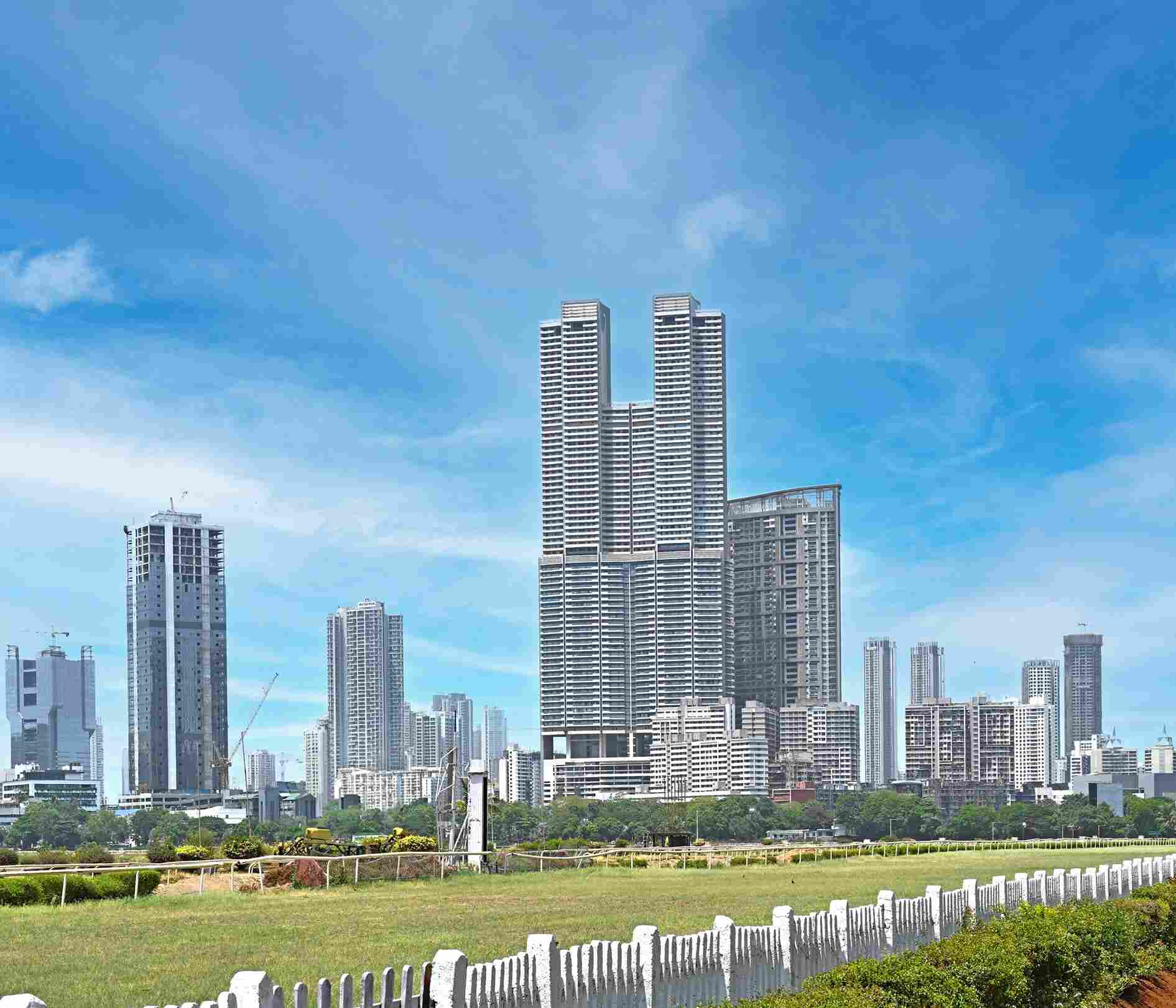
Reportedly, the structure stands at an impressive 91 storeys and forms part of an exclusive group of only two supertall buildings in the entire country, a classification reserved for towers that surpass the 300m threshold.
Mumbai Reaches New Heights
The only other structure in India to share this supertall status is the Palais Royale, another residential skyscraper located in Mumbai, which reportedly remains under active construction. Though not yet complete, Palais Royale has already been topped out at 320m, making it the tallest building in India by structural height.
Minerva Tower houses 362 marketable residential apartments and was conceived as the commercial centrepiece of a broader urban regeneration initiative covering a 2.6 hectare informal settlement. The project was developed in accordance with the Mumbai Slum Redevelopment Policy, a government-backed framework administered by the Slum Rehabilitation Authority. Before any luxury residential construction could begin, the initiative required the relocation of the existing slum residents into 10 newly constructed formal housing blocks, alongside the development of essential community infrastructure such as schools, shops and public amenities spread across nearly 2 hectare of the site.
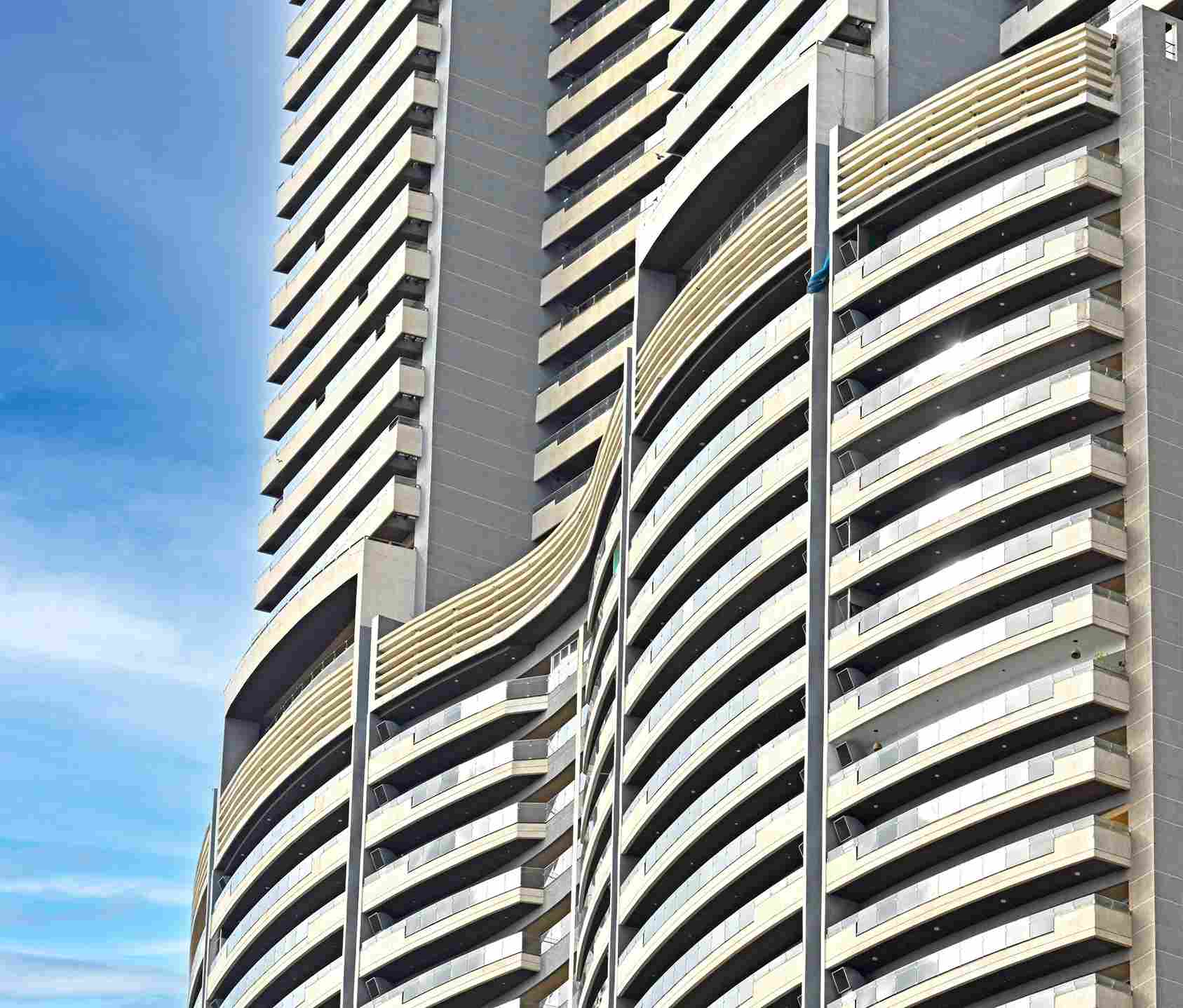
Minerva Tower houses 362 marketable residential apartments and was conceived as the commercial centrepiece of a broader urban regeneration initiative covering a 2.6 hectare informal settlement.
It was only after these social obligations were fully satisfied that the remaining 6,000 sqm parcel of land became eligible for private development. According to the studio, tall buildings in India are generally not the result of prestige-driven competition but rather practical responses to complex land and policy conditions. In a city like Mumbai, where land is frequently made available only through slum rehabilitation schemes, the obligations associated with re-housing and premium payments leave developers with relatively small plots. Vertical construction, thus, becomes an economic necessity to ensure financial viability while remaining compliant with regulatory requirements.
Against All Odds
Architecturally, Minerva Tower is characterised by its distinctive twin-tower configuration, brought together by a shared podium base. The design incorporates continuous curved deck levels and generously deep-set balconies and the structure has been built predominantly using reinforced concrete. A central design priority was ensuring that every apartment enjoys an outlook towards either the lush greenery of the Mahalaxmi Racecourse or the expansive Arabian Sea. The residential mix is predominantly composed of 3-4 bedroom units, though the tower also features duplex penthouses and premium homes offering up to five bedrooms. The shared podium accommodates parking facilities along with a range of sports and leisure amenities for residents.
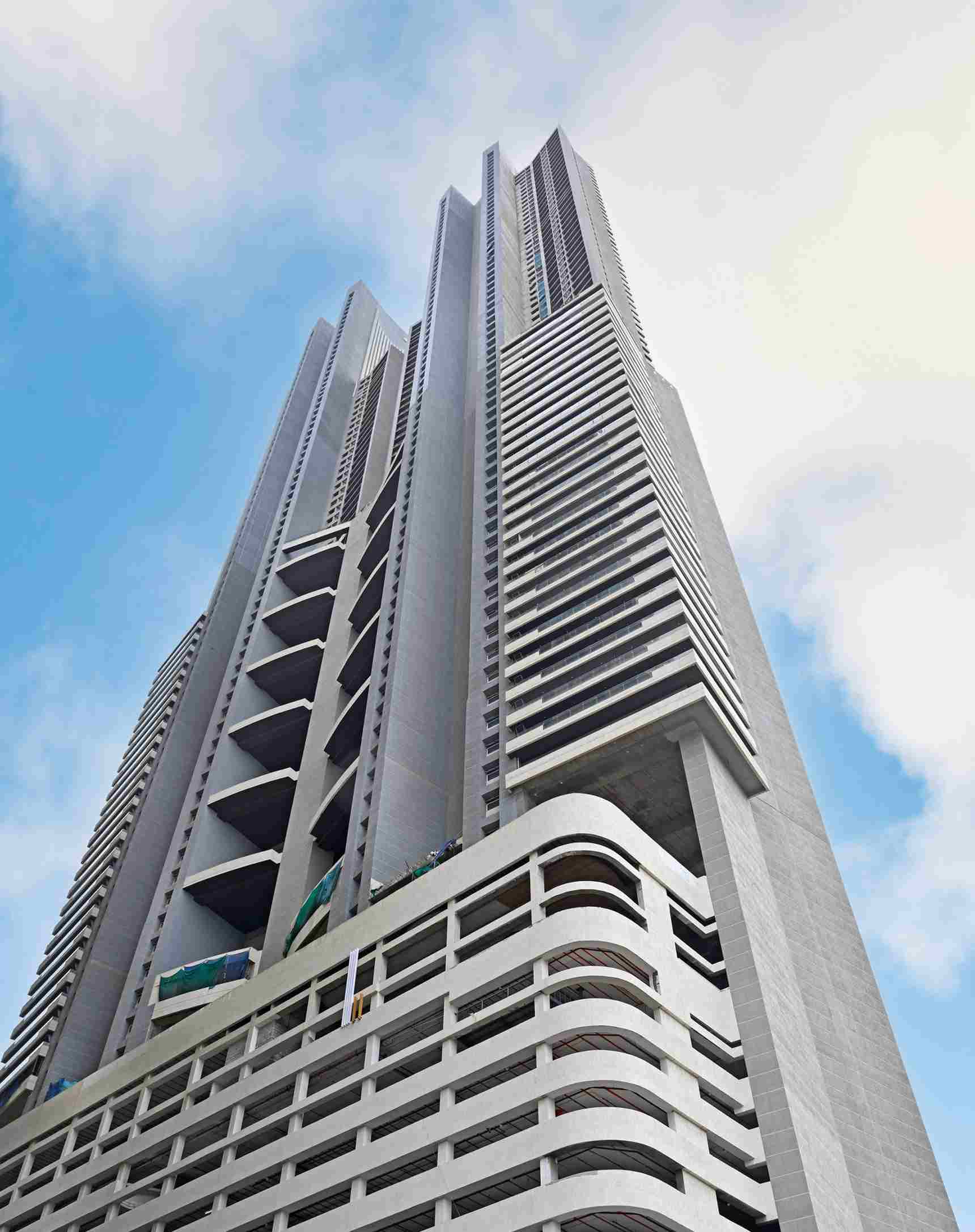
The design incorporates continuous curved deck levels and generously deep-set balconies and the structure has been built predominantly using reinforced concrete.
Notably, the tower’s final twin-tower form was not part of the original design. A significant transformation occurred midway through construction when changes to Mumbai’s building regulations altered the rules governing floor space exemptions. Under the previous regulatory framework, expansive decks and shared spaces did not count toward the Floor Space Index, allowing for broader floor plates up to the 51st level. When updated regulations revoked these exemptions, the design team was reportedly compelled to reconfigure the upper floors, reducing the footprint, consolidating lift cores and decreasing the number of apartments per floor, thus resulting in the distinctive dual-tower profile that defines the building today.
Image credit: Noshir Gobhai