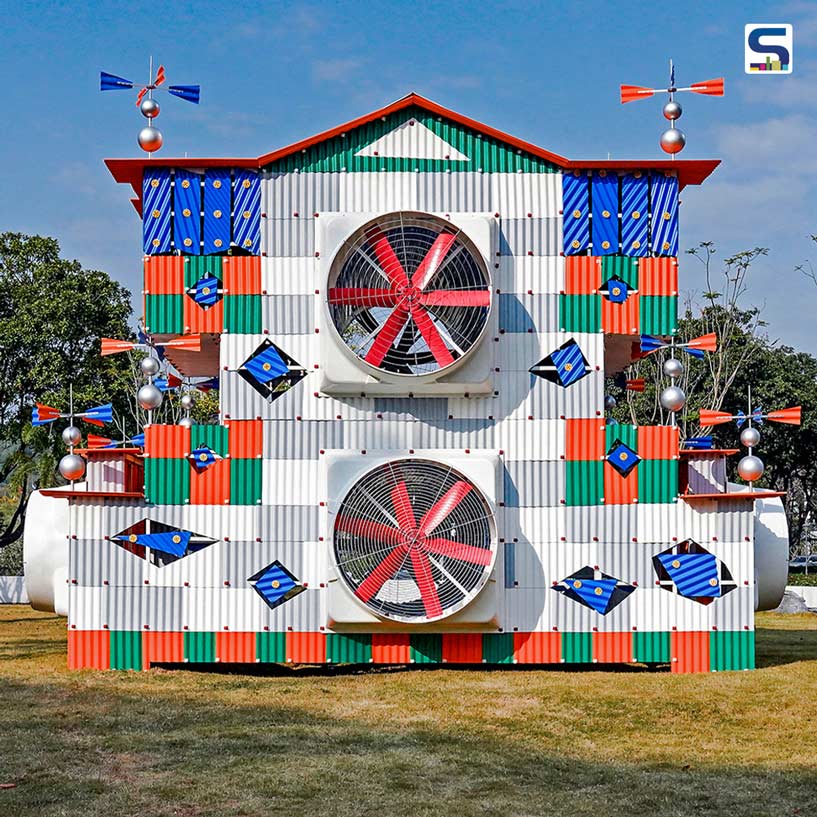
There is a particular kind of wonder that comes from witnessing buildings behave like a living thing. Clock House No 2, a public art installation conceived by the Beijing-based Drawing Architecture Studio, captures this feeling. Every 15 minutes, it emits a chime and floods its structure with shifting light, transforming the mundane act of timekeeping into an immersive, multi-sensory event. Know more about it on SURFACES REPORTER (SR).
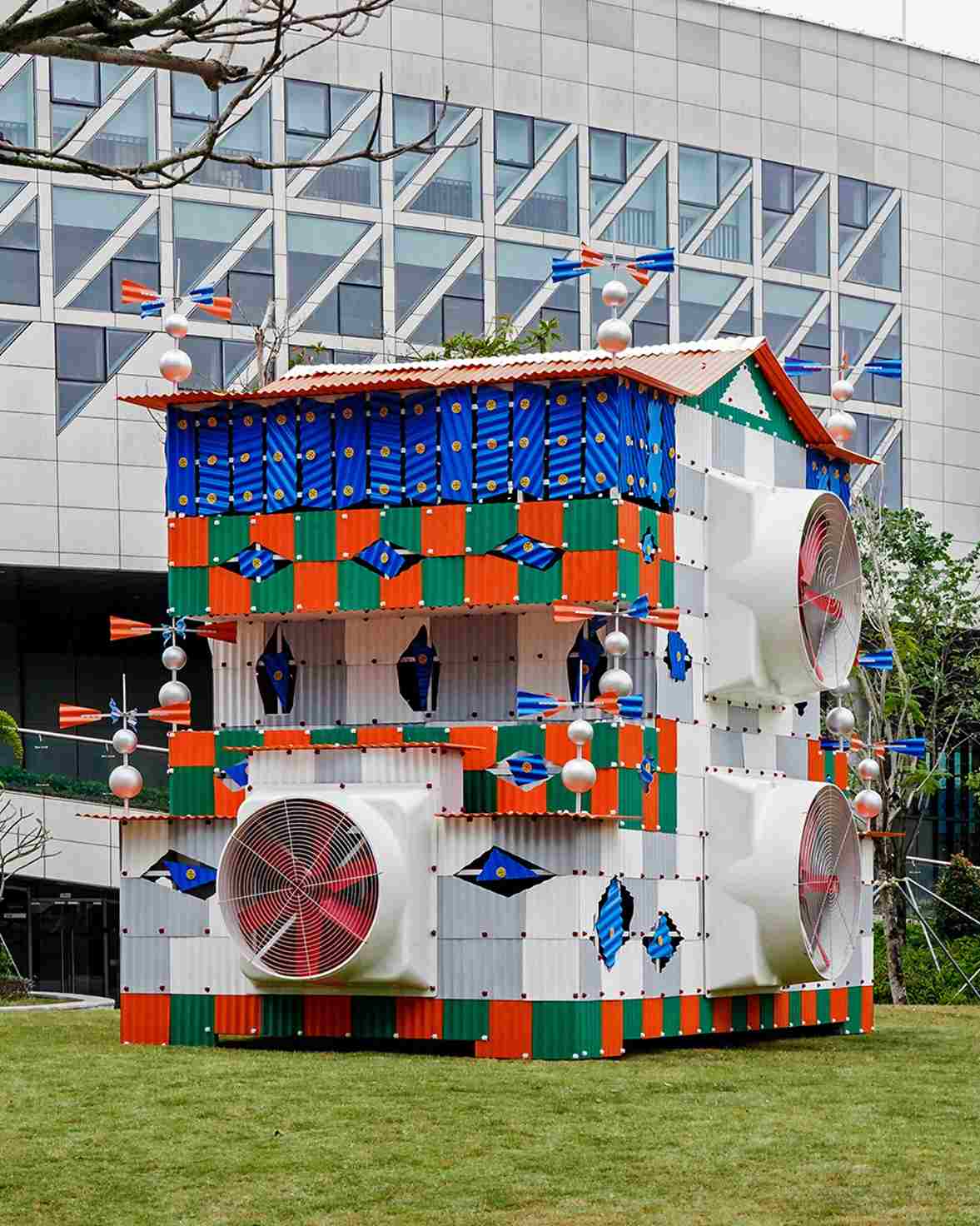
Rather than replicating the precious craftsmanship of those early automaton timepieces, Drawing Architecture Studio constructed the piece using widely available, low-cost industrial components, the ones sourced from ordinary construction supply stores rather than specialist workshops.
The inspiration
The work had been commissioned for the 7th Shenzhen Bay Public Art Season in China, where it remains on view through April 19, 2026. The structure bears an unmistakable resemblance to a mantel clock yet it has been scaled to the proportions of a modest dwelling. This deliberate collision of scales is central to the project’s conceptual ambition.
The studio’s research led them to a rich and often overlooked chapter of cross-cultural history. During the transition from the late Ming Dynasty to the early Qing Dynasty, European missionaries arrived in China bearing automaton clocks as gifts for the imperial court. These were not merely instruments for measuring hours. They were elaborate mechanical spectacles with intricate assemblages of gears, springs and moving parts that chimed and animated themselves with theatrical precision. The Chinese termed them Zi Ming Zhong, meaning the clock that rings by itself, a name that captures both their novelty and their seemingly self-sufficient nature. Over time, these objects migrated from the exclusive domain of the emperor’s court into broader domestic life, becoming household items. They were functional but also profoundly symbolic artifacts of cultural negotiation.
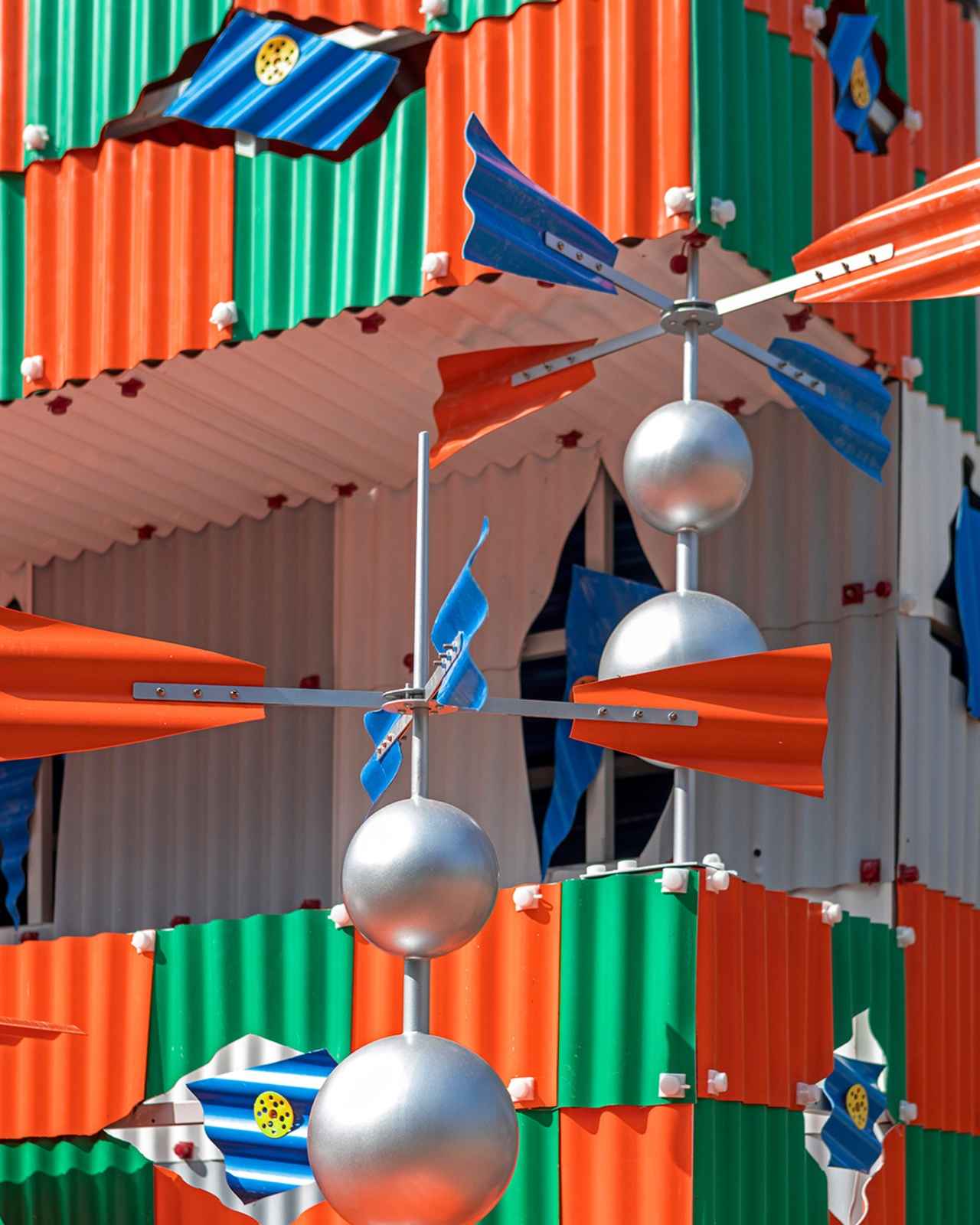
Visually, the structure draws on the vernacular architectural language of Guangdong Province, referencing the layered facades and tiled rooflines characteristic of everyday residential buildings in the region.
The mechanism
Clock House No 2 takes this historical encounter as its point of departure, though it reinterprets it through an entirely contemporary sensibility. Rather than replicating the precious craftsmanship of those early automaton timepieces, Drawing Architecture Studio constructed the piece using widely available, low-cost industrial components, the ones sourced from ordinary construction supply stores rather than specialist workshops. This choice carries its own quiet argument about accessibility and the nature of making in the present day.
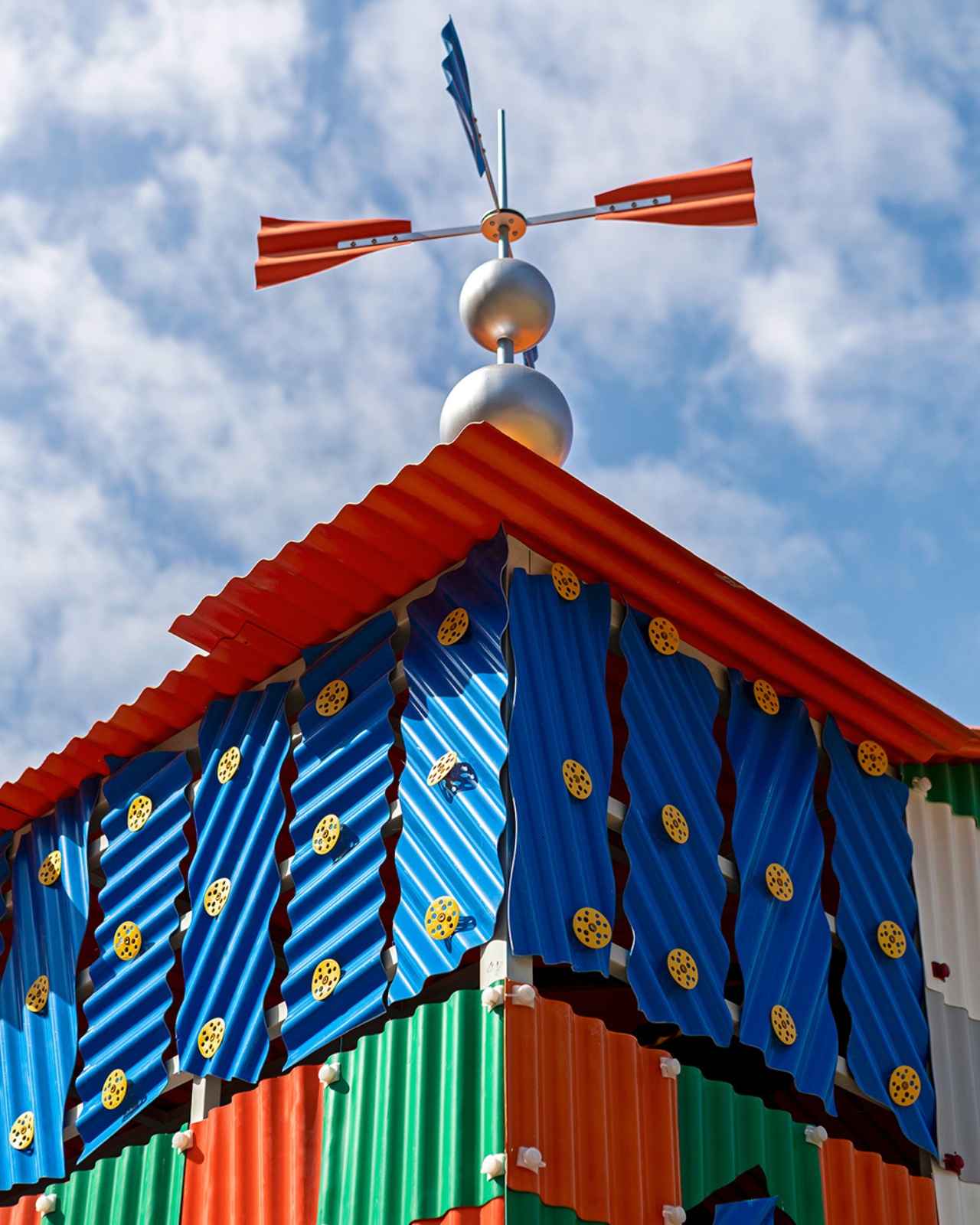
LED strips woven into the fabric of the structure illuminate its openings from within, casting a warm glow through the gaps in the facade.
Visually, the structure draws on the vernacular architectural language of Guangdong Province, referencing the layered facades and tiled rooflines characteristic of everyday residential buildings in the region. The result is a form that simultaneously evokes local domestic tradition and the historically imported mechanics. Where the original Zi Ming Zhong clocks depended on intricate mechanical choreography to mark the hours, Clock House No 2 achieves its temporal performances through electronics and light. LED strips woven into the fabric of the structure illuminate its openings from within, casting a warm glow through the gaps in the facade. On the quarter hour, an automated musical chime sounds while the lighting shifts through a sequence of colours.
Image credit: Drawing Architecture Studio