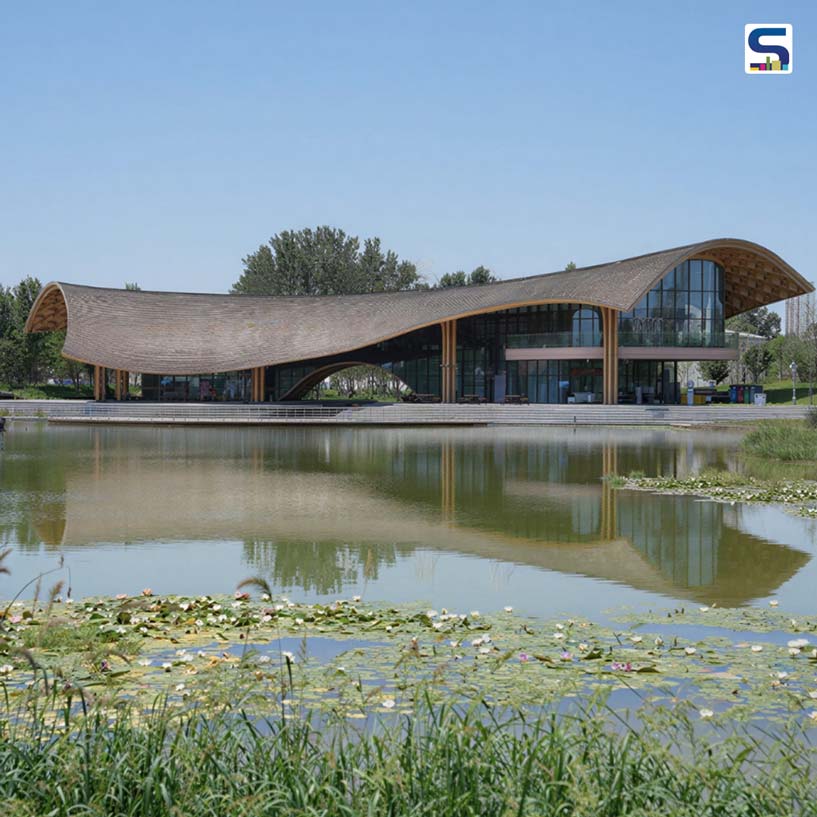
Positioned at the water’s edge, the wooden columns of the Lakeside Restaurant at Silk Road Friendship Park in Dingzhou, China, rise and branch upward in a manner that feels less like construction and more like the natural extension of a forest reaching toward a lake. Completed in 2025 by THAD SUP Atelier and designed by principal architects Song Yehao and Chen Xiaojuan, the structure spans 2,400 sqm within Hebei Province’s culturally significant Silk Road Friendship Park, which is a site historically linked to ancient trade routes. What truly distinguishes this project is a design philosophy that is simultaneously rooted in natural form and technical precision. Know more about it on SURFACES REPORTER (SR).
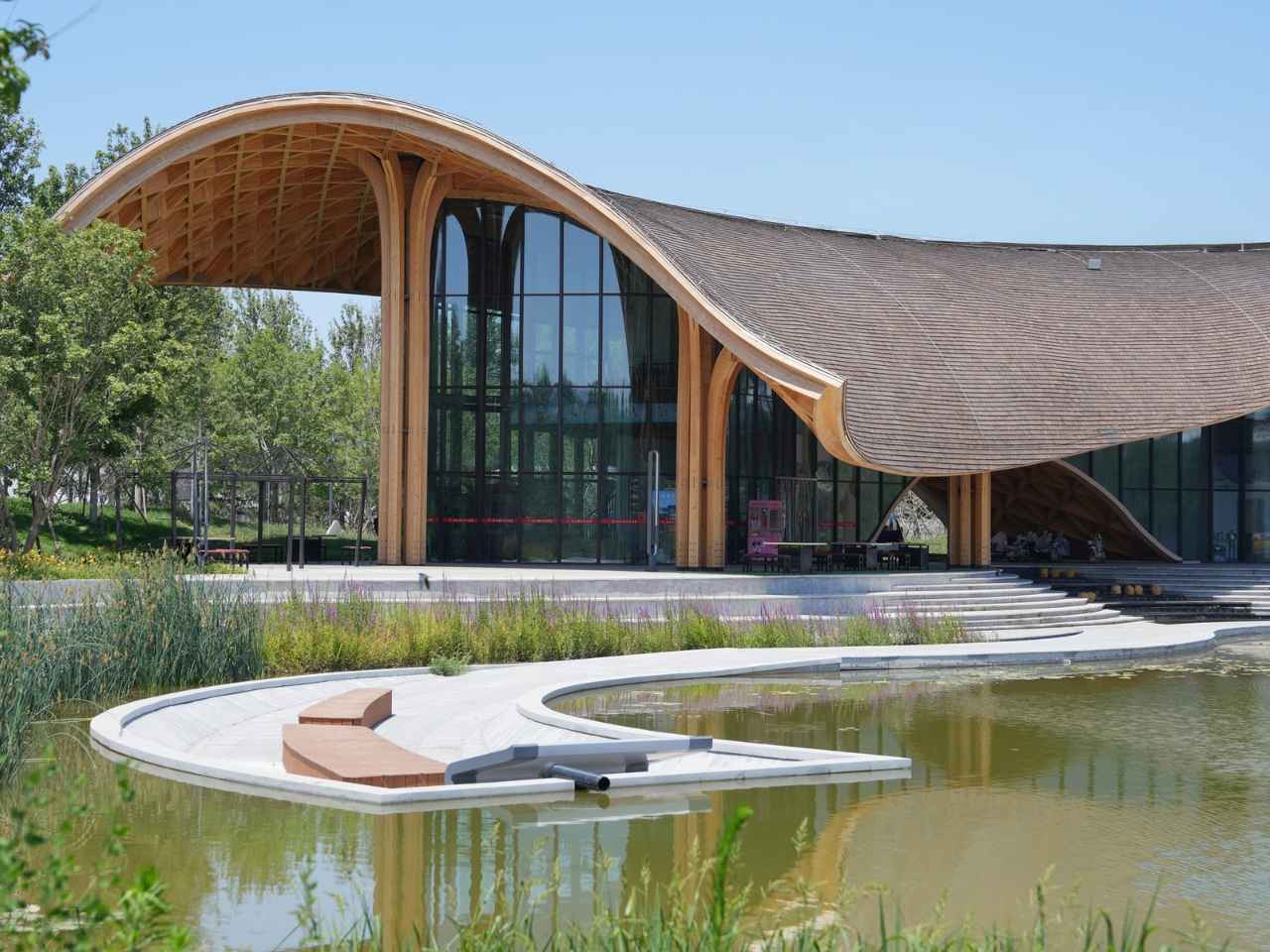
Completed in 2025 by THAD SUP Atelier and designed by principal architects Song Yehao and Chen Xiaojuan, the structure spans 2,400 sqm within Hebei Province’s culturally significant Silk Road Friendship Park, which is a site historically linked to ancient trade routes.
The conceptual foundation of the Lakeside Restaurant draws from two landscapes at once, namely, the forest canopy overhead and the reflective lake below. Blossoming wooden columns emerge from the ground and spread outward to support a fluid, continuous roof, all conceived as a single, unified system rather than a collection of separate components. The outcome resembles something that might have grown organically from the earth rather than been assembled by human hands.
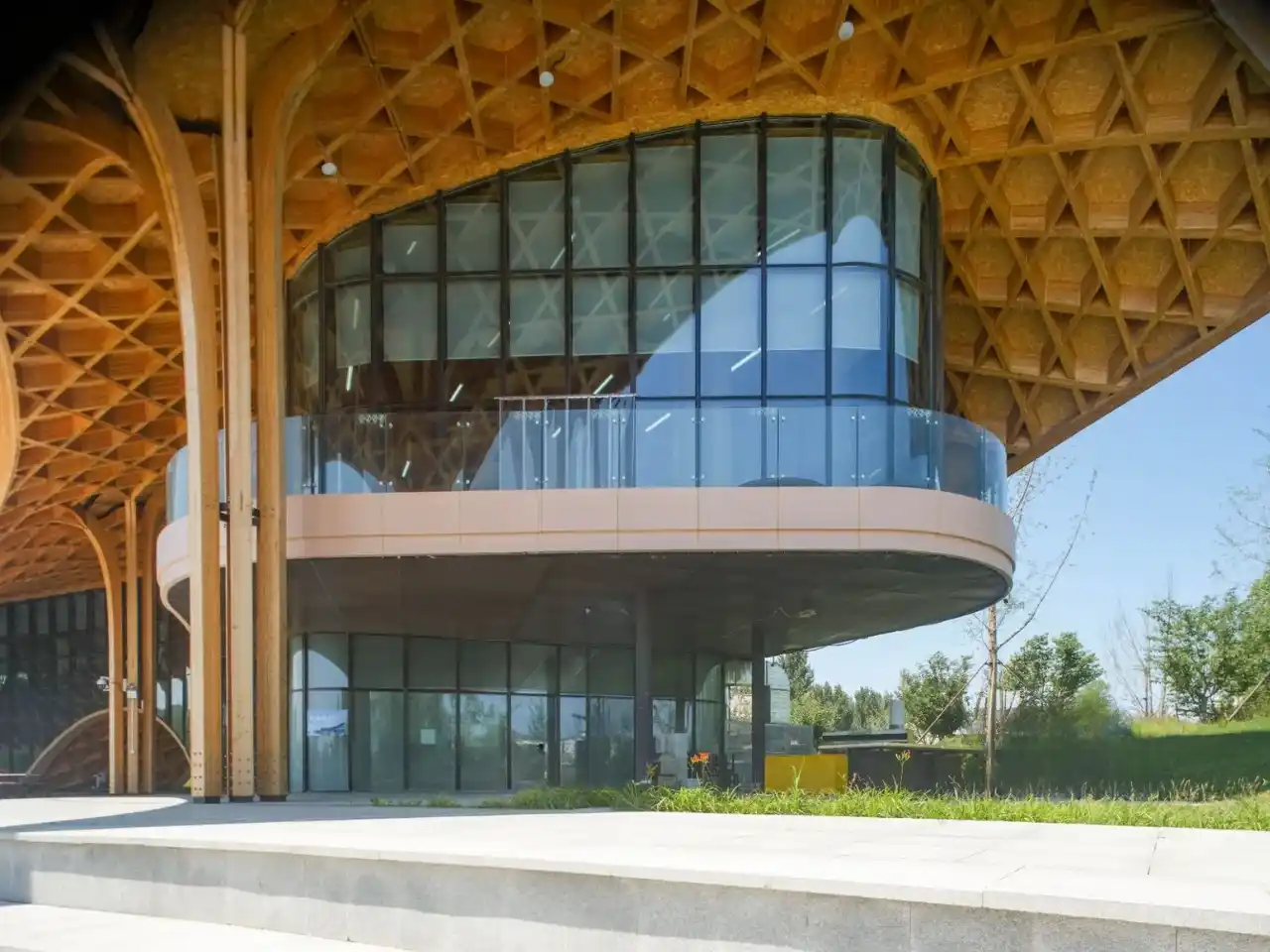
Glued laminated timber was shaped using digital industrial prefabrication techniques that allowed precise formal control, while each wooden element was individually optimized through computational tools.
The design team achieved this effect through a thoughtful amalgamation of digital fabrication and traditional woodworking. Glued laminated timber was shaped using digital industrial prefabrication techniques that allowed precise formal control, while each wooden element was individually optimized through computational tools. The spatial organization of the building is equally considered. The structure follows the natural contour of the shoreline, sloping gradually from south to north. Along the western façade, the side that faces the main park road, the design is comparatively closed off, concealing the kitchen and service areas from public view. This apparent restraint, however, is entirely purposeful. Rather than dispersing visitors’ attention, it concentrates it and directs guests toward a central archway on the ground floor.
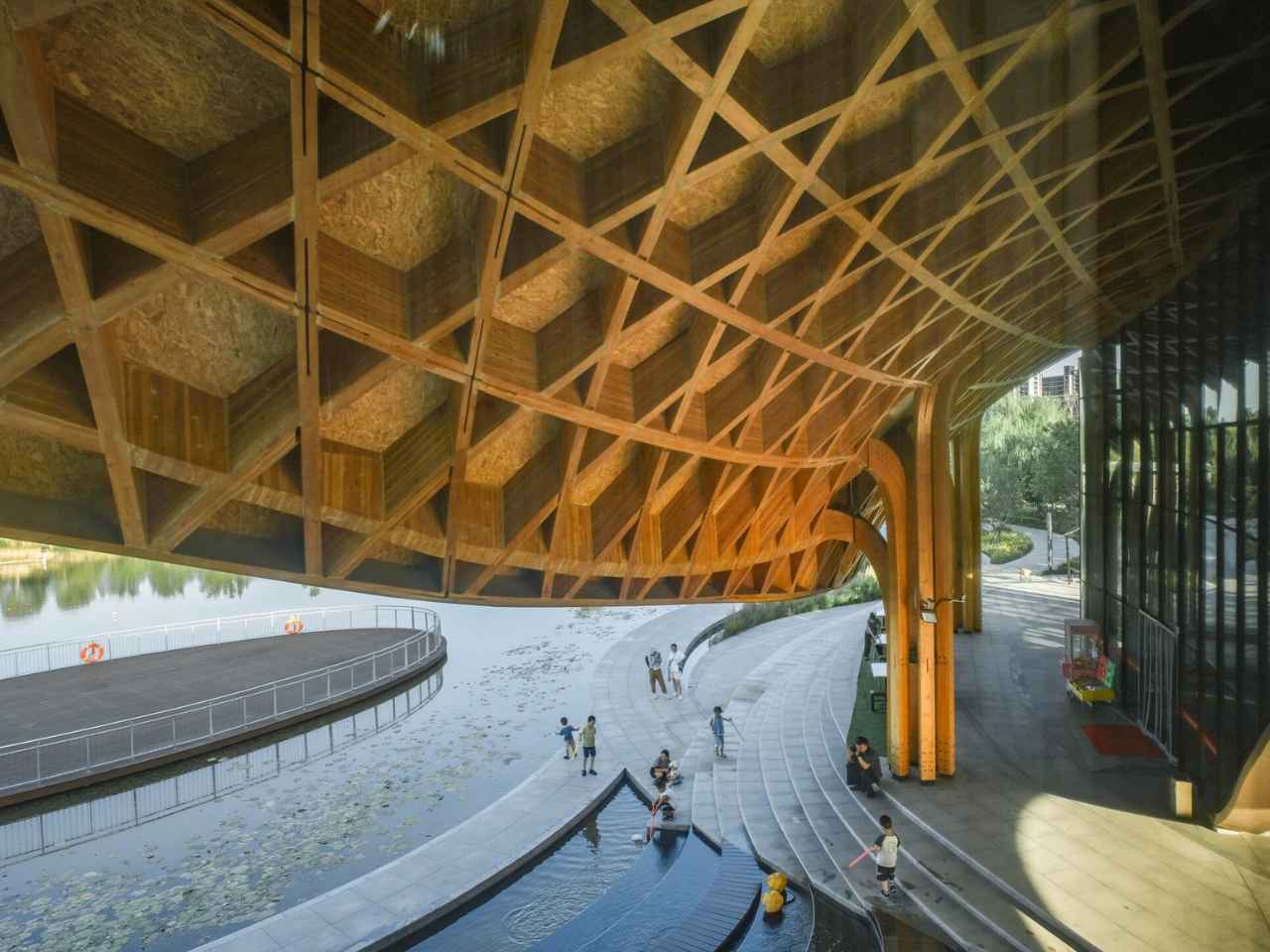
The structure follows the natural contour of the shoreline, sloping gradually from south to north.
Stepping through that threshold produces an immediate and deliberate revelation as the lake opens up before the visitor in full. The spatial sequence, from arrival to discovery to lingering contemplation, is structured like a narrative. Three sides of the building face the lake, and the projecting roof generates a series of layered corridor spaces that evolve as visitors move through them. By day, the timber framework casts shifting shadows across the glass curtain wall, producing a dappled, forest canopy effect that filters into the interior. By night, with the building lit from within, the hard boundary between inside and outside dissolves, and the curving wooden structure glows with a quiet luminosity. It is the kind of building that rewards return visits at different hours, each one yielding something new.
Image credit: Xiaoqing Guan, Xinxhing Chen
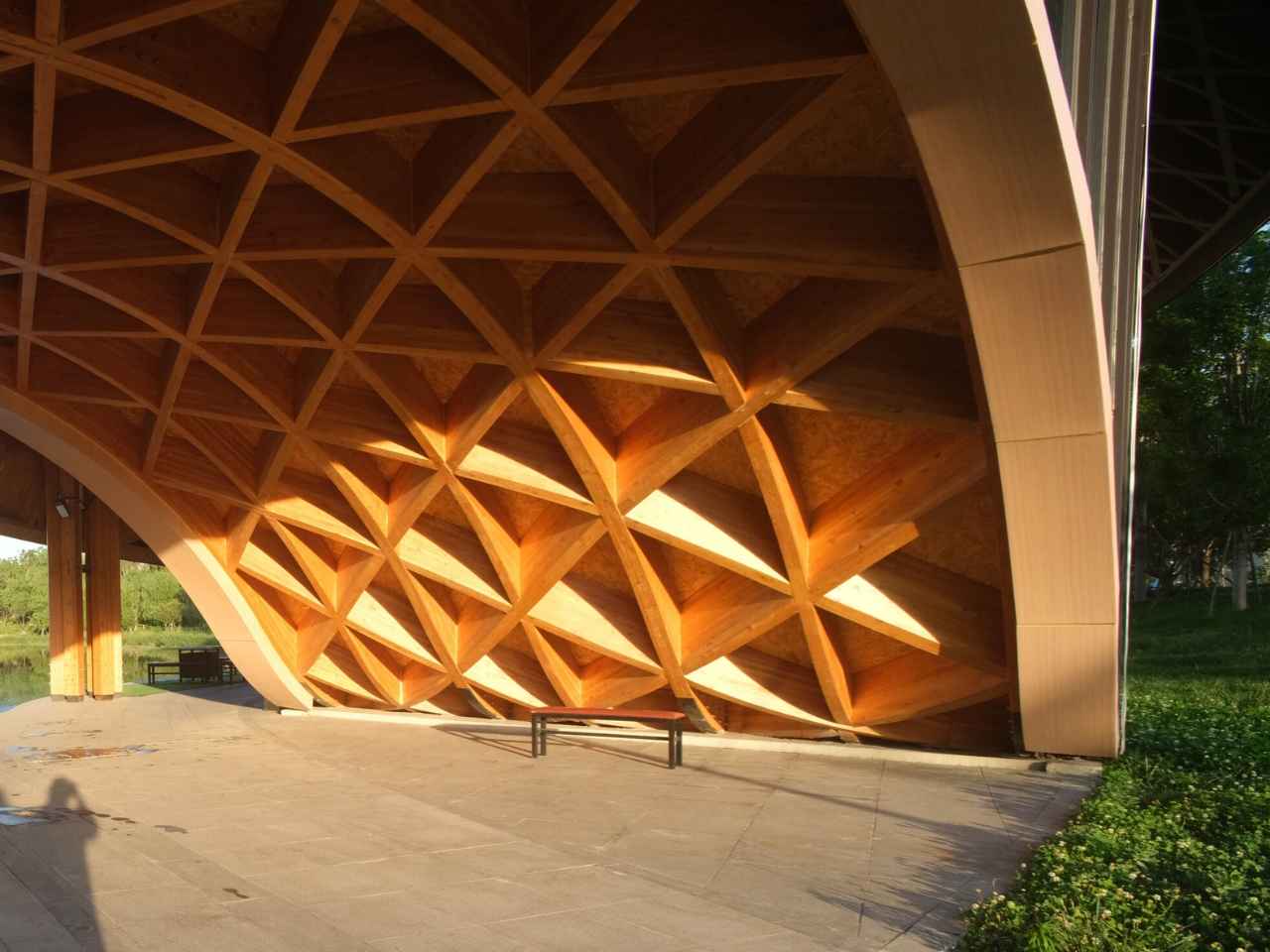
Blossoming wooden columns emerge from the ground and spread outward to support a fluid, continuous roof, all conceived as a single, unified system rather than a collection of separate components.