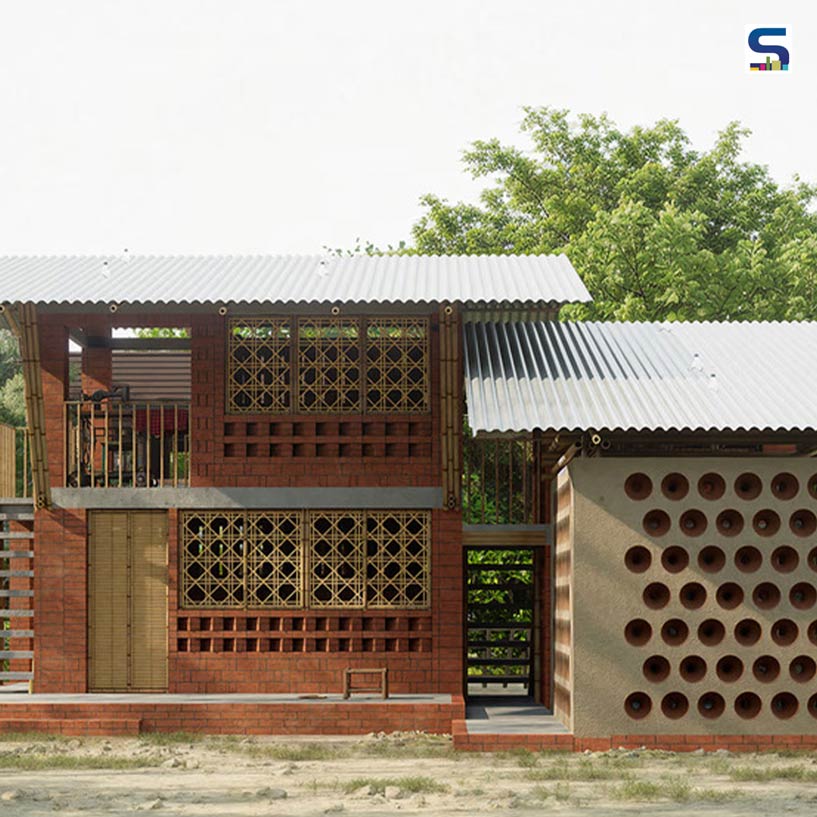
The $2,500 Vernacular Home in Para Dash, a bamboo-rich village in Modonpur, Bangladesh, stands as a thoughtful demonstration of what deeply contextual and resource efficient design can achieve. Conceived by designer Xinyun Li for a multi-generational family of four, including the parents, their son and daughter-in-law, the home is designed keeping in mind the realities of local climate, culture, economy and ecology. Despite its extremely modest budget, the project provides all essential spatial functions while integrating climate-responsive strategies and construction techniques that draw entirely from the immediate environment. Learn more about this climate-responsive architecture that does not require a large budget but knowledge of vernacular content on SURFACES REPORTER (SR).
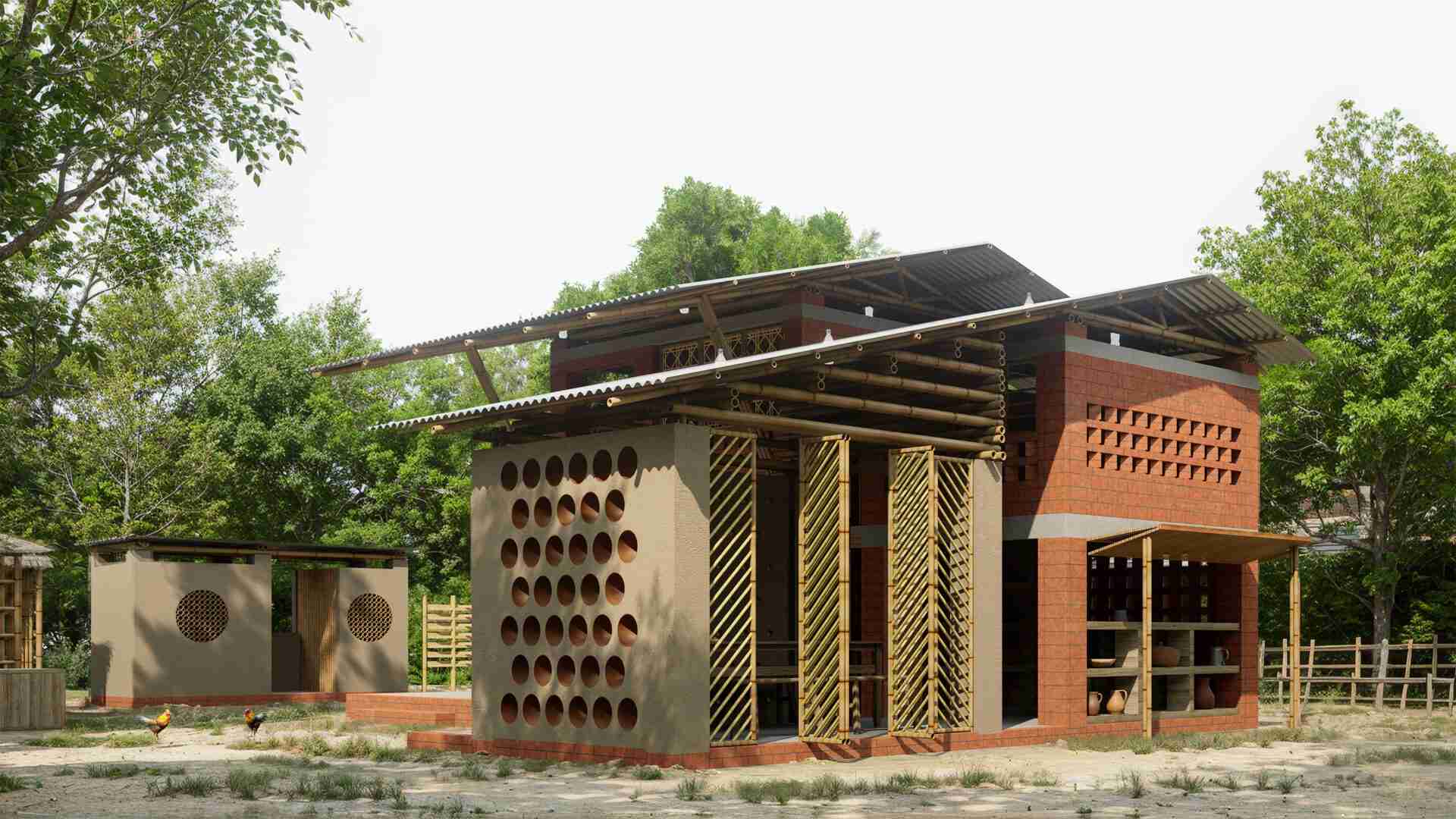
Li’s design philosophy was grounded in an uncompromising commitment to local materials and community embedded knowledge.
Affordable vernacular architecture
Li’s design philosophy was grounded in an uncompromising commitment to local materials and community embedded knowledge. Mud, straw and bamboo were directly sourced from the natural surroundings, while bricks and tin sheets were manufactured nearby using regionally available resources. This approach eliminated transportation costs, reduced environmental impact and kept the overall expenditure, materials plus labour, within the remarkably low threshold of USD 2,500. The project is, therefore, not only affordable but also ecologically sensitive and socially attuned.

These pots are not used ornamentally; instead, they compress and channel incoming air, helping to cool it before it enters the interior, thereby improving thermal comfort.
Bangladesh’s demanding climate has shaped every design decision. The region experiences intense heat, prolonged monsoon rains and recurrent flooding. Instead of relying on mechanical systems, Li devised a spatial and architectural configuration that works harmoniously with natural forces. The house rests on a raised plinth and incorporates a protective veranda to mitigate flood-related risks. Meanwhile, its steeply pitched roofs ensure efficient drainage during monsoons, preventing water accumulation and structural deterioration. Inside, the rooms are laid out to promote natural airflow where windows are strategically positioned at different heights on opposing facades so that wind can enter, circulate and expel heat without the need for electrical cooling.
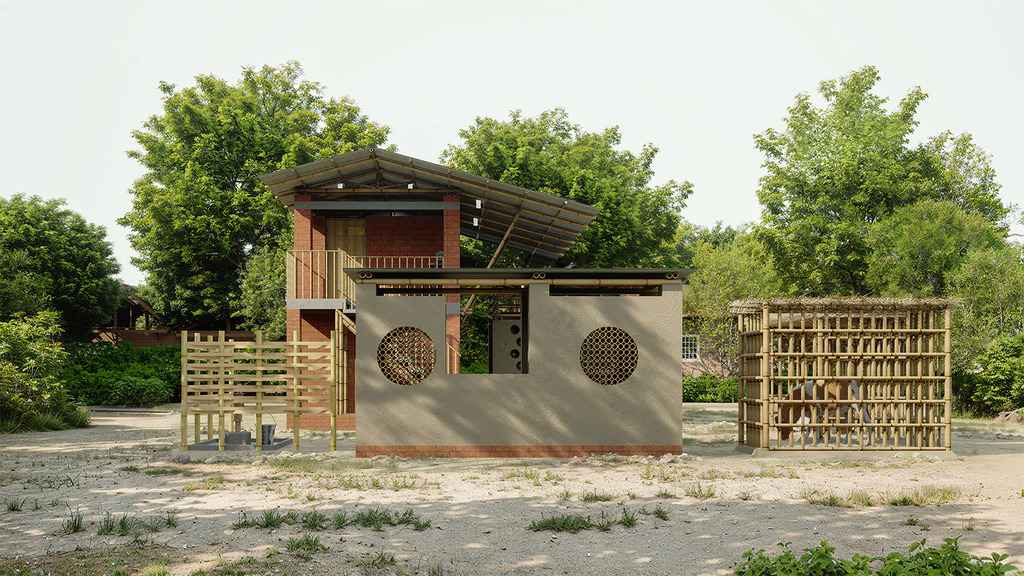
Meanwhile, its steeply pitched roofs ensure efficient drainage during monsoons, preventing water accumulation and structural deterioration.
Climate smart home
One of the project’s most inventive features appears on the tea house facade, where traditional clay pots from a neighbouring village are inserted into the mud walls. These pots are not used ornamentally; instead, they compress and channel incoming air, helping to cool it before it enters the interior, thereby improving thermal comfort. This technique blends indigenous wisdom with contemporary environmental thinking, demonstrating how simple, low-cost elements can significantly enhance comfort.
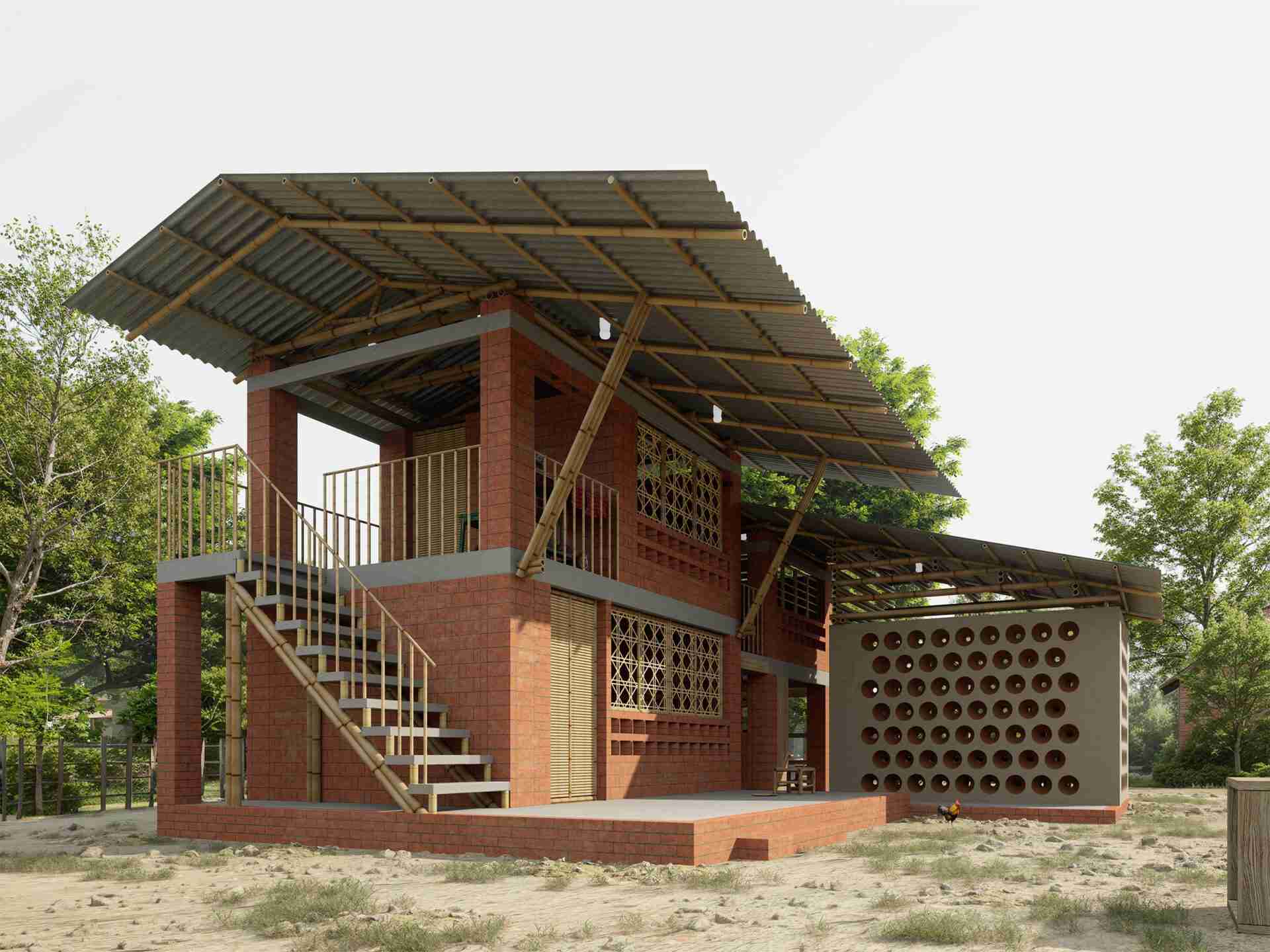
Mud, straw and bamboo were directly sourced from the natural surroundings, while bricks and tin sheets were manufactured nearby using regionally available resources.
Given that electricity is limited in Para Dash, the roof incorporates liter bottles of light, an ingenious low-tech system where water-filled plastic bottles are fitted into openings to refract sunlight into the rooms. This allows daytime illumination without relying on power, further reducing the home’s operational costs while supporting daily activities. Programmatically, the house is tailored to the family’s needs and lifestyle patterns. It contains two private bedrooms, a kitchen, a toilet, two cow sheds and a space allocated for a future child’s room. The daughter-in-law, who engages in weaving, has been provided with a dedicated workspace on the upper-level balcony adjacent to her bedroom. This placement allows her to practise her craft while remaining visually and socially connected to the central courtyard and family activities below.

One of the project’s most inventive features appears on the tea house facade, where traditional clay pots from a neighbouring village are inserted into the mud walls.
Along the village road, at the courtyard’s edge, sits a tea house and small shop that form the economic backbone of the parents’ livelihood. Positioned to be easily accessible to passers-by while still maintaining the privacy of the home, this semi-public zone reinforces the tight knit social fabric of rural Bangladeshi settlements.
Project details
Project name: $2,500 Vernacular Home
Location: Modonpur, Bangladesh
Studio: XYLab
Lead designer: Xinyun Li
Photographs: Xinyun Li