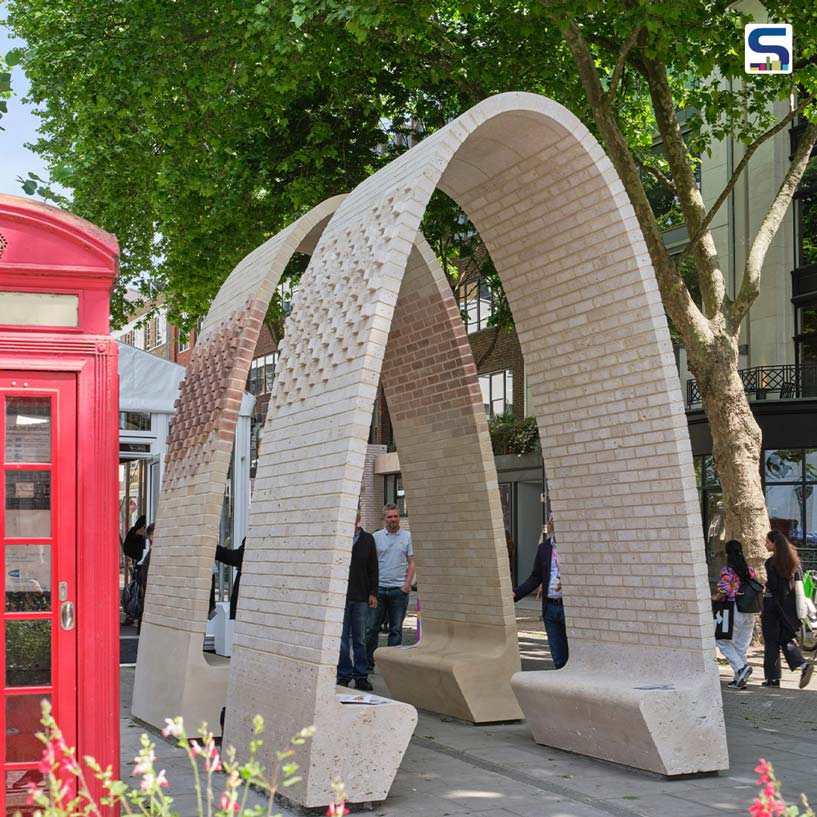
At this year’s Clerkenwell Design Week in London, architecture studio Hawkins\Brown and engineering firm Webb Yates collaborated on a striking installation titled Brick from a Stone: Arch Revival. Installed at Clerkenwell Green, the project features two hyperbolic arches, each reaching a height of 4m. These graceful, freestanding structures are more than artistic displays. They are experimental prototypes highlighting the sustainable potential of British natural stone and questioning conventional building practices. Know more about the installation on SURFACES REPORTER (SR) as it advocates sustainable design and encourages a wider adoption of stone as a responsible and practical building material.
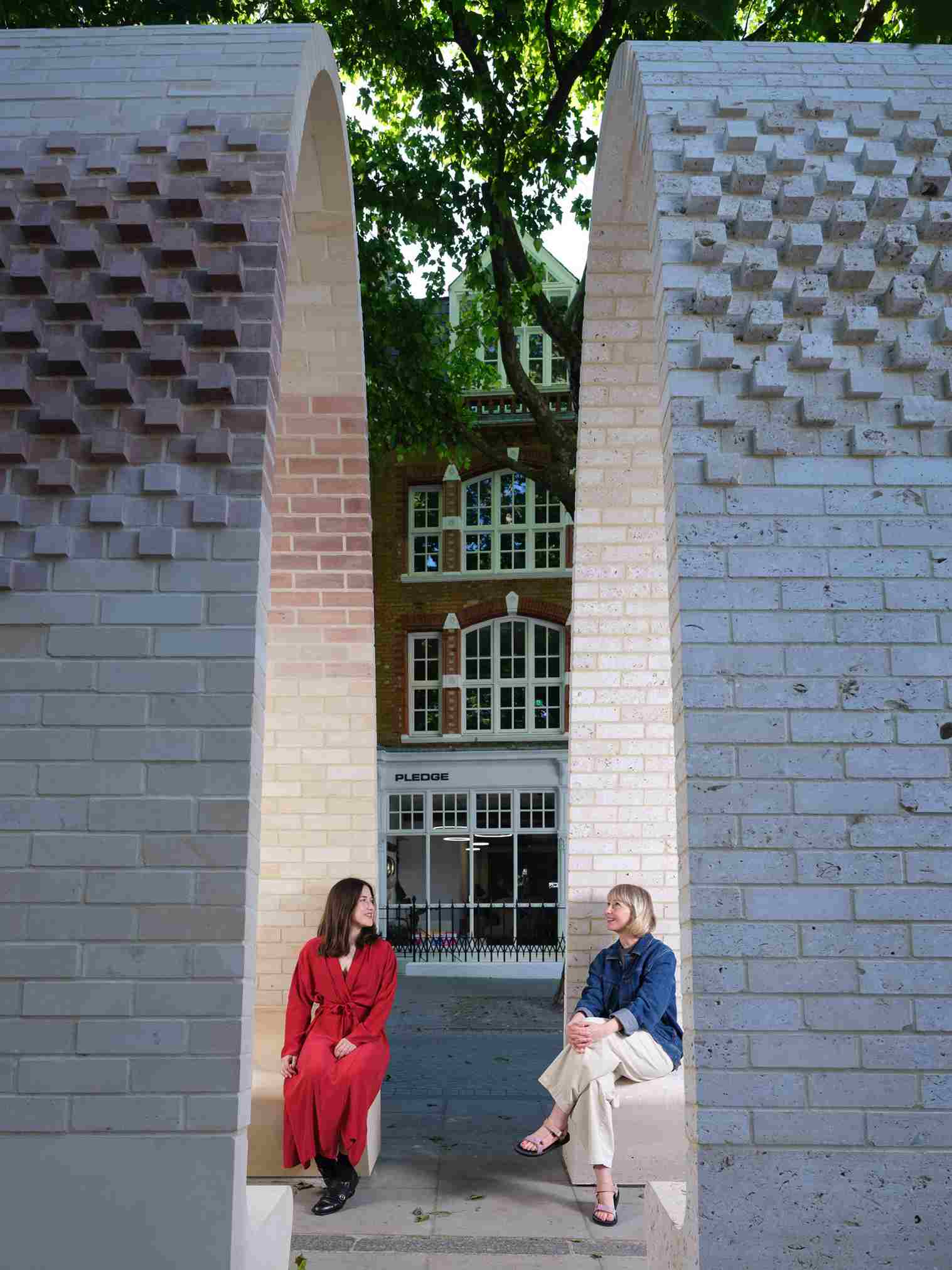
These graceful, freestanding structures are more than artistic displays. They are experimental prototypes highlighting the sustainable potential of British natural stone and questioning conventional building practices.
Waste to Wonder
The arches of Brick from a Stone: Arch Revival are crafted from bricks made using discarded stone, which had been quarried but left unused due to irregularities in colour or texture, variations which often deemed commercially undesirable but structurally irrelevant. By giving this overlooked material a second life, the design duo not only challenged industry aesthetics but also demonstrated a meaningful approach to reducing construction waste.
Each arch rests atop solid stone seating, further integrating the installation with tactile permanence and usability. The sandstone arch incorporates stones of varied hues from Hutton Stone, while the other arch employs Portland stone bricks sourced from Albion Stone’s Dorset quarry. A pixelated design was created on the arch exteriors by carefully arranging T-shaped stone bricks, adding a contemporary flair to this age-old material.
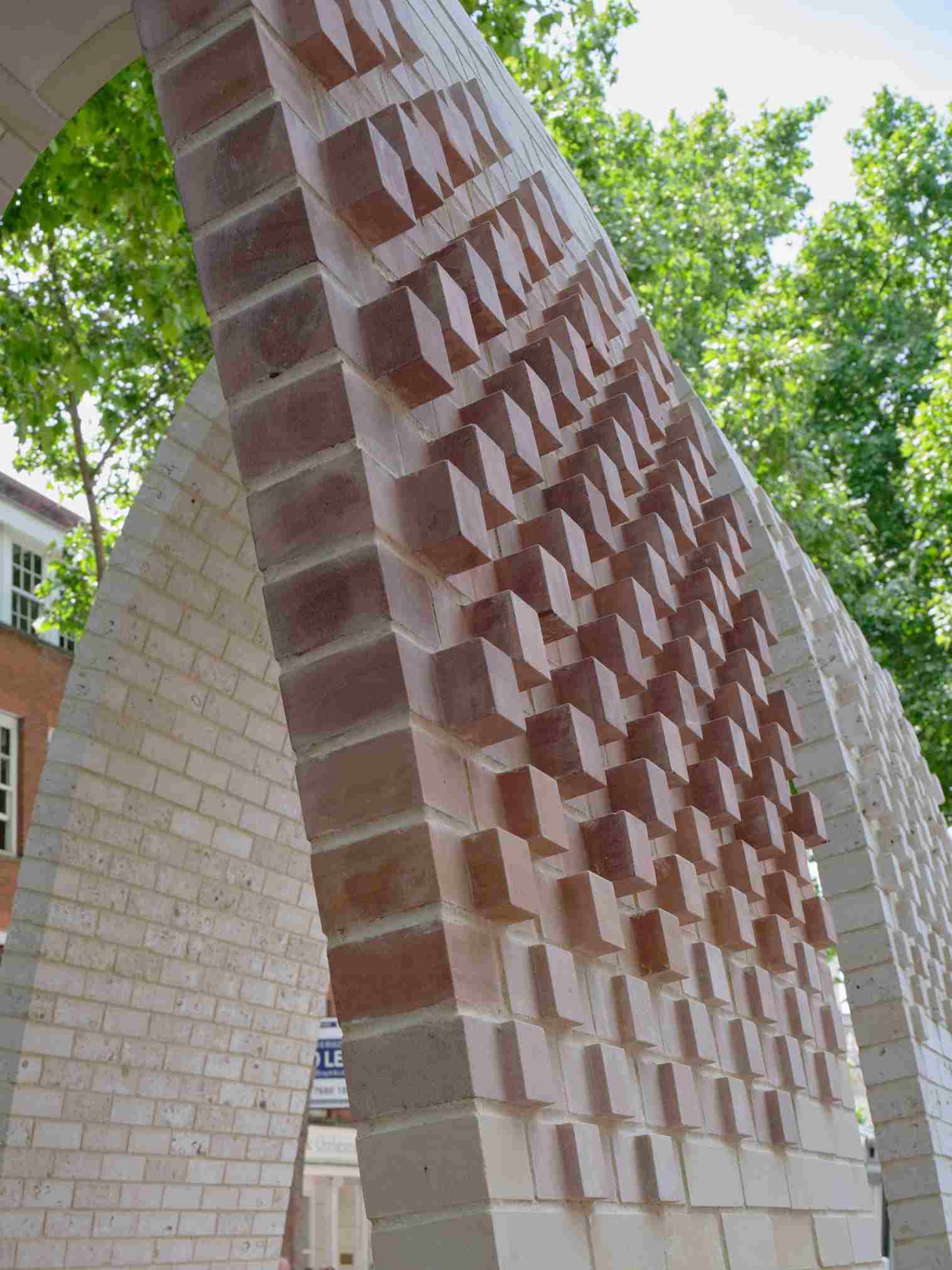
The arches of Brick from a Stone: Arch Revival are crafted from bricks made using discarded stone, which had been quarried but left unused due to irregularities in colour or texture, variations which often deemed commercially undesirable but structurally irrelevant.
Central to the environmental message is the carbon performance of the structure. Hawkins\Brown and Webb Yates reportedly calculated that these stone brick arches embody 66 per cent less energy than conventional clay-fired bricks, which require energy-intensive kilns for production. By avoiding the need for high-temperature firing, stone bricks emerge as a more climate-conscious alternative.
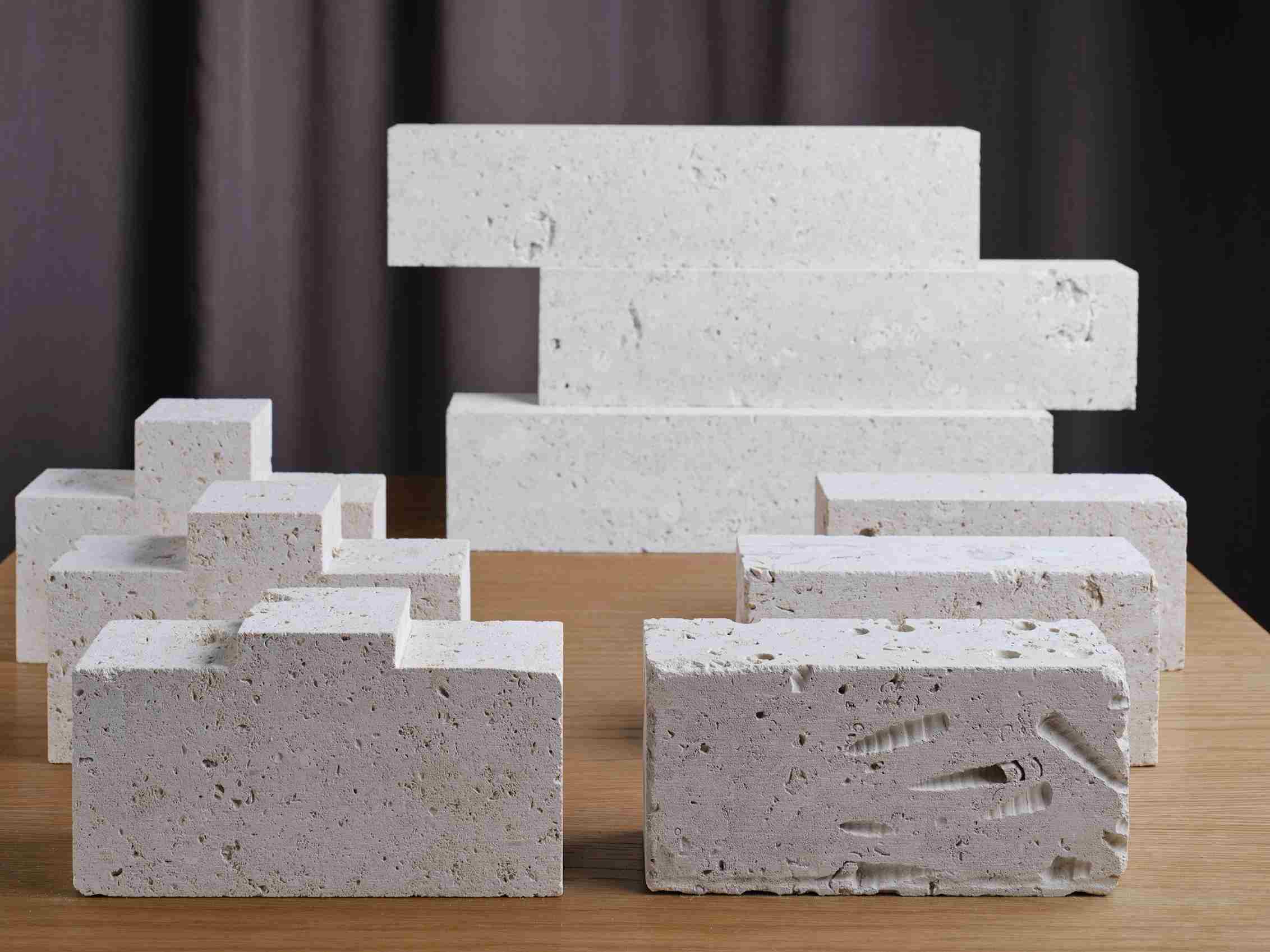
Hawkins\Brown and Webb Yates reportedly calculated that these stone brick arches embody 66 per cent less energy than conventional clay-fired bricks, which require energy-intensive kilns for production.
Arch Revival
From a structural perspective, the arches embrace form efficiency through the use of catenary curves. A catenary is the shape that a flexible rope or chain assumes when suspended from two points. When inverted, this naturally occurring curve becomes one of the most effective geometries for handling compression forces by thus making it ideal for stone construction. Reportedly, Brick from a Stone: Arch Revival is not intended to be a temporary statement. Following its successful debut at Clerkenwell, the installation will be reportedly relocated to the London Cancer Hub in Sutton and will also appear at the London Festival of Architecture in June.
Image credit: Will Pryce