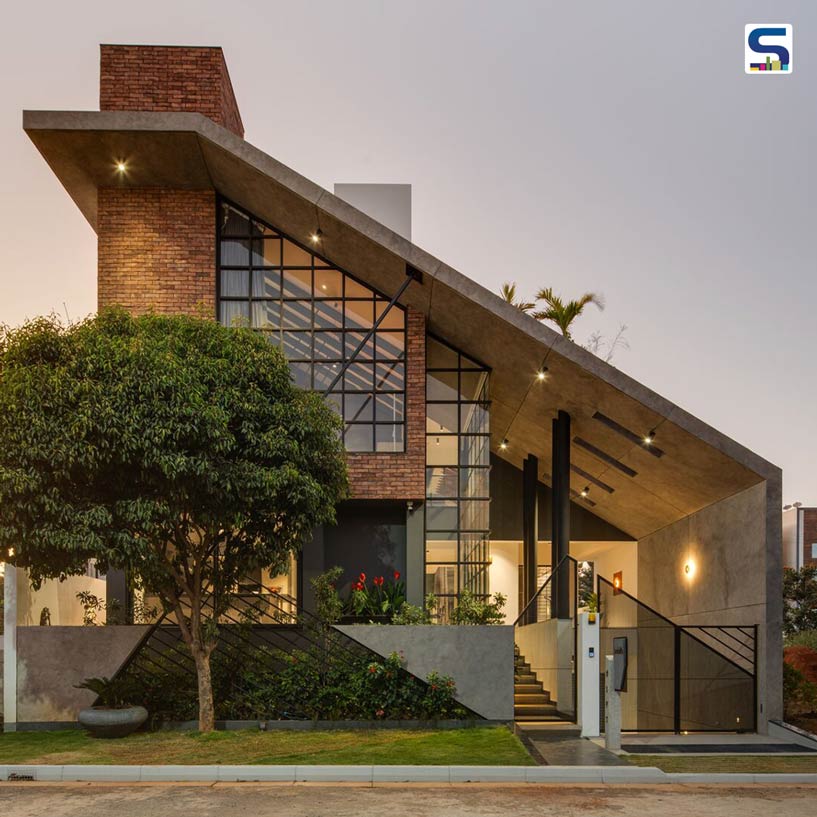
Kodalli’s Happy Place by Ashwin Architects residence is envisioned as a serene, contemporary haven set amidst the outskirts of Bengaluru, Karnataka. Designed for a family that cherishes togetherness as much as personal tranquility, the home brings architectural boldness and emotional warmth into a single narrative. Its exterior immediately establishes its identity with a dramatic sloping concrete roof paired with slender steel-framed windows that forms a sculptural silhouette as it stands confidently yet harmoniously within the landscape. Natural materials, lush green trees and thoughtfully planned openings come together to provide shade, privacy and a whimsical play of filtered daylight. Know on SURFACES REPORTER (SR) how every space, across the three levels, is crafted to support the varied rhythms of family life.
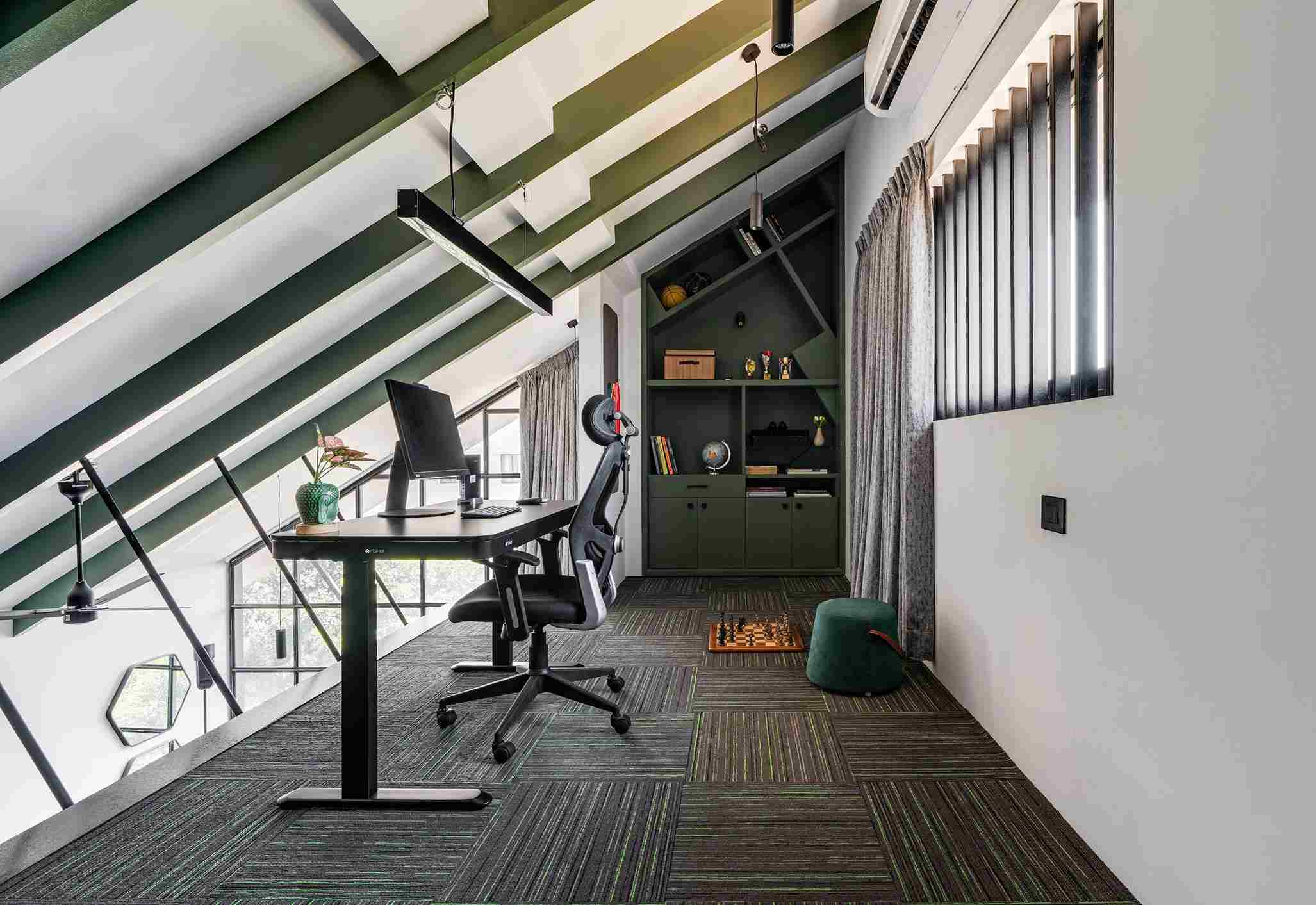
A thoughtful study nook encourages reading, learning and reflective space, making the room both functional and deeply personal.
Sweeping concrete roof
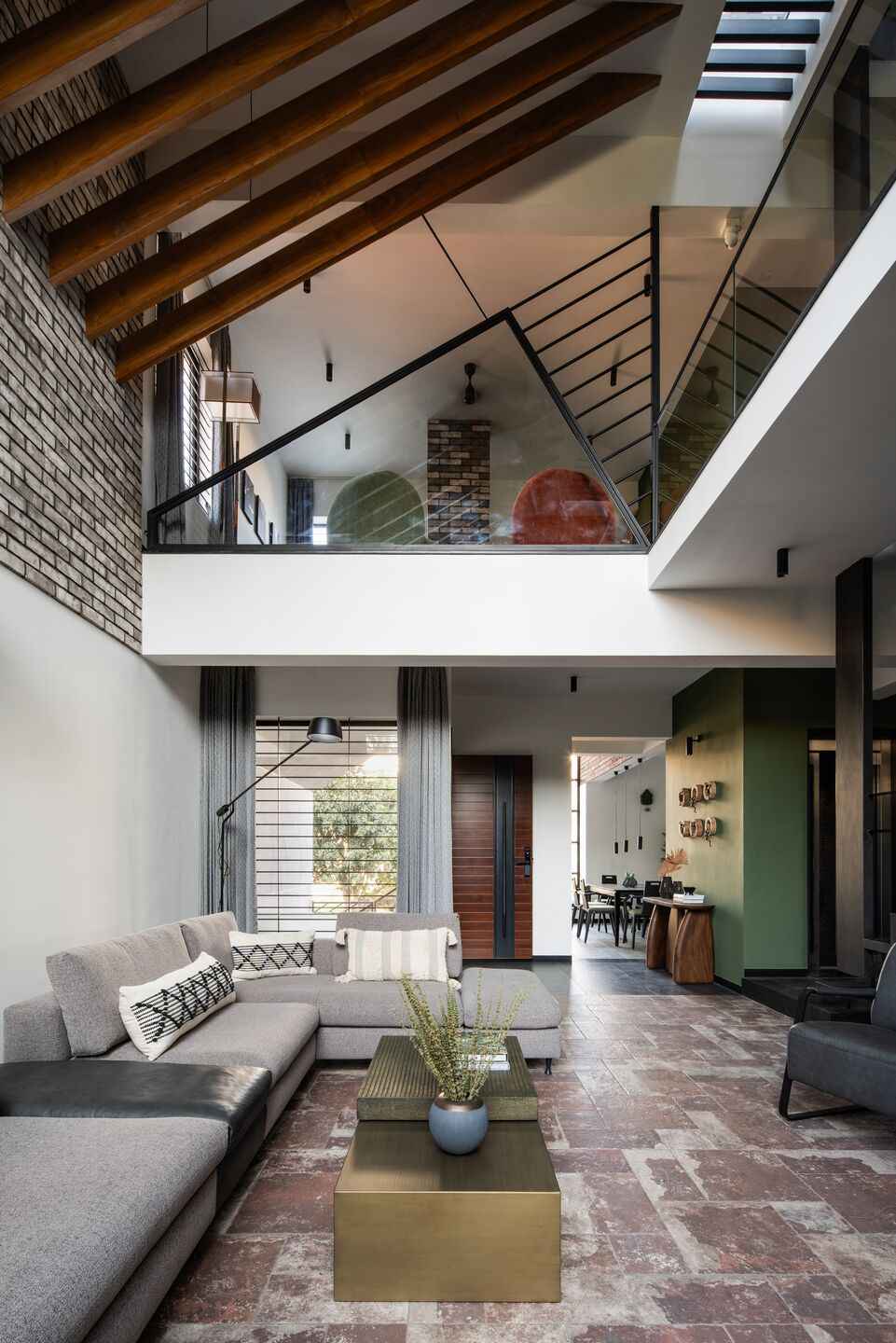
As one steps inside Kodalli’s Happy Place, an inviting olive-toned foyer sets the mood, unfolding into a double-height living area which is defined by exposed brick surfaces, wooden rafters and an impeccably detailed cantilevered staircase. The connection to the outdoors is preserved through large glazed surfaces that draw the eye toward the garden, ensuring the interior remains visually open and grounded in nature.
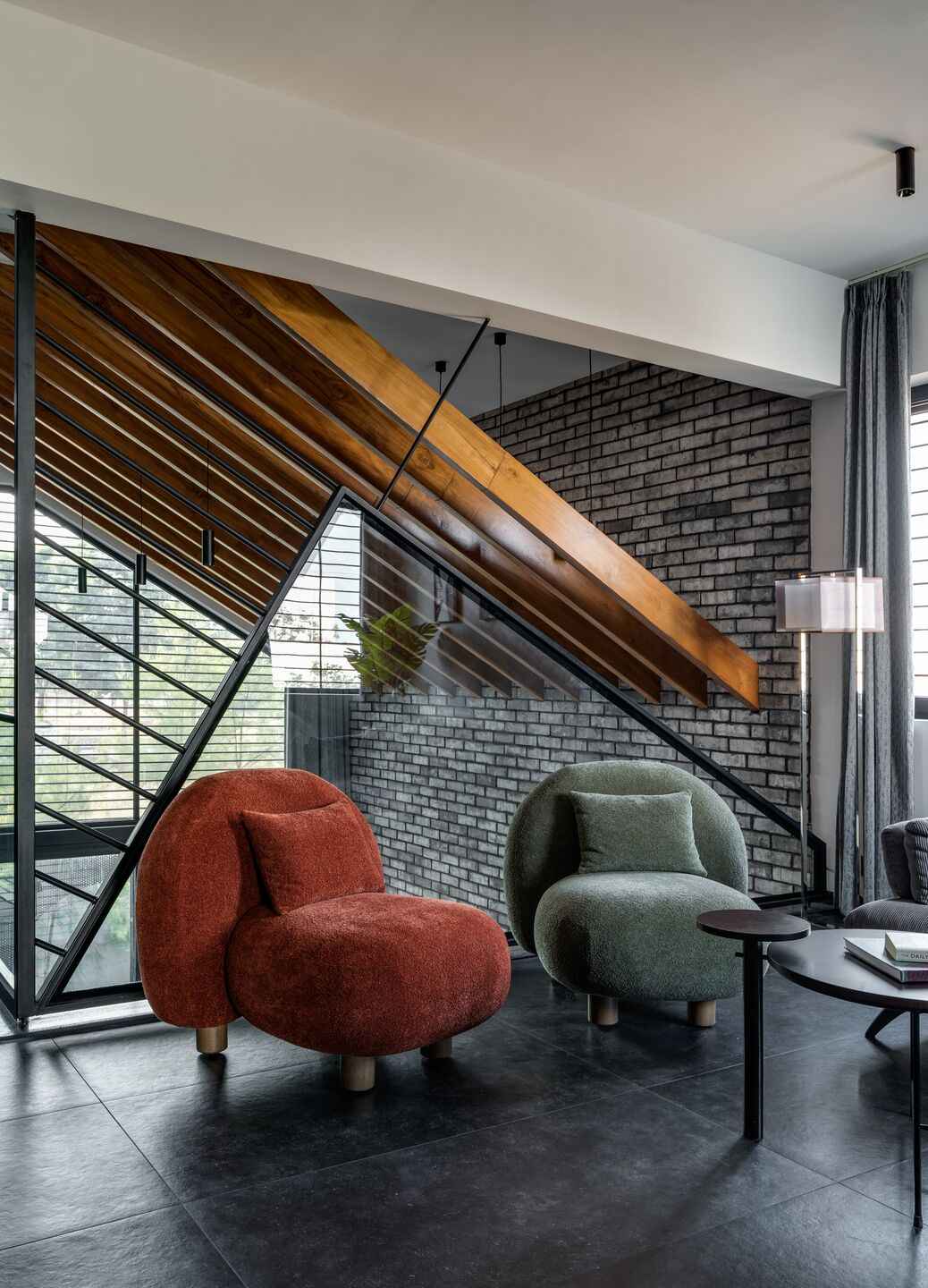
A meticulous choice of floor tiles lends character to the space, while a false sloped ceiling mirrors the external roofline.
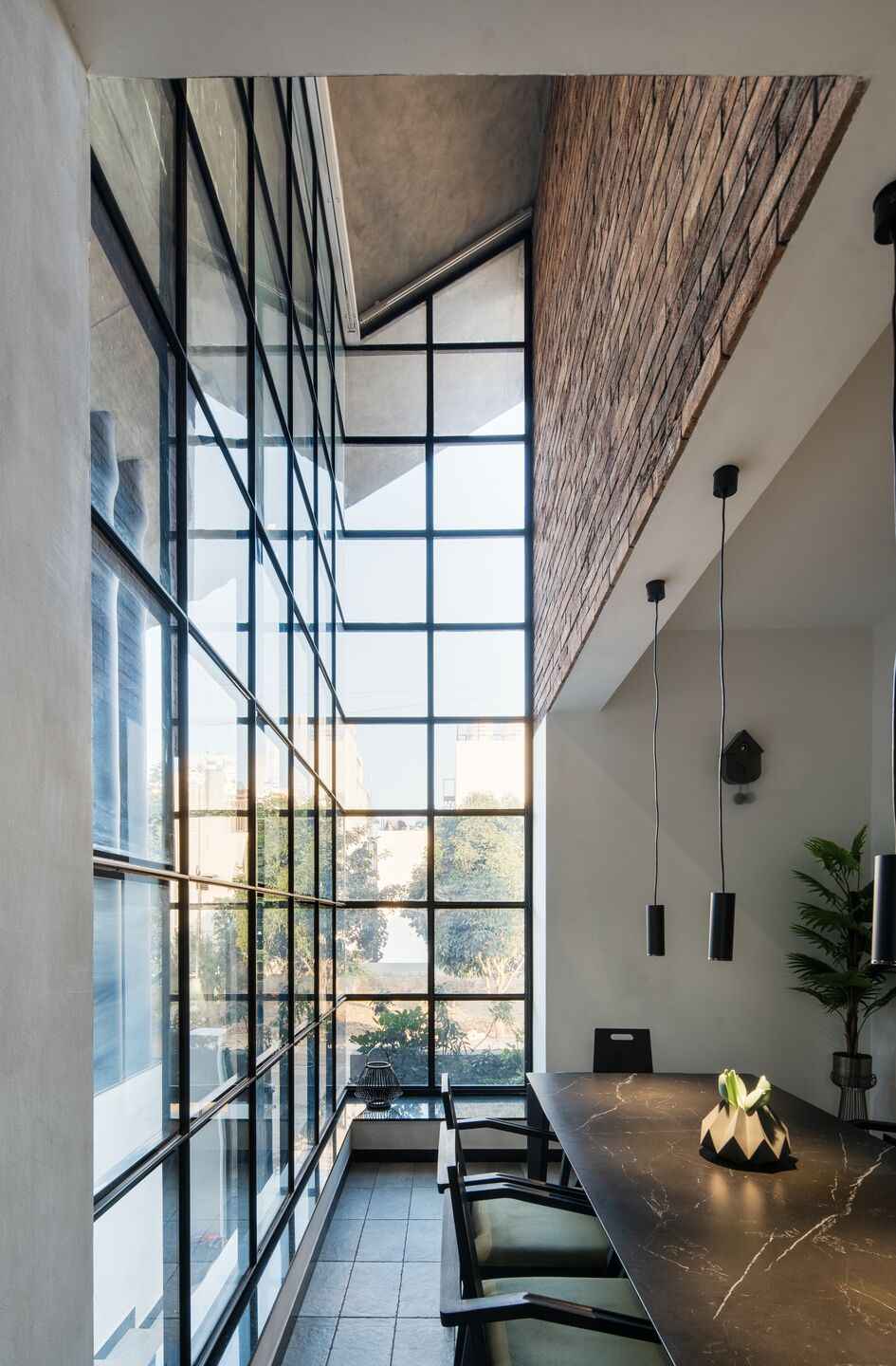
The home’s entry sequence is memorable. The sweeping concrete roof frames the arrival, while a skylight above gently illuminates the steps leading to the patio and the ramp descending toward the basement. The patio, finished in black leather-textured granite, radiates minimalism and material richness. A double-height glass opening near the entrance provides curated views of the dining and kitchen areas, thereby subtly blurring the boundary between inside and outside.
Ascending to the first floor, one encounters the family lounge, which is an informal zone designed for spontaneous conversations, leisure and quiet bonding moments.
The living room serves as the social heart of the ground floor where it invites conversation, lounging and intimate family evenings. A meticulous choice of floor tiles lends character to the space, while a false sloped ceiling mirrors the external roofline. Adjacent to this is the soaring dining area, bathed in natural light through tall glazing. Its placement beside the kitchen allows it to function as a lively hub for family interactions while also being ideal for formal gatherings. In the kitchen, warm lighting highlights the black quartz countertop and backsplash, thus creating a cohesive visual palette that is enhanced by black granite flooring. The island, seamlessly integrated with the main counter, strengthens the flow between cooking and dining zones, while a sliding door visually anchors the space to the lush tree just outside.
Avoiding conventional supports like glass balustrades, wooden stringers or exposed beams, the design treats both flights as a single sculptural entity.
Striking staircase
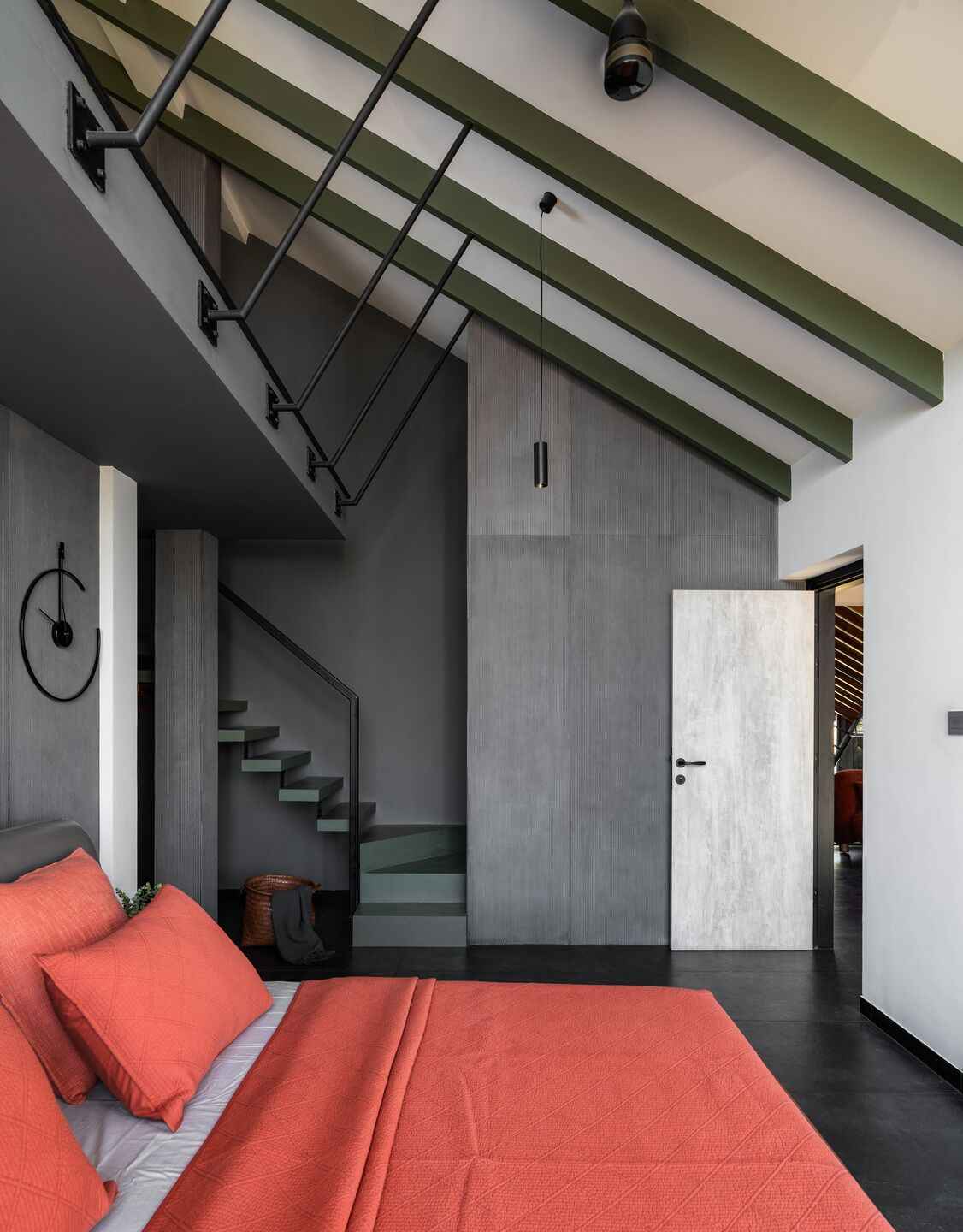
Ascending to the first floor, one encounters the family lounge, which is an informal zone designed for spontaneous conversations, leisure and quiet bonding moments. Overlooking the garden, it acts as a transitional space that connects the private areas of the home while still retaining an intimate atmosphere. The children’s bedroom, tucked beneath the sloping roof, is designed as a bright and spirited environment. Its unique geometry gives it a sense of enclosure without compromising openness. Carefully positioned windows usher in natural light, accentuating the playful slope of the ceiling. A thoughtful study nook encourages reading, learning and reflective space, making the room both functional and deeply personal.
Packed with concrete and finished with large vitrified tiles featuring chamfered edges, the staircase presents itself as a monolithic piece of art.
One of the most striking elements of the home is the staircase. Avoiding conventional supports like glass balustrades, wooden stringers or exposed beams, the design treats both flights as a single sculptural entity. The structure combines a cantilevered system with a concealed beam embedded at an angle within the wall, assisted by a Z-frame to stabilize vibrations. Packed with concrete and finished with large vitrified tiles featuring chamfered edges, the staircase presents itself as a monolithic piece of art. The concrete-panel backdrop, reminiscent of a graph sheet, amplifies the geometric intent and echoes the original hand sketches that inspired it.
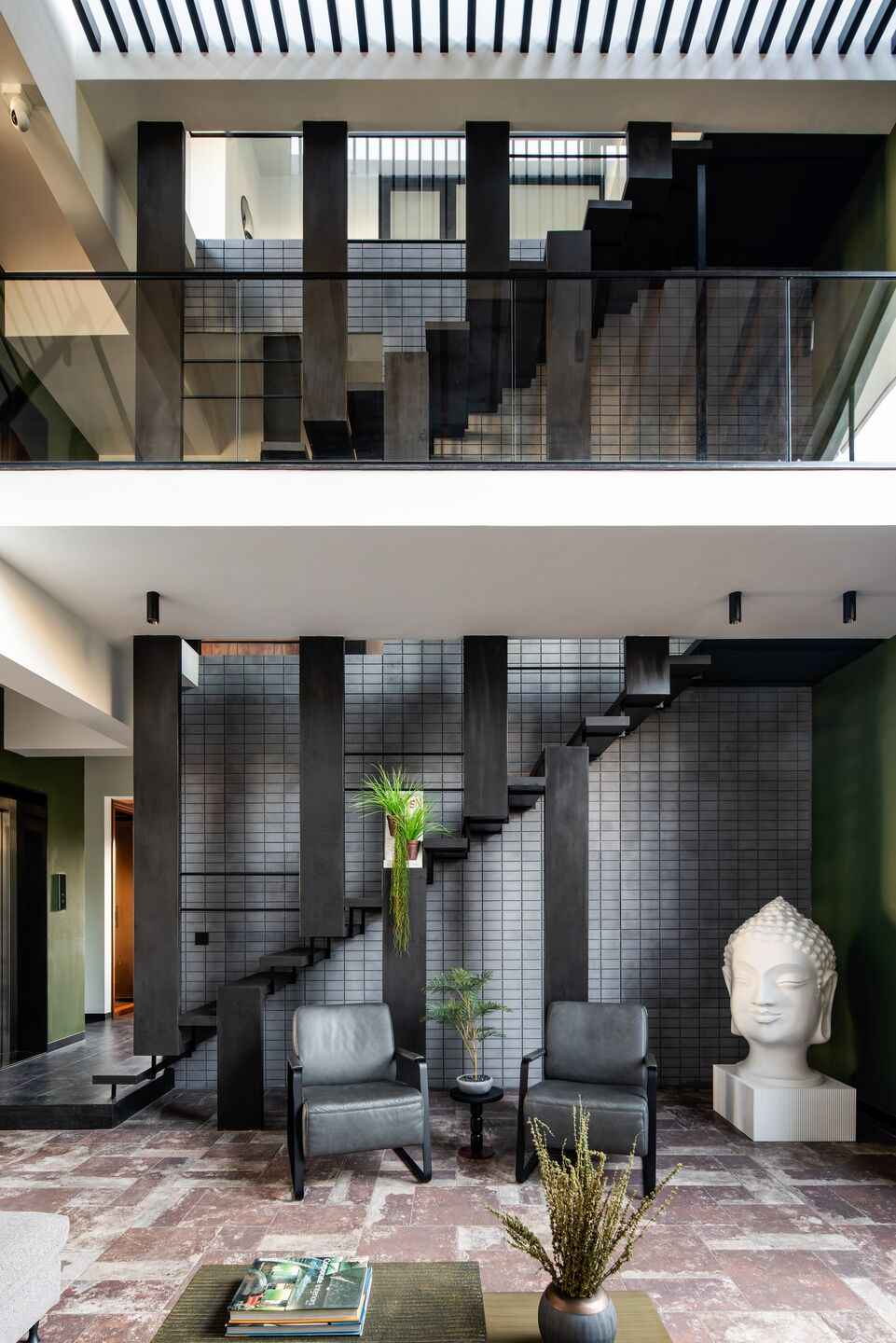
The structure combines a cantilevered system with a concealed beam embedded at an angle within the wall, assisted by a Z-frame to stabilize vibrations.
Project details
Project name: Kodalli’s Happy Place
Location: Bengaluru
Area: 7,500 sqft
Completion: 2025
Type: Residence
Studio: Ashwin Architects
Lead architect: Ashwin A P
Photographs: Shamanth Patil