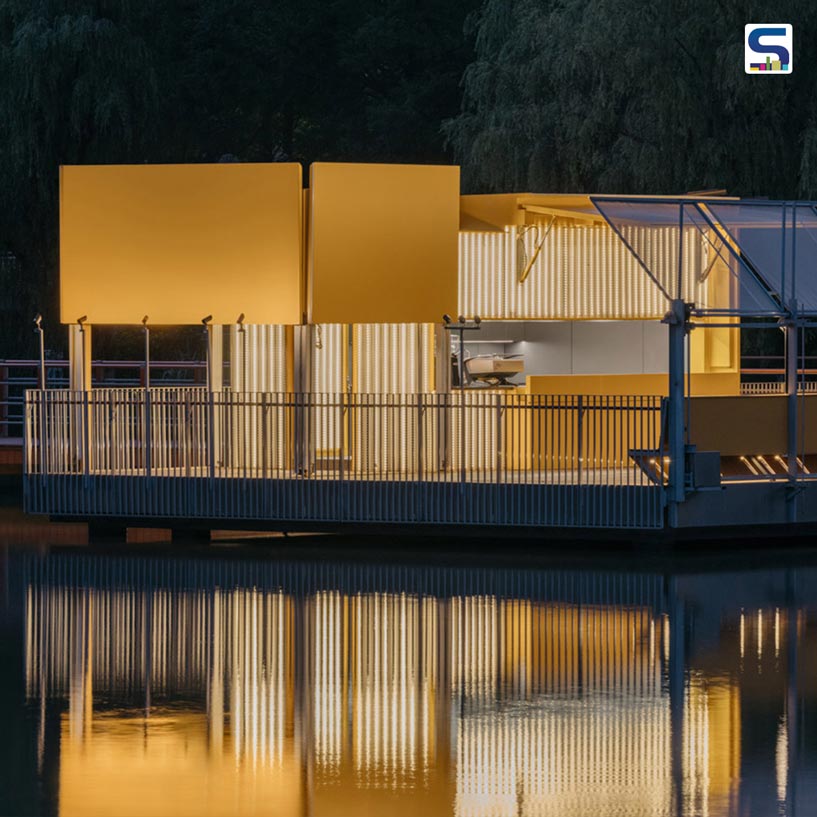
Chinese architecture studio SoBA Architects designed an adaptable cafe and florist shop in Kunshan, China, which was conceived as a compact yet highly responsive architectural object. Named The Bloom Box, the 40sqm structure is positioned on a lakeside platform within an urban park, occupying a site that was previously used as a simple sunshade pavilion. Rather than introducing a permanent, static building, the architects chose to reinterpret the location through a lightweight and transformable intervention that encourages people to stop, engage and spend time by the water. Know on SURFACES REPORTER (SR) how architecture does not always have to be monumental but meaningful.
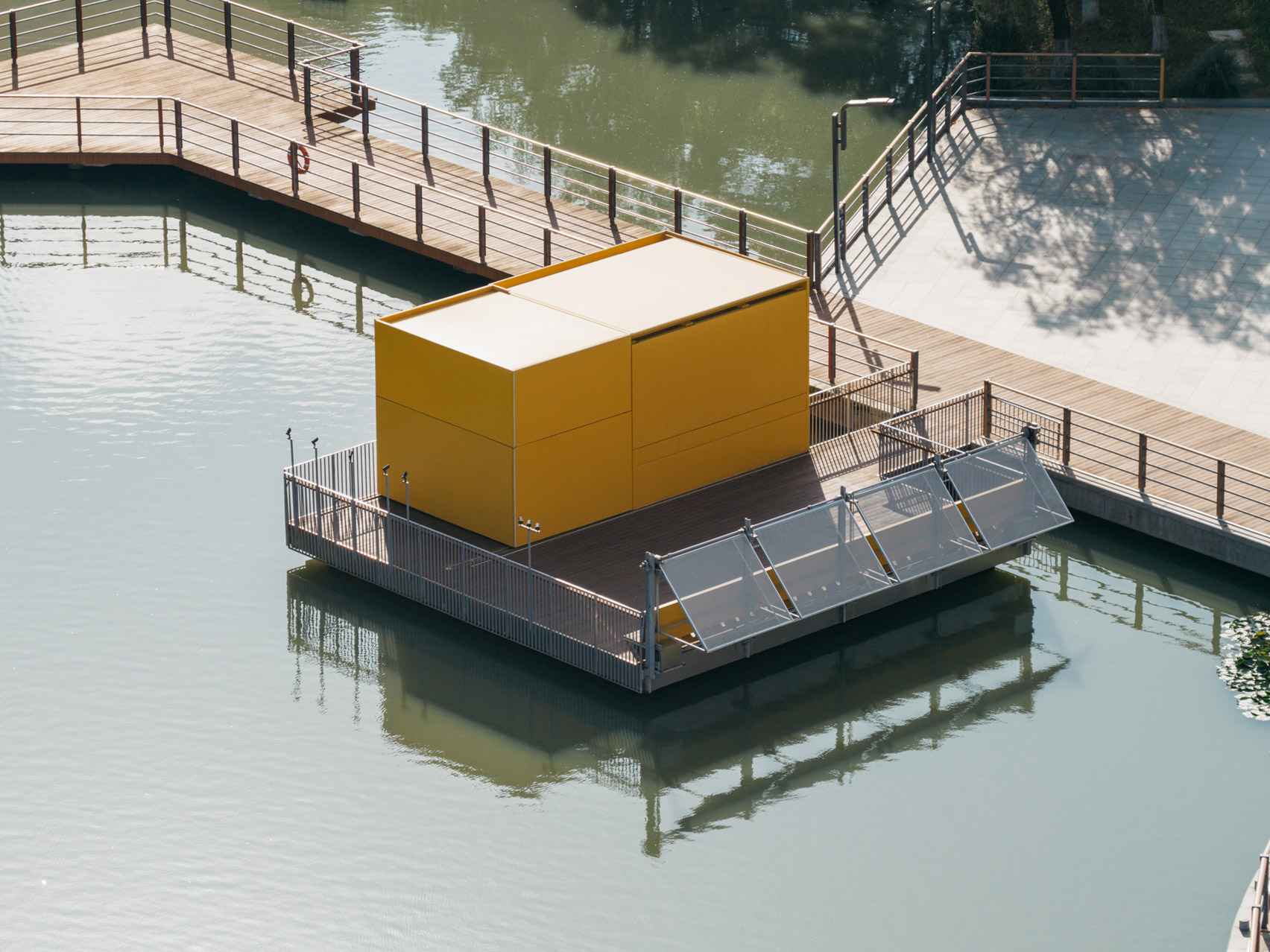
The Bloom Box takes the form of a geometric, foldable container that can open up or close down depending on weather conditions, daylight levels and operational needs.
Visually defined by its bright yellow colour, The Bloom Box takes the form of a geometric, foldable container that can open up or close down depending on weather conditions, daylight levels and operational needs. During business hours, the building comes alive as its facades unfold through sliding panels and adjustable components, allowing the cafe and flower shop interiors to merge seamlessly with the surrounding landscape. When closed, the structure retracts into a compact, enclosed box, protecting the interior while maintaining a clear, sculptural presence within the park.
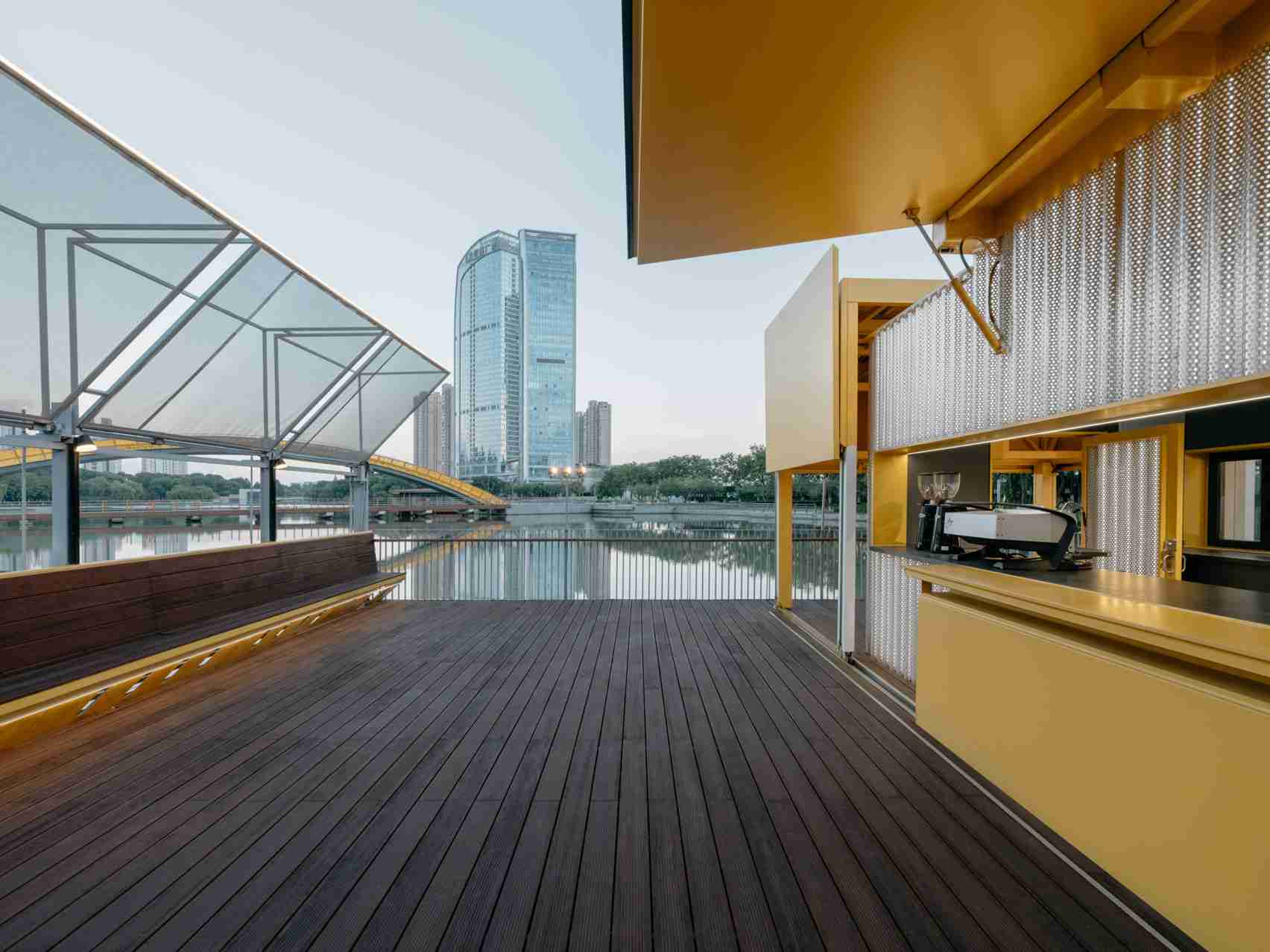
When closed, the structure retracts into a compact, enclosed box, protecting the interior while maintaining a clear, sculptural presence within the park.
According to the team, the intent was to create a structure that feels active rather than inert. The studio described the project as an architectural element that responds continuously to time, climate and patterns of use, making it part of the everyday rhythm of the city rather than a fixed object frozen in form. Structurally, the building is supported by a lightweight steel frame, which ensures stability on the floating lakeside platform while allowing for flexibility in the envelope. The exterior is wrapped in translucent aluminium cladding that filters natural light and airflow into the interior, enhancing comfort while reinforcing the building’s sense of permeability. At the coffee counter, a section of the facade lifts outward to create a temporary canopy, offering shelter for customers and extending the usable space beyond the footprint of the box.
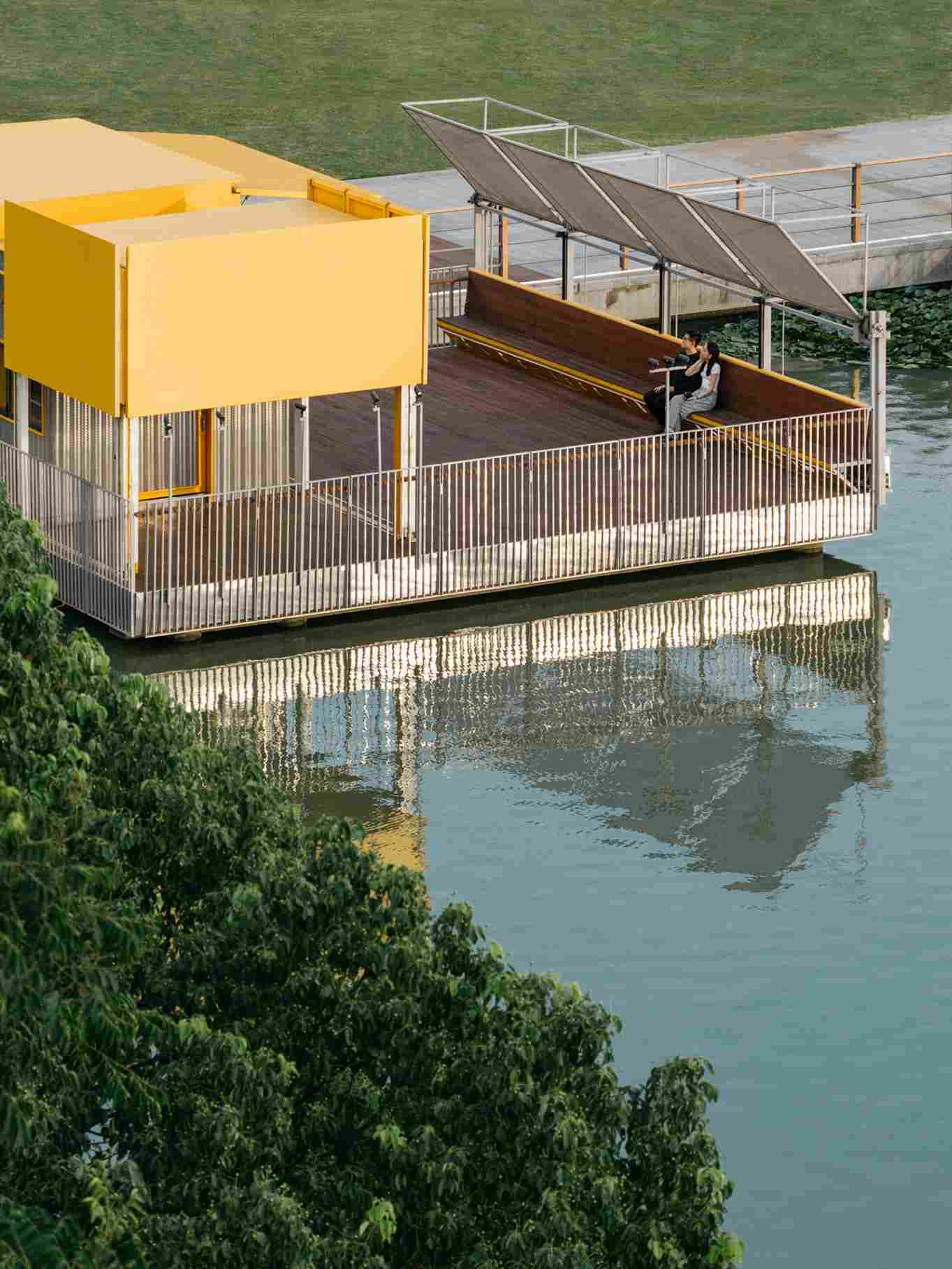
Structurally, the building is supported by a lightweight steel frame, which ensures stability on the floating lakeside platform while allowing for flexibility in the envelope.
Complementing the structure, a long wooden bench runs alongside the building, inviting visitors to sit and linger. Above it, translucent panels made from a steel frame and ECTFE membrane provide shade, creating a comfortable environment for social interaction. Rather than viewing The Bloom Box as a finished architectural product, the studio considers it a living container, which evolves through daily use and changing conditions.
Image credit: Wen Studio